The Friar's Tale Poem Rhyme Scheme and Analysis
Rhyme Scheme: ABCCDDECFFGGCCGGHIJK LMNNLCOPAAKLAL Q RASSAAKKTRKKOGSOUUVV SS OOWQXGOASSK KA QY AOOXXKZSOKKKYAGOOXXA AOOXA2B2C2O GXOKAAOO OOOD2OOSOC2 YO SOO AGGAAAAKOA KE2OY UOUUOF2OAG YYZASU AYYAKEG2AK OOKAZAOSA| This worthy limitour this noble Frere | A |
| He made always a manner louring cheer countenance | B |
| Upon the Sompnour but for honesty courtesy | C |
| No villain word as yet to him spake he | C |
| But at the last he said unto the Wife | D |
| 'Dame ' quoth he 'God give you right good life | D |
| Ye have here touched all so may I the thrive | E |
| In school matter a greate difficulty | C |
| Ye have said muche thing right well I say | F |
| But Dame here as we ride by the way | F |
| Us needeth not but for to speak of game | G |
| And leave authorities in Godde's name | G |
| To preaching and to school eke of clergy | C |
| But if it like unto this company | C |
| I will you of a Sompnour tell a game | G |
| Pardie ye may well knowe by the name | G |
| That of a Sompnour may no good be said | H |
| I pray that none of you be evil paid dissatisfied | I |
| A Sompnour is a runner up and down | J |
| With mandements for fornicatioun mandates summonses | K |
| And is y beat at every towne's end ' | L |
| Then spake our Host 'Ah sir ye should be hend civil gentle | M |
| And courteous as a man of your estate | N |
| In company we will have no debate | N |
| Tell us your tale and let the Sompnour be ' | L |
| 'Nay ' quoth the Sompnour 'let him say by me | C |
| What so him list when it comes to my lot | O |
| By God I shall him quiten every groat pay him off | P |
| I shall him telle what a great honour | A |
| It is to be a flattering limitour | A |
| And his office I shall him tell y wis' | K |
| Our Host answered 'Peace no more of this ' | L |
| And afterward he said unto the frere | A |
| 'Tell forth your tale mine owen master dear ' | L |
| - | |
| - | |
| THE TALE | Q |
| - | |
| - | |
| Whilom there was dwelling in my country once on a time | R |
| An archdeacon a man of high degree | A |
| That boldely did execution | S |
| In punishing of fornication | S |
| Of witchecraft and eke of bawdery | A |
| Of defamation and adultery | A |
| Of churche reeves and of testaments churchwardens | K |
| Of contracts and of lack of sacraments | K |
| And eke of many another manner crime sort of | T |
| Which needeth not rehearsen at this time | R |
| Of usury and simony also | K |
| But certes lechours did he greatest woe | K |
| They shoulde singen if that they were hent caught | O |
| And smale tithers lt gt were foul y shent troubled put to shame | G |
| If any person would on them complain | S |
| There might astert them no pecunial pain lt gt | O |
| For smalle tithes and small offering | U |
| He made the people piteously to sing | U |
| For ere the bishop caught them with his crook | V |
| They weren in the archedeacon's book | V |
| Then had he through his jurisdiction | S |
| Power to do on them correction | S |
| - | |
| He had a Sompnour ready to his hand | O |
| A slier boy was none in Engleland | O |
| For subtlely he had his espiaille espionage | W |
| That taught him well where it might aught avail | Q |
| He coulde spare of lechours one or two | X |
| To teache him to four and twenty mo' | G |
| For though this Sompnour wood be as a hare furious mad | O |
| To tell his harlotry I will not spare | A |
| For we be out of their correction | S |
| They have of us no jurisdiction | S |
| Ne never shall have term of all their lives | K |
| - | |
| 'Peter so be the women of the stives ' stews | K |
| Quoth this Sompnour 'y put out of our cure ' care | A |
| - | |
| 'Peace with mischance and with misaventure ' | - |
| Our Hoste said 'and let him tell his tale | Q |
| Now telle forth and let the Sompnour gale whistle bawl | Y |
| Nor spare not mine owen master dear ' | - |
| - | |
| This false thief the Sompnour quoth the Frere | A |
| Had always bawdes ready to his hand | O |
| As any hawk to lure in Engleland | O |
| That told him all the secrets that they knew | X |
| For their acquaintance was not come of new | X |
| They were his approvers privily informers | K |
| He took himself at great profit thereby | Z |
| His master knew not always what he wan won | S |
| Withoute mandement a lewed man ignorant | O |
| He could summon on pain of Christe's curse | K |
| And they were inly glad to fill his purse | K |
| And make him greate feastes at the nale alehouse | K |
| And right as Judas hadde purses smale small | Y |
| And was a thief right such a thief was he | A |
| His master had but half his duety what was owing him | G |
| He was if I shall give him his laud | O |
| A thief and eke a Sompnour and a bawd | O |
| And he had wenches at his retinue | X |
| That whether that Sir Robert or Sir Hugh | X |
| Or Jack or Ralph or whoso that it were | A |
| That lay by them they told it in his ear | A |
| Thus were the wench and he of one assent | O |
| And he would fetch a feigned mandement | O |
| And to the chapter summon them both two | X |
| And pill the man and let the wenche go plunder pluck | A2 |
| Then would he say 'Friend I shall for thy sake | B2 |
| Do strike thee out of oure letters blake black | C2 |
| Thee thar no more as in this case travail need | O |
| I am thy friend where I may thee avail ' | - |
| Certain he knew of bribers many mo' | G |
| Than possible is to tell in yeare's two | X |
| For in this world is no dog for the bow lt gt | O |
| That can a hurt deer from a whole know | K |
| Bet than this Sompnour knew a sly lechour better | A |
| Or an adult'rer or a paramour | A |
| And for that was the fruit of all his rent | O |
| Therefore on it he set all his intent | O |
| - | |
| And so befell that once upon a day | O |
| This Sompnour waiting ever on his prey | O |
| Rode forth to summon a widow an old ribibe lt gt | O |
| Feigning a cause for he would have a bribe | D2 |
| And happen'd that he saw before him ride | O |
| A gay yeoman under a forest side | O |
| A bow he bare and arrows bright and keen | S |
| He had upon a courtepy of green short doublet | O |
| A hat upon his head with fringes blake black | C2 |
| 'Sir ' quoth this Sompnour 'hail and well o'ertake ' | - |
| 'Welcome ' quoth he 'and every good fellaw | Y |
| Whither ridest thou under this green shaw ' shade | O |
| Saide this yeoman 'wilt thou far to day ' | - |
| This Sompnour answer'd him and saide 'Nay | S |
| Here faste by ' quoth he 'is mine intent | O |
| To ride for to raisen up a rent | O |
| That longeth to my lorde's duety ' | - |
| 'Ah art thou then a bailiff ' 'Yea ' quoth he | A |
| He durste not for very filth and shame | G |
| Say that he was a Sompnour for the name | G |
| 'De par dieux ' lt gt quoth this yeoman 'leve brother dear | A |
| Thou art a bailiff and I am another | A |
| I am unknowen as in this country | A |
| Of thine acquaintance I will praye thee | A |
| And eke of brotherhood if that thee list please | K |
| I have gold and silver lying in my chest | O |
| If that thee hap to come into our shire | A |
| All shall be thine right as thou wilt desire ' | - |
| 'Grand mercy ' quoth this Sompnour 'by my faith ' great thanks | K |
| Each in the other's hand his trothe lay'th | E2 |
| For to be sworne brethren till they dey die lt gt | O |
| In dalliance they ride forth and play | Y |
| - | |
| This Sompnour which that was as full of jangles chattering | U |
| As full of venom be those wariangles butcher birds lt gt | O |
| And ev'r inquiring upon every thing | U |
| 'Brother ' quoth he 'where is now your dwelling | U |
| Another day if that I should you seech ' seek visit | O |
| This yeoman him answered in soft speech | F2 |
| Brother ' quoth he 'far in the North country lt gt | O |
| Where as I hope some time I shall thee see | A |
| Ere we depart I shall thee so well wiss inform | G |
| That of mine house shalt thou never miss ' | - |
| Now brother ' quoth this Sompnour 'I you pray | Y |
| Teach me while that we ride by the way | Y |
| Since that ye be a bailiff as am I | Z |
| Some subtilty and tell me faithfully | A |
| For mine office how that I most may win | S |
| And spare not for conscience or for sin conceal nothing | U |
| But as my brother tell me how do ye ' | - |
| Now by my trothe brother mine ' said he | A |
| As I shall tell to thee a faithful tale | Y |
| My wages be full strait and eke full smale | Y |
| My lord is hard to me and dangerous niggardly | A |
| And mine office is full laborious | K |
| And therefore by extortion I live | E |
| Forsooth I take all that men will me give | G2 |
| Algate by sleighte or by violence whether | A |
| From year to year I win all my dispence | K |
| I can no better tell thee faithfully ' | - |
| Now certes ' quoth this Sompnour 'so fare I do | O |
| I spare not to take God it wot | O |
| But if it be too heavy or too hot unless | K |
| What I may get in counsel privily | A |
| No manner conscience of that have I | Z |
| N'ere mine extortion I might not live were it not for | A |
| For of such japes will I not be shrive tricks confessed | O |
| Stomach nor conscience know I none | S |
| I shrew | A |
Geoffrey Chaucer
(1)
Poem topics: , Print This Poem , Rhyme Scheme
Submit Spanish Translation
Submit German Translation
Submit French Translation
About The Friar's Tale
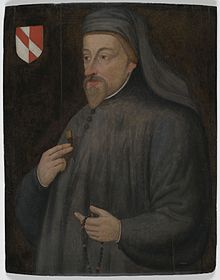
The Friar's Tale is a poem by Geoffrey Chaucer. This page includes the poem text, poet information, related topics, comments, and similar poems.
Write your comment about The Friar's Tale poem by Geoffrey Chaucer
Best Poems of Geoffrey Chaucer