The Cross Roads; Or, The Haymaker's Story Poem Rhyme Scheme and Analysis
Rhyme Scheme: AABBCCDDEEFFGGHHIJKK LMNN OOPPQQRR SSTTHHUUPPRRVVWWXXYZ A2A2B2B2C2C2PPD2D2E2 E2F2F2G2G2H2H2I2J2B2 B2K2K2OOL2L2M2M2N2N2 O2O2P2P2Q2Q2QQR2R2S2 S2T2U2KKV2V2A2A2BBA2 A2W2W2X2X2Q2Q2Y2Y2S2 S2Z2Z2A3B3D2D2C3C3GG D3E3F3F3 G3E2E2OOH3I3UUGGW2W2 UUGGJ3J3W2W2GGGGK3K3 L3L3GGM3M3W2W2N3I3GG Z| Stopt by the storm that long in sullen black | A |
| From the south west stained its encroaching track | A |
| Haymakers hustling from the rain to hide | B |
| Sought the grey willows by the pasture side | B |
| And there while big drops bow the grassy stems | C |
| And bleb the withering hay with pearly gems | C |
| Dimple the brook and patter in the leaves | D |
| The song or tale an hour's restraint relieves | D |
| And while the old dames gossip at their ease | E |
| And pinch the snuff box empty by degrees | E |
| The young ones join in love's delightful themes | F |
| Truths told by gipsies and expounded dreams | F |
| And mutter things kept secrets from the rest | G |
| As sweethearts' names and whom they love the best | G |
| And dazzling ribbons they delight to show | H |
| And last new favours of some veigling beau | H |
| Who with such treachery tries their hearts to move | I |
| And like the highest bribes the maidens' love | J |
| The old dames jealous of their whispered praise | K |
| Throw in their hints of man's deluding ways | K |
| And one to give her counsels more effect | L |
| And by example illustrate the fact | M |
| Of innocence oercome by flattering man | N |
| Thrice tapped her box and pinched and thus began | N |
| - | |
| 'Now wenches listen and let lovers lie | O |
| Ye'll hear a story ye may profit by | O |
| I'm your age treble with some oddments to't | P |
| And right from wrong can tell if ye'll but do't | P |
| Ye need not giggle underneath your hat | Q |
| Mine's no joke matter let me tell you that | Q |
| So keep ye quiet till my story's told | R |
| And don't despise your betters cause they're old | R |
| - | |
| 'That grave ye've heard of where the four roads meet | S |
| Where walks the spirit in a winding sheet | S |
| Oft seen at night by strangers passing late | T |
| And tarrying neighbours that at market wait | T |
| Stalking along as white as driven snow | H |
| And long as one's shadow when the sun is low | H |
| The girl that's buried there I knew her well | U |
| And her whole history if ye'll hark can tell | U |
| Her name was Jane and neighbour's children we | P |
| And old companions once as ye may be | P |
| And like to you on Sundays often strolled | R |
| To gipsies' camps to have our fortunes told | R |
| And oft God rest her in the fortune book | V |
| Which we at hay time in our pockets took | V |
| Our pins at blindfold on the wheel we stuck | W |
| When hers would always prick the worst of luck | W |
| For try poor thing as often as she might | X |
| Her point would always on the blank alight | X |
| Which plainly shows the fortune one's to have | Y |
| As such like go unwedded to the grave | Z |
| And so it proved The next succeeding May | A2 |
| We both to service went from sports and play | A2 |
| Though in the village still as friends and kin | B2 |
| Thought neighbour's service better to begin | B2 |
| So out we went Jane's place was reckoned good | C2 |
| Though she bout life but little understood | C2 |
| And had a master wild as wild can be | P |
| And far unfit for such a child as she | P |
| And soon the whisper went about the town | D2 |
| That Jane's good looks procured her many a gown | D2 |
| From him whose promise was to every one | E2 |
| But whose intention was to wive with none | E2 |
| Twas nought to wonder though begun by guess | F2 |
| For Jane was lovely in her Sunday dress | F2 |
| And all expected such a rosy face | G2 |
| Would be her ruin as was just the case | G2 |
| The while the change was easily perceived | H2 |
| Some months went by ere I the tales believed | H2 |
| For there are people nowadays Lord knows | I2 |
| Will sooner hatch up lies than mend their clothes | J2 |
| And when with such like tattle they begin | B2 |
| Don't mind whose character they spoil a pin | B2 |
| But passing neighbours often marked them smile | K2 |
| And watched him take her milkpail oer a stile | K2 |
| And many a time as wandering closer by | O |
| From Jenny's bosom met a heavy sigh | O |
| And often marked her as discoursing deep | L2 |
| When doubts might rise to give just cause to weep | L2 |
| Smothering their notice by a wished disguise | M2 |
| To slive her apron corner to her eyes | M2 |
| Such signs were mournful and alarming things | N2 |
| And far more weighty than conjecture brings | N2 |
| Though foes made double what they heard of all | O2 |
| Swore lies as proofs and prophesied her fall | O2 |
| Poor thoughtless wench it seems but Sunday past | P2 |
| Since we went out together for the last | P2 |
| And plain enough indeed it was to find | Q2 |
| She'd something more than common on her mind | Q2 |
| For she was always fond and full of chat | Q |
| In passing harmless jokes bout beaus and that | Q |
| But nothing then was scarcely talked about | R2 |
| And what there was I even forced it out | R2 |
| A gloomy wanness spoiled her rosy cheek | S2 |
| And doubts hung there it was not mine to seek | S2 |
| She neer so much as mentioned things to come | T2 |
| But sighed oer pleasures ere she left her home | U2 |
| And now and then a mournful smile would raise | K |
| At freaks repeated of our younger days | K |
| Which I brought up while passing spots of ground | V2 |
| Where we when children 'hurly burlied' round | V2 |
| Or 'blindman buffed' some morts of hours away | A2 |
| Two games poor thing Jane dearly loved to play | A2 |
| She smiled at these but shook her head and sighed | B |
| When eer she thought my look was turned aside | B |
| Nor turned she round as was her former way | A2 |
| To praise the thorn white over then with May | A2 |
| Nor stooped once though thousands round her grew | W2 |
| To pull a cowslip as she used to do | W2 |
| For Jane in flowers delighted from a child | X2 |
| I like the garden but she loved the wild | X2 |
| And oft on Sundays young men's gifts declined | Q2 |
| Posies from gardens of the sweetest kind | Q2 |
| And eager scrambled the dog rose to get | Y2 |
| And woodbine flowers at every bush she met | Y2 |
| The cowslip blossom with its ruddy streak | S2 |
| Would tempt her furlongs from the path to seek | S2 |
| And gay long purple with its tufty spike | Z2 |
| She'd wade oer shoes to reach it in the dyke | Z2 |
| And oft while scratching through the briary woods | A3 |
| For tempting cuckoo flowers and violet buds | B3 |
| Poor Jane I've known her crying sneak to town | D2 |
| Fearing her mother when she'd torn her gown | D2 |
| Ah these were days her conscience viewed with pain | C3 |
| Which all are loth to lose as well as Jane | C3 |
| And what I took more odd than all the rest | G |
| Was that same night she neer a wish exprest | G |
| To see the gipsies so beloved before | D3 |
| That lay a stone's throw from us on the moor | E3 |
| I hinted it she just replied again | F3 |
| She once believed them but had doubts since then | F3 |
| And when we sought our cows I called 'Come mull ' | - |
| But she stood silent for her heart was full | G3 |
| She loved dumb things and ere she had begun | E2 |
| To milk caressed them more than eer she'd done | E2 |
| But though her tears stood watering in her eye | O |
| I little took it as her last good bye | O |
| For she was tender and I've often known | H3 |
| Her mourn when beetles have been trampled on | I3 |
| So I neer dreamed from this what soon befell | U |
| Till the next morning rang her passing bell | U |
| My story's long but time's in plenty yet | G |
| Since the black clouds betoken nought but wet | G |
| And I'll een snatch a minute's breath or two | W2 |
| And take another pinch to help me through | W2 |
| - | |
| 'So as I said next morn I heard the bell | U |
| And passing neighbours crossed the street to tell | U |
| That my poor partner Jenny had been found | G |
| In the old flag pool on the pasture drowned | G |
| God knows my heart I twittered like a leaf | J3 |
| And found too late the cause of Sunday's grief | J3 |
| For every tongue was loosed to gabble oer | W2 |
| The slanderous things that secret passed before | W2 |
| With truth or lies they need not then be strict | G |
| The one they railed at could not contradict | G |
| Twas now no secret of her being beguiled | G |
| For every mouth knew Jenny died with child | G |
| And though more cautious with a living name | K3 |
| Each more than guessed her master bore the blame | K3 |
| That very morning it affects me still | L3 |
| Ye know the foot path sidles down the hill | L3 |
| Ignorant as babe unborn I passed the pond | G |
| To milk as usual in our close beyond | G |
| And cows were drinking at the water's edge | M3 |
| And horses browsed among the flags and sedge | M3 |
| And gnats and midges danced the water oer | W2 |
| Just as I've marked them scores of times before | W2 |
| And birds sat singing as in mornings gone | N3 |
| While I as unconcerned went soodling on | I3 |
| But little dreaming as the wakening wind | G |
| Flapped the broad ash leaves oer the pond reclin'd | G |
| And oer the water crinked the curdled wave | Z |
| That Jane was sleeping in her w | - |
John Clare
(1)
Poem topics: , Print This Poem , Rhyme Scheme
Submit Spanish Translation
Submit German Translation
Submit French Translation
About The Cross Roads; Or, The Haymaker's Story
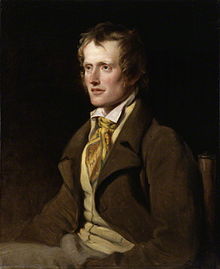
The Cross Roads; Or, The Haymaker's Story is a poem by John Clare. This page includes the poem text, poet information, related topics, comments, and similar poems.
Write your comment about The Cross Roads; Or, The Haymaker's Story poem by John Clare
Best Poems of John Clare