The Half Of Life Gone Poem Rhyme Scheme and Analysis
Rhyme Scheme: ABCBDEFEGHIHFJKJLMNM OPQRSTUTVWXWYZA2ZJA2 B2A2C2D2E2D2 F2JG2JVH2I2H2J2K2I2K 2L2M2N2M2H2D O2DYP2Q2P2R2US2UT2U2 V2U2 OW2J2X2LYLYY2UOU Z2JLJC2A3FA3B3A2I2A2 JC3OC3D3YJ2YULFL OKOKE3UL2UOF3G3F3H3I 3J3I3F3LM2LE3OJ3OK3L 3J2L3OC3FC3D3AM3ALI2 N3I2 M3O3I2O3J2OJ2OJ2LOLP 3LM3L| The days have slain the days | A |
| and the seasons have gone by | B |
| And brought me the summer again | C |
| and here on the grass I lie | B |
| As erst I lay and was glad | D |
| ere I meddled with right and with wrong | E |
| Wide lies the mead as of old | F |
| and the river is creeping along | E |
| By the side of the elm clad bank | G |
| that turns its weedy stream | H |
| And grey o er its hither lip | I |
| the quivering rushes gleam | H |
| There is work in the mead as of old | F |
| they are eager at winning the hay | J |
| While every sun sets bright | K |
| and begets a fairer day | J |
| The forks shine white in the sun | L |
| round the yellow red wheeled wain | M |
| Where the mountain of hay grows fast | N |
| and now from out of the lane | M |
| Comes the ox team drawing another | O |
| comes the bailiff and the beer | P |
| And thump thump goes the farmer s nag | Q |
| o er the narrow bridge of the weir | R |
| High up and light are the clouds | S |
| and though the swallows flit | T |
| So high o er the sunlit earth | U |
| they are well a part of it | T |
| And so though high over them | V |
| are the wings of the wandering herne | W |
| In measureless depths above him | X |
| doth the fair sky quiver and burn | W |
| The dear sun floods the land | Y |
| as the morning falls toward noon | Z |
| And a little wind is awake | A2 |
| in the best of the latter June | Z |
| They are busy winning the hay | J |
| and the life and the picture they make | A2 |
| If I were as once I was | B2 |
| I should deem it made for my sake | A2 |
| For here if one need not work | C2 |
| is a place for happy rest | D2 |
| While one s thought wends over the world | E2 |
| north south and east and west | D2 |
| - | |
| There are the men and the maids | F2 |
| and the wives and the gaffers grey | J |
| Of the fields I know so well | G2 |
| and but little changed are they | J |
| Since I was a lad amongst them | V |
| and yet how great is the change | H2 |
| Strange are they grown unto me | I2 |
| yea I to myself am strange | H2 |
| Their talk and their laughter mingling | J2 |
| with the music of the meads | K2 |
| Has now no meaning to me | I2 |
| to help or to hinder my needs | K2 |
| So far from them have I drifted | L2 |
| And yet amidst of them goes | M2 |
| A part of myself my boy | N2 |
| and of pleasure and pain he knows | M2 |
| And deems it something strange | H2 |
| when he is other than glad | D |
| - | |
| Lo now the woman that stoops | O2 |
| and kisses the face of the lad | D |
| And puts a rake in his hand | Y |
| and laughs in his laughing face | P2 |
| Whose is the voice that laughs | Q2 |
| in the old familiar place | P2 |
| Whose should it be but my love s | R2 |
| if my love were yet on the earth | U |
| Could she refrain from the fields | S2 |
| where my joy and her joy had birth | U |
| When I was there and her child | T2 |
| on the grass that knew her feet | U2 |
| Mid the flowers that led her on | V2 |
| when the summer eve was sweet | U2 |
| - | |
| No no it is she no longer | O |
| never again can she come | W2 |
| And behold the hay wains creeping | J2 |
| o er the meadows of her home | X2 |
| No more can she kiss her son | L |
| or put the rake in his hand | Y |
| That she handled a while agone | L |
| in the midst of the haymaking band | Y |
| Her laughter is gone and her life | Y2 |
| there is no such thing on the earth | U |
| No share for me then in the stir | O |
| no share in the hurry and mirth | U |
| - | |
| Nay let me look and believe | Z2 |
| that all these will vanish away | J |
| At least when the night has fallen | L |
| and that she will be there mid the hay | J |
| Happy and weary with work | C2 |
| waiting and longing for love | A3 |
| There will she be as of old | F |
| when the great moon hung above | A3 |
| And lightless and dead was the village | B3 |
| and nought but the weir was awake | A2 |
| There will she rise to meet me | I2 |
| and my hands will she hasten to take | A2 |
| And thence shall we wander away | J |
| and over the ancient bridge | C3 |
| By many a rose hung hedgerow | O |
| till we reach the sun burnt ridge | C3 |
| And the great trench digged by the Romans | D3 |
| there then awhile shall we stand | Y |
| To watch the dawn come creeping | J2 |
| o er the fragrant lovely land | Y |
| Till all the world awaketh | U |
| and draws us down we twain | L |
| To the deeds of the field and the fold | F |
| and the merry summer s gain | L |
| - | |
| Ah thus only thus shall I see her | O |
| in dreams of the day or the night | K |
| When my soul is beguiled of its sorrow | O |
| to remember past delight | K |
| She is gone She was and she is not | E3 |
| there is no such thing on the earth | U |
| But e en as a picture painted | L2 |
| and for me there is void and dearth | U |
| That I cannot name or measure | O |
| Yet for me and all these she died | F3 |
| E en as she lived for awhile | G3 |
| that the better day might betide | F3 |
| Therefore I live and I shall live | H3 |
| till the last day s work shall fail | I3 |
| Have patience now but a little | J3 |
| and I will tell you the tale | I3 |
| Of how and why she died | F3 |
| and why I am weak and worn | L |
| And have wandered away to the meadows | M2 |
| and the place where I was born | L |
| But here and to day I cannot | E3 |
| for ever my thought will stray | O |
| To that hope fulfilled for a little | J3 |
| and the bliss of the earlier day | O |
| Of the great world s hope and anguish | K3 |
| to day I scarce can think | L3 |
| Like a ghost from the lives of the living | J2 |
| and their earthly deeds I shrink | L3 |
| I will go adown by the water | O |
| and over the ancient bridge | C3 |
| And wend in our footsteps of old | F |
| till I come to the sun burnt ridge | C3 |
| And the great trench digged by the Romans | D3 |
| and thence awhile will I gaze | A |
| And see three teeming counties | M3 |
| stretch out till they fade in the haze | A |
| And in all the dwellings of man | L |
| that thence mine eyes shall see | I2 |
| What man as hapless as I am | N3 |
| beneath the sun shall be | I2 |
| - | |
| O fool what words are these | M3 |
| Thou hast a sorrow to nurse | O3 |
| And thou hast been bold and happy | I2 |
| but these if they utter a curse | O3 |
| No sting it has and no meaning | J2 |
| it is empty sound on the air | O |
| Thy life is full of mourning | J2 |
| and theirs so empty and bare | O |
| That they have no words of complaining | J2 |
| nor so happy have they been | L |
| That they may measure sorrow | O |
| or tell what grief may mean | L |
| And thou thou hast deeds to do | P3 |
| and toil to meet thee soon | L |
| Depart and ponder on these | M3 |
| through the sun worn afternoon | L |
William Morris
(1)
Poem topics: , Print This Poem , Rhyme Scheme
Submit Spanish Translation
Submit German Translation
Submit French Translation
About The Half Of Life Gone
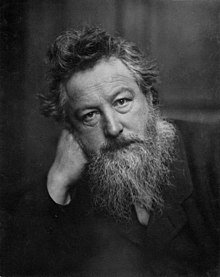
The Half Of Life Gone is a poem by William Morris. This page includes the poem text, poet information, related topics, comments, and similar poems.
Write your comment about The Half Of Life Gone poem by William Morris
Best Poems of William Morris