Captain Craig Poem Rhyme Scheme and Analysis
Rhyme Scheme: A BCDEFGHIJKLMNOPQRSCT FUVWXIMNYZA2ZB2KC2D2 E2F2DG2H2I2J2DC2K2L2 UM2N2 O2P2Q2R2MJS2T2U2V2MW 2X2Y2Z2K2M2JEUHT2EA3 L2AT2IT2B3C3C2FD3E3S 2F3G3H3C2KKI3M2J3D3K 3L3IM3N3O3P3Q3R3 AGT2S3T3M2VU3I2EN3F2 O3V3T2T2SVW3EV2VX3C3 SESC2W3SY3Z3GDSN3Y2S SKET2A4F2T2FX3UN3F3K T2B4X3F2T2SB4X3 F3Q2C4D4C2SRSSE4EQSF 4G4SN3H4| I | A |
| - | |
| I doubt if ten men in all Tilbury Town | B |
| Had ever shaken hands with Captain Craig | C |
| Or called him by his name or looked at him | D |
| So curiously or so concernedly | E |
| As they had looked at ashes but a few | F |
| Say five or six of us had found somehow | G |
| The spark in him and we had fanned it there | H |
| Choked under like a jest in Holy Writ | I |
| By Tilbury prudence He had lived his life | J |
| And in his way had shared with all mankind | K |
| Inveterate leave to fashion of himself | L |
| By some resplendent metamorphosis | M |
| Whatever he was not And after time | N |
| When it had come sufficiently to pass | O |
| That he was going patch clad through the streets | P |
| Weak dizzy chilled and half starved he had laid | Q |
| Some nerveless fingers on a prudent sleeve | R |
| And told the sleeve in furtive confidence | S |
| Just how it was My name is Captain Craig | C |
| He said and I must eat The sleeve moved on | T |
| And after it moved others one or two | F |
| For Captain Craig before the day was done | U |
| Got back to the scant refuge of his bed | V |
| And shivered into it without a curse | W |
| Without a murmur even He was cold | X |
| And old and hungry but the worst of it | I |
| Was a forlorn familiar consciousness | M |
| That he had failed again There was a time | N |
| When he had fancied if worst came to worst | Y |
| And he could do no more that he might ask | Z |
| Of whom he would But once had been enough | A2 |
| And soon there would be nothing more to ask | Z |
| He was himself and he had lost the speed | B2 |
| He started with and he was left behind | K |
| There was no mystery no tragedy | C2 |
| And if they found him lying on his back | D2 |
| Stone dead there some sharp morning as they might | E2 |
| Well once upon a time there was a man | F2 |
| Es war einmal ein K nig if it pleased him | D |
| And he was right there were no men to blame | G2 |
| There was just a false note in the Tilbury tune | H2 |
| A note that able bodied men might sound | I2 |
| Hosannas on while Captain Craig lay quiet | J2 |
| They might have made him sing by feeding him | D |
| Till he should march again but probably | C2 |
| Such yielding would have jeopardized the rhythm | K2 |
| They found it more melodious to shout | L2 |
| Right on with unmolested adoration | U |
| To keep the tune as it had always been | M2 |
| To trust in God and let the Captain starve | N2 |
| - | |
| He must have understood that afterwards | O2 |
| When we had laid some fuel to the spark | P2 |
| Of him and oxidized it for he laughed | Q2 |
| Out loud and long at us to feel it burn | R2 |
| And then for gratitude made game of us | M |
| You are the resurrection and the life | J |
| He said and I the hymn the Brahmin sings | S2 |
| O Fuscus and we ll go no more a roving | T2 |
| We were not quite accoutred for a blast | U2 |
| Of any lettered nonchalance like that | V2 |
| And some of us the five or six of us | M |
| Who found him out were singularly struck | W2 |
| But soon there came assurance of his lips | X2 |
| Like phrases out of some sweet instrument | Y2 |
| Man s hand had never fitted that he felt | Z2 |
| No penitential shame for what had come | K2 |
| No virtuous regret for what had been | M2 |
| But rather a joy to find it in his life | J |
| To be an outcast usher of the soul | E |
| For such as had good courage of the Sun | U |
| To pattern Love The Captain had one chair | H |
| And on the bottom of it like a king | T2 |
| For longer time than I dare chronicle | E |
| Sat with an ancient ease and eulogized | A3 |
| His opportunity My friends got out | L2 |
| Like brokers out of Arcady but I | A |
| May be for fascination of the thing | T2 |
| Or may be for the larger humor of it | I |
| Stayed listening unwearied and unstung | T2 |
| When they were gone the Captain s tuneful ooze | B3 |
| Of rhetoric took on a change he smiled | C3 |
| At me and then continued earnestly | C2 |
| Your friends have had enough of it but you | F |
| For a motive hardly vindicated yet | D3 |
| By prudence or by conscience have remained | E3 |
| And that is very good for I have things | S2 |
| To tell you things that are not words alone | F3 |
| Which are the ghosts of things but something firmer | G3 |
| First would I have you know for every gift | H3 |
| Or sacrifice there are or there may be | C2 |
| Two kinds of gratitude the sudden kind | K |
| We feel for what we take the larger kind | K |
| We feel for what we give Once we have learned | I3 |
| As much as this we know the truth has been | M2 |
| Told over to the world a thousand times | J3 |
| But we have had no ears to listen yet | D3 |
| For more than fragments of it we have heard | K3 |
| A murmur now and then and echo here | L3 |
| And there and we have made great music of it | I |
| And we have made innumerable books | M3 |
| To please the Unknown God Time throws away | N3 |
| Dead thousands of them but the God that knows | O3 |
| No death denies not one the books all count | P3 |
| The songs all count and yet God s music has | Q3 |
| No modes his language has no adjectives | R3 |
| - | |
| You may be right you may be wrong said I | A |
| But what has this that you are saying now | G |
| This nineteenth century Nirvana talk | T2 |
| To do with you and me The Captain raised | S3 |
| His hand and held it westward where a patched | T3 |
| And unwashed attic window filtered in | M2 |
| What barren light could reach us and then said | V |
| With a suave complacent resonance There shines | U3 |
| The sun Behold it We go round and round | I2 |
| And wisdom comes to us with every whirl | E |
| We count throughout the circuit We may say | N3 |
| The child is born the boy becomes a man | F2 |
| The man does this and that and the man goes | O3 |
| But having said it we have not said much | V3 |
| Not very much Do I fancy or you think | T2 |
| That it will be the end of anything | T2 |
| When I am gone There was a soldier once | S |
| Who fought one fight and in that fight fell dead | V |
| Sad friends went after and they brought him home | W3 |
| And had a brass band at his funeral | E |
| As you should have at mine and after that | V2 |
| A few remembered him But he was dead | V |
| They said and they should have their friend no more | X3 |
| However there was once a starveling child | C3 |
| A ragged vested little incubus | S |
| Born to be cuffed and frighted out of all | E |
| Capacity for childhood s happiness | S |
| Who started out one day quite suddenly | C2 |
| To drown himself He ran away from home | W3 |
| Across the clover fields and through the woods | S |
| And waited on a rock above a stream | Y3 |
| Just like a kingfisher He might have dived | Z3 |
| Or jumped or he might not but anyhow | G |
| There came along a man who looked at him | D |
| With such an unexpected friendliness | S |
| And talked with him in such a common way | N3 |
| That life grew marvelously different | Y2 |
| What he had lately known for sullen trunks | S |
| And branches and a world of tedious leaves | S |
| Was all transmuted a faint forest wind | K |
| That once had made the loneliest of all | E |
| Sad sounds on earth made now the rarest music | T2 |
| And water that had called him once to death | A4 |
| Now seemed a flowing glory And that man | F2 |
| Born to go down a soldier did this thing | T2 |
| Not much to do Not very much I grant you | F |
| Good occupation for a sonneteer | X3 |
| Or for a clown or for a clergyman | U |
| But small work for a soldier By the way | N3 |
| When you are weary sometimes of your own | F3 |
| Utility I wonder if you find | K |
| Occasional great comfort pondering | T2 |
| What power a man has in him to put forth | B4 |
| Of all the many marvelous things that are | X3 |
| Nothing is there more marvelous than man | F2 |
| Said Sophocles and he lived long ago | T2 |
| And earth unending ancient of the gods | S |
| He furrows and the ploughs go back and forth | B4 |
| Turning the broken mould year after year | X3 |
| - | |
| I turned a little furrow of my own | F3 |
| Once on a time and everybody laughed | Q2 |
| As I laughed afterwards and I doubt not | C4 |
| The First Intelligence which we have drawn | D4 |
| In our competitive humility | C2 |
| As if it went forever on two legs | S |
| Had some diversion of it I believe | R |
| God s humor is the music of the spheres | S |
| But even as we draft omnipotence | S |
| Itself to our own image we pervert | E4 |
| The courage of an infinite ideal | E |
| To finite resignation You have made | Q |
| The cement of your churches out of tears | S |
| And ashes and the fabric will not stand | F4 |
| The shifted walls that you have coaxed and shored | G4 |
| So long with unavailing compromise | S |
| Will crumble down to dust and blow away | N3 |
| And younger dust will follow after them | H4 |
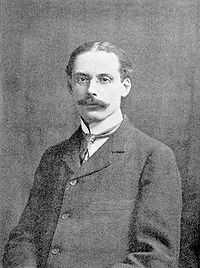
Edwin Arlington Robinson
(1)
Poem topics: , Print This Poem , Rhyme Scheme
Submit Spanish Translation
Submit German Translation
Submit French Translation
About Captain Craig
Captain Craig is a poem by Edwin Arlington Robinson. This page includes the poem text, poet information, related topics, comments, and similar poems.
Write your comment about Captain Craig poem by Edwin Arlington Robinson
Best Poems of Edwin Arlington Robinson