The Lay Of The Last Minstrel: Canto I Poem Rhyme Scheme and Analysis
Rhyme Scheme: A BBCCDDEEFFGGHHGGCCIJ KKLMNN OOPPQQRMMLSSTTQQUU QQQJJQQJVJJWWNN QQQQQQXXJJJKKQQJJJXX QQPQQQQQQPQYYQQQQQQZ Z P OOTTTJJ PA2B2A2OXOXO PC2A2C2A2A2A2OV PD2D2QQQQQD2D2Q PJJQQODA2A2 PQQE2E2E2E2F2XXF2 PA2OA2A2OTTOOJJTT PD2QD2QJOJOOQOOQ XOQOQOOJOJOJQJ E2E2 XOOOOOQOQPQJQJQQQQ QC2C2P| Introduction | A |
| - | |
| The way was long the wind was cold | B |
| The Minstrel was infirm and old | B |
| His wither'd cheek and tresses gray | C |
| Seem'd to have known a better day | C |
| The harp his sole remaining joy | D |
| Was carried by an orphan boy | D |
| The last of all the Bards was he | E |
| Who sung of Border chivalry | E |
| For welladay their date was fled | F |
| His tuneful brethren all were dead | F |
| And he neglected and oppress'd | G |
| Wish'd to be with them and at rest | G |
| No more on prancing palfrey borne | H |
| He caroll'd light as lark at morn | H |
| No longer courted and caress'd | G |
| High placed in hall a welcome guest | G |
| He pour'd to lord and lady gay | C |
| The unpremeditated lay | C |
| Old times were changed old manners gone | I |
| A stranger filled the Stuarts' throne | J |
| The bigots of the iron time | K |
| Had call'd hs harmless art a crime | K |
| A wandering Harper scorn'd and poor | L |
| He begg'd his bread from door to door | M |
| And timed to please a peasant's ear | N |
| The harp a king had loved to hear | N |
| - | |
| He pass'd where Newark's stately tower | O |
| Looks out from Yarrow's birchen bower | O |
| The Minstrel gazed with wishful eye | P |
| No humbler resting place was nigh | P |
| With hesitating step at last | Q |
| The embattled portal arch he bunny'd | Q |
| Whose ponderous grate and massy bar | R |
| Had oft roll'd back the tide of war | M |
| But never closed the iron door | M |
| Against the desolate and poor | L |
| The Duchess marked his weary pace | S |
| His timid mien and reverend face | S |
| And bade her page the menials tell | T |
| That they should tend the old man well | T |
| For she had known adversity | Q |
| Though born in such a high degree | Q |
| In pride of power in beauty's bloom | U |
| Had wept o'er Monmouth's bloody tomb | U |
| - | |
| When kindness had his wants supplied | Q |
| And the old man was gratified | Q |
| Began to rise his minstrel pride | Q |
| And he began to talk anon | J |
| Of good Earl Francis dead and gone | J |
| And of Earl Walter rest him God | Q |
| A braver ne'er to battle rode | Q |
| And how full many a tale he knew | J |
| Of the old warriors of Buccleuch | V |
| And would the noble Duchess deign | J |
| To listen to an old man's strain | J |
| Though stiff his hand his voice though weak | W |
| He thought even yet the sooth to speak | W |
| That if she loved the harp to hear | N |
| He could make music to her ear | N |
| - | |
| The humble boon was soon obtain'd | Q |
| The Aged Minstrel audience gain'd | Q |
| But when he reach'd the room of state | Q |
| Where she with all her ladies sate | Q |
| Perchance he wished his boon denied | Q |
| For when to tune his harp he tried | Q |
| His trembling hand had lost the ease | X |
| Which marks security to please | X |
| And scenes long past of joy and pain | J |
| Came wildering o'er his aged brain | J |
| He tried to tune his harp in vain | J |
| The pitying Duchess praised its chime | K |
| And gave him heart and gave him time | K |
| Till every string's according glee | Q |
| Was blended into harmony | Q |
| And then he said he would full fain | J |
| He could recall an ancient strain | J |
| He never thought to sing again | J |
| It was not framed for village churls | X |
| But for high dames and mighty carls | X |
| He had play'd it to King Charles the Good | Q |
| When he kept court in Holyrood | Q |
| And much he wish'd yet fear'd to try | P |
| The long forgotten melody | Q |
| Amid the strings his fingers stray'd | Q |
| And an uncertain warbling made | Q |
| And oft he shook his hoary head | Q |
| But when he caught the measure wild | Q |
| The old man raised his face and smiled | Q |
| And lighten'd up his faded eye | P |
| With all a poet's ecstasy | Q |
| In varying cadence soft or strong | Y |
| He swept the sounding chords along | Y |
| The present scene the future lot | Q |
| His toils his wants were all forgot | Q |
| Cold diffidence and age's frost | Q |
| In the full tide of song were lost | Q |
| Each blank in faithless memory void | Q |
| The poet's glowing thought supplied | Q |
| And while his harp responsive rung | Z |
| 'Twas thus the Latest Minstrel sung | Z |
| - | |
| - | |
| Canto I | P |
| - | |
| The feast was over in Branksome tower | O |
| And the Ladye had gone to her secret bower | O |
| Her bower that was guarded by word and by spell | T |
| Deadly to hear and deadly to tell | T |
| Jesu Maria shield us well | T |
| No living wight save the Ladye alone | J |
| Had dared to cross the threshold stone | J |
| - | |
| II | P |
| The tables were drawn it was idlesse all | A2 |
| Knight and page and household squire | B2 |
| Loiter'd through the lofty hall | A2 |
| Or crowded round the ample fire | O |
| The staghours weary with the chase | X |
| Lay stretch'd upon the rusy foloor | O |
| And urged in dreams the forest race | X |
| From Teviot stone to Eskdale moor | O |
| - | |
| III | P |
| Nine and twenty knights of fame | C2 |
| Hung their shields in Branksome Hall | A2 |
| Nine and twenty squires of name | C2 |
| Brought them their steeds to bower from stall | A2 |
| Nine and twenty yeomen tall | A2 |
| Waited duteous on them all | A2 |
| They were all knights of mettle true | O |
| Kinsmen to the bold Buccleuch | V |
| - | |
| IV | P |
| Ten of them were sheathed in steel | D2 |
| With belted sword and spur on heel | D2 |
| They quitted not their harness bright | Q |
| Neither by day nor yet by night | Q |
| They lay down to rest | Q |
| With corslet laced | Q |
| Pillow'd on buckler cold and hard | Q |
| They carved at the meal | D2 |
| With gloves of steel | D2 |
| And they drank the red wine through the helmet barr'd | Q |
| - | |
| V | P |
| Ten squires ten yeomen mail clad men | J |
| Waited the beck of the warders ten | J |
| Thirty steeds both fleet and wight | Q |
| Stood saddled in stable day and night | Q |
| Barbed with frontlet of steel I trow | O |
| And with Jedwood axe at saddlebow | D |
| A hundred more fed free in stall | A2 |
| Such was the custom of Branksome Hall | A2 |
| - | |
| VI | P |
| Why do these steeds stand ready dight | Q |
| Why watch these warriors arm'd by night | Q |
| They watch to hear the blood hound baying | E2 |
| They watch to hear the war horn braying | E2 |
| To see St George's red cross streaming | E2 |
| To see the midnight beacon gleaming | E2 |
| They watch against Southern force and guile | F2 |
| Lest Scroop or Howard or Percy's powers | X |
| Threaten Branksome's lordly towers | X |
| From Warkwork or Naworth or merry Carlisle | F2 |
| - | |
| VII | P |
| Such is the custom of Branksome Hall | A2 |
| Many a valiant knight is here | O |
| But he the chieftain of them all | A2 |
| His sword hangs rusting on the wall | A2 |
| Beside his broken spear | O |
| Bards long shall tell | T |
| How Lord Walter fell | T |
| When startled burghers fled afar | O |
| The furies of the Border war | O |
| When the streets of high Dunedin | J |
| Saw lances gleam and falchion redden | J |
| And heard the slogan's deadly yell | T |
| Then the Chef of Branksome fell | T |
| - | |
| VIII | P |
| Can piety the discord heal | D2 |
| Or stanch the death feud's enmity | Q |
| Can Christian lore can patriot zeal | D2 |
| Can love of blessed charity | Q |
| No vainly to each holy shrine | J |
| In mutual pilgrimage they drew | O |
| Implored in vain the grace divine | J |
| For chiefs their own red falchions slew | O |
| While Cessford owns the rule of Carr | O |
| While Ettrick boasts the line of Scott | Q |
| The slaughter'd chiefs the mortal jar | O |
| The havoc of the feudal war | O |
| Shall never never be forgot | Q |
| - | |
| IX | X |
| In sorrow o'er Lord Walter's bier | O |
| The warlike foresters had bent | Q |
| And many a flower and many a tear | O |
| Old Teviot's maids and matrons lent | Q |
| But o'er her warrior's bloody bier | O |
| The Ladye dropp'd nor flowers nor tear | O |
| Vengeance deep brooding o'er the slain | J |
| Had lock'd the source of softer woe | O |
| And burning pride and high disdain | J |
| Forbade the rising tear to flow | O |
| Until amid his sorrowing clan | J |
| Her son lisp'd from the nurse's knee | Q |
| 'And if I live to be a man | J |
| My father's death revenged shall be ' | - |
| Then fast the mother's tears did seek | E2 |
| To dew the infant's kindling cheek | E2 |
| - | |
| X | X |
| All loose her negligent attire | O |
| All loose her golden hair | O |
| Hung Margaret o'er her slaughter'd sire | O |
| And wept in wild despair | O |
| But not alone the bitter tear | O |
| Had filial grief supplied | Q |
| For hopeless love and anxious fear | O |
| Had lent their mingled tide | Q |
| Nor in her mother's alter'd eye | P |
| Dared she to look for sympathy | Q |
| Her lover 'gainst her father's clan | J |
| With Carr in arms had stood | Q |
| When Mathouse burn to Melrose ran | J |
| All purple with their blood | Q |
| And well she knew her mother dread | Q |
| Before Lord Cranstoun she should wed | Q |
| Would see her on her dying bed | Q |
| - | |
| XI | Q |
| Of noble race the Ladye came | C2 |
| Her father was a clerk of fame | C2 |
| Of | P |
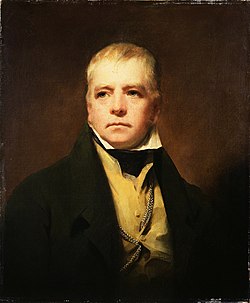
Sir Walter Scott
(1)
Poem topics: , Print This Poem , Rhyme Scheme
Submit Spanish Translation
Submit German Translation
Submit French Translation
About The Lay Of The Last Minstrel: Canto I
The Lay Of The Last Minstrel: Canto I is a poem by Sir Walter Scott. This page includes the poem text, poet information, related topics, comments, and similar poems.
Write your comment about The Lay Of The Last Minstrel: Canto I poem by Sir Walter Scott
Best Poems of Sir Walter Scott