Marmion: Canto Ii. - The Convent Poem Rhyme Scheme and Analysis
Rhyme Scheme: A BCBBCDDEFFEGGHIFHJJK K A LLMNNNMFNFOAAOFFAANN PPP A NNQQRSAATTFFUUTTVWNN NNNN A FFPXYYOOFFTTNNNNYY A PPNNNNNNZZA2A2 A ZFAAFFPPNNB2A2C2C2 A NNNNNNNTTD2D2AAOO A NNE2E2OOFFF2G2C2C2FF TTH2XI2I2PPC2C2OO G2 C2C2FFOOG2G2NNG2G2FF G2 NNFFC2J2J2C2C2C2G2G2 OONNFFC2C2NNWWNN G2 EENNG2I2I2G2FFK2PPPK 2NNNNNN G2 NNHG2G2| I | A |
| - | |
| The breeze which swept away the smoke | B |
| Round Norham Castle rolled | C |
| When all the loud artillery spoke | B |
| With lightning flash and thunder stroke | B |
| As Marmion left the hold | C |
| It curled not Tweed alone that breeze | D |
| For far upon Northumbrian seas | D |
| It freshly blew and strong | E |
| Where from high Whitby's cloistered pile | F |
| Bound to St Cuthbert's holy isle | F |
| It bore a barque along | E |
| Upon the gale she stooped her side | G |
| And bounded o'er the swelling tide | G |
| As she were dancing home | H |
| The merry seamen laughed to see | I |
| Their gallant ship so lustily | F |
| Furrow the green sea foam | H |
| Much joyed they in their honoured freight | J |
| For on the deck in chair of state | J |
| The Abbess of Saint Hilda placed | K |
| With five fair nuns the galley graced | K |
| - | |
| II | A |
| - | |
| 'Twas sweet to see these holy maids | L |
| Like birds escaped to greenwood shades | L |
| Their first flight from the cage | M |
| How timid and how curious too | N |
| For all to them was strange and new | N |
| And all the common sights they view | N |
| Their wonderment engage | M |
| One eyed the shrouds and swelling sail | F |
| With many a benedicite | N |
| One at the rippling surge grew pale | F |
| And would for terror pray | O |
| Then shrieked because the sea dog nigh | A |
| His round black head and sparkling eye | A |
| Reared o'er the foaming spray | O |
| And one would still adjust her veil | F |
| Disordered by the summer gale | F |
| Perchance lest some more worldly eye | A |
| Her dedicated charms might spy | A |
| Perchance because such action graced | N |
| Her fair turned arm and slender waist | N |
| Light was each simple bosom there | P |
| Save two who ill might pleasure share | P |
| The Abbess and the novice Clare | P |
| - | |
| III | A |
| - | |
| The Abbess was of noble blood | N |
| But early took the veil and hood | N |
| Ere upon life she cast a look | Q |
| Or knew the world that she forsook | Q |
| Fair too she was and kind had been | R |
| As she was fair but ne'er had seen | S |
| For her a timid lover sigh | A |
| Nor knew the influence of her eye | A |
| Love to her ear was but a name | T |
| Combined with vanity and shame | T |
| Her hopes her fears her joys were all | F |
| Bounded within the cloister wall | F |
| The deadliest sin her mind could reach | U |
| Was of monastic rule the breach | U |
| And her ambition's highest aim | T |
| To emulate Saint Hilda's fame | T |
| For this she gave her ample dower | V |
| To raise the convent's eastern tower | W |
| For this with carving rare and quaint | N |
| She decked the chapel of the saint | N |
| And gave the relic shrine of cost | N |
| With ivory and gems embossed | N |
| The poor her convent's bounty blest | N |
| The pilgrim in its halls found rest | N |
| - | |
| IV | A |
| - | |
| Black was her garb her rigid rule | F |
| Reformed on Benedictine school | F |
| Her cheek was pale her form was spare | P |
| Vigils and penitence austere | X |
| Had early quenched the light of youth | Y |
| But gentle was the dame in sooth | Y |
| Though vain of her religious sway | O |
| She loved to see her maids obey | O |
| Yet nothing stern was she in cell | F |
| And the nuns loved their Abbess well | F |
| Sad was this voyage to the dame | T |
| Summoned to Lindisfarne she came | T |
| There with Saint Cuthbert's Abbot old | N |
| And Tynemouth's Prioress to hold | N |
| A chapter of Saint Benedict | N |
| For inquisition stern and strict | N |
| On two apostates from the faith | Y |
| And if need were to doom to death | Y |
| - | |
| V | A |
| - | |
| Nought say I here of Sister Clare | P |
| Save this that she was young and fair | P |
| As yet a novice unprofessed | N |
| Lovely and gentle but distressed | N |
| She was betrothed to one now dead | N |
| Or worse who had dishonoured fled | N |
| Her kinsmen bade her give her hand | N |
| To one who loved her for her land | N |
| Herself almost heart broken now | Z |
| Was bent to take the vestal vow | Z |
| And shroud within Saint Hilda's gloom | A2 |
| Her blasted hopes and withered bloom | A2 |
| - | |
| VI | A |
| - | |
| She sate upon the galley's prow | Z |
| And seemed to mark the waves below | F |
| Nay seemed so fixed her look and eye | A |
| To count them as they glided by | A |
| She saw them not 'twas seeming all | F |
| Far other scene her thoughts recall | F |
| A sun scorched desert waste and bare | P |
| Nor waves nor breezes murmured there | P |
| There saw she where some careless hand | N |
| O'er a dead corpse had heaped the sand | N |
| To hide it till the jackals come | B2 |
| To tear it from the scanty tomb | A2 |
| See what a woful look was given | C2 |
| As she raised up her eyes to heaven | C2 |
| - | |
| VII | A |
| - | |
| Lovely and gentle and distressed | N |
| These charms might tame the fiercest breast | N |
| Harpers have sung and poets told | N |
| That he in fury uncontrolled | N |
| The shaggy monarch of the wood | N |
| Before a virgin fair and good | N |
| Hath pacified his savage mood | N |
| But passions in the human frame | T |
| Oft put the lion's rage to shame | T |
| And jealousy by dark intrigue | D2 |
| With sordid avarice in league | D2 |
| Had practised with their bowl and knife | A |
| Against the mourner's harmless life | A |
| This crime was charged 'gainst those who lay | O |
| Prisoned in Cuthbert's islet grey | O |
| - | |
| VIII | A |
| - | |
| And now the vessel skirts the strand | N |
| Of mountainous Northumberland | N |
| Towns towers and halls successive rise | E2 |
| And catch the nuns' delighted eyes | E2 |
| Monkwearmouth soon behind them lay | O |
| And Tynemouth's priory and bay | O |
| They marked amid her trees the hall | F |
| Of lofty Seaton Delaval | F |
| They saw the Blythe and Wansbeck floods | F2 |
| Rush to the sea through sounding woods | G2 |
| They passed the tower of Widderington | C2 |
| Mother of many a valiant son | C2 |
| At Coquet Isle their beads they tell | F |
| To the good saint who owned the cell | F |
| Then did the Alne attention claim | T |
| And Warkworth proud of Percy's name | T |
| And next they crossed themselves to hear | H2 |
| The whitening breakers sound so near | X |
| Where boiling through the rocks they roar | I2 |
| On Dunstanborough's caverned shore | I2 |
| Thy tower proud Bamborough marked they there | P |
| King Ida's castle huge and square | P |
| From its tall rock look grimly down | C2 |
| And on the swelling ocean frown | C2 |
| Then from the coast they bore away | O |
| And reached the Holy Island's bay | O |
| - | |
| IX | G2 |
| - | |
| The tide did now its floodmark gain | C2 |
| And girdled in the saint's domain | C2 |
| For with the flow and ebb its style | F |
| Varies from continent to isle | F |
| Dry shod o'er sands twice every day | O |
| The pilgrims to the shrine find way | O |
| Twice every day the waves efface | G2 |
| Of staves and sandalled feet the trace | G2 |
| As to the port the galley flew | N |
| Higher and higher rose to view | N |
| The castle with its battled walls | G2 |
| The ancient monastery's halls | G2 |
| A solemn huge and dark red pile | F |
| Placed on the margin of the isle | F |
| - | |
| X | G2 |
| - | |
| In Saxon strength that abbey frowned | N |
| With massive arches broad and round | N |
| That rose alternate row and row | F |
| On ponderous columns short and low | F |
| Built ere the art was known | C2 |
| By pointed aisle and shafted stalk | J2 |
| The arcades of an alleyed walk | J2 |
| To emulate in stone | C2 |
| On the deep walls the heathen Dane | C2 |
| Had poured his impious rage in vain | C2 |
| And needful was such strength to these | G2 |
| Exposed to the tempestuous seas | G2 |
| Scourged by the winds' eternal sway | O |
| Open to rovers fierce as they | O |
| Which could twelve hundred years withstand | N |
| Winds waves and northern pirates' hand | N |
| Not but that portions of the pile | F |
| Rebuilded in a later style | F |
| Showed where the spoiler's hand had been | C2 |
| Not hut the wasting sea breeze keen | C2 |
| Had worn the pillar's carving quaint | N |
| And mouldered in his niche the saint | N |
| And rounded with consuming power | W |
| The pointed angles of each tower | W |
| Yet still entire the abbey stood | N |
| Like veteran worn but unsubdued | N |
| - | |
| XI | G2 |
| - | |
| Soon as they neared his turrets strong | E |
| The maidens raised Saint Hilda's song | E |
| And with the sea wave and the wind | N |
| Their voices sweetly shrill combined | N |
| And made harmonious close | G2 |
| Then answering from the sandy shore | I2 |
| Half drowned amid the breakers' roar | I2 |
| According chorus rose | G2 |
| Down to the haven of the isle | F |
| The monks and nuns in order file | F |
| From Cuthbert's cloisters grim | K2 |
| Banner and cross and relics there | P |
| To meet Saint Hilda's maids they bare | P |
| And as they caught the sounds on air | P |
| They echoed back the hymn | K2 |
| The islanders in joyous mood | N |
| Rushed emulously through the flood | N |
| To hale the barque to land | N |
| Conspicuous by her veil and hood | N |
| Signing the cross the Abbess stood | N |
| And blessed them with her hand | N |
| - | |
| XII | G2 |
| - | |
| Suppose we now the welcome said | N |
| Suppose the convent banquet made | N |
| All through the holy dome | H |
| Through cloister aisle and gallery | G2 |
| Wherever ves | G2 |
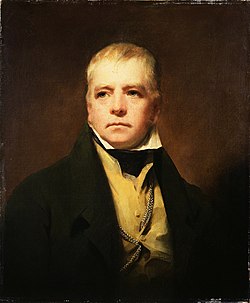
Sir Walter Scott
(1)
Poem topics: , Print This Poem , Rhyme Scheme
Submit Spanish Translation
Submit German Translation
Submit French Translation
About Marmion: Canto Ii. - The Convent
Marmion: Canto Ii. - The Convent is a poem by Sir Walter Scott. This page includes the poem text, poet information, related topics, comments, and similar poems.
Write your comment about Marmion: Canto Ii. - The Convent poem by Sir Walter Scott
Best Poems of Sir Walter Scott