The Scholar-gipsy Poem Rhyme Scheme and Analysis
Rhyme Scheme: ABCBCACDDC CEFEGCHIIH CJKJKCLCCL MNOPQMQCCQ RSCSCRACC QCHCHQTUUT VWXWXVYZZY CA2CA2CCB2LLB2 QC2HD2HQSEEA2 E2F2G2H2G2I2SJ2J2S ZK2CK2CK2HSSH CHK2HVCVHHV VL2M2L2M2VN2VVN2 SK2O2K2O2SCP2P2C K2SK2SK2K2SCCS L2Q2CQ2CL2CR2R2C K2CK2CK2K2S2K2K2S2 K2K2CK2CK2SK2| Go for they call you shepherd from the hill | A |
| Go shepherd and untie the wattled cotes | B |
| No longer leave thy wistful flock unfed | C |
| Nor let thy bawling fellows rack their throats | B |
| Nor the cropp'd herbage shoot another head | C |
| But when the fields are still | A |
| And the tired men and dogs all gone to rest | C |
| And only the white sheep are sometimes seen | D |
| Cross and recross the strips of moon blanch'd green | D |
| Come shepherd and again begin the quest | C |
| - | |
| Here where the reaper was at work of late | C |
| In this high field's dark corner where he leaves | E |
| His coat his basket and his earthen cruse | F |
| And in the sun all morning binds the sheaves | E |
| Then here at noon comes back his stores to use | G |
| Here will I sit and wait | C |
| While to my ear from uplands far away | H |
| The bleating of the folded flocks is borne | I |
| With distant cries of reapers in the corn | I |
| All the live murmur of a summer's day | H |
| - | |
| Screen'd is this nook o'er the high half reap'd field | C |
| And here till sun down shepherd will I be | J |
| Through the thick corn the scarlet poppies peep | K |
| And round green roots and yellowing stalks I see | J |
| Pale pink convolvulus in tendrils creep | K |
| And air swept lindens yield | C |
| Their scent and rustle down their perfumed showers | L |
| Of bloom on the bent grass where I am laid | C |
| And bower me from the August sun with shade | C |
| And the eye travels down to Oxford's towers | L |
| - | |
| And near me on the grass lies Glanvil's book | M |
| Come let me read the oft read tale again | N |
| The story of the Oxford scholar poor | O |
| Of pregnant parts and quick inventive brain | P |
| Who tired of knocking at preferment's door | Q |
| One summer morn forsook | M |
| His friends and went to learn the gipsy lore | Q |
| And roam'd the world with that wild brotherhood | C |
| And came as most men deem'd to little good | C |
| But came to Oxford and his friends no more | Q |
| - | |
| But once years after in the country lanes | R |
| Two scholars whom at college erst he knew | S |
| Met him and of his way of life enquired | C |
| Whereat he answer'd that the gipsy crew | S |
| His mates had arts to rule as they desired | C |
| The workings of men's brains | R |
| And they can bind them to what thoughts they will | A |
| 'And I ' he said 'the secret of their art | C |
| When fully learn'd will to the world impart | C |
| But it needs heaven sent moments for this skill ' | - |
| - | |
| This said he left them and return'd no more | Q |
| But rumours hung about the country side | C |
| That the lost Scholar long was seen to stray | H |
| Seen by rare glimpses pensive and tongue tied | C |
| In hat of antique shape and cloak of grey | H |
| The same the gipsies wore | Q |
| Shepherds had met him on the Hurst in spring | T |
| At some lone alehouse in the Berkshire moors | U |
| On the warm ingle bench the smock frock'd boors | U |
| Had found him seated at their entering | T |
| - | |
| But 'mid their drink and clatter he would fly | V |
| And I myself seem half to know thy looks | W |
| And put the shepherds wanderer on thy trace | X |
| And boys who in lone wheatfields scare the rooks | W |
| I ask if thou hast pass'd their quiet place | X |
| Or in my boat I lie | V |
| Moor'd to the cool bank in the summer heats | Y |
| 'Mid wide grass meadows which the sunshine fills | Z |
| And watch the warm green muffled Cumner hills | Z |
| And wonder if thou haunt'st their shy retreats | Y |
| - | |
| For most I know thou lov'st retired ground | C |
| Thee at the ferry Oxford riders blithe | A2 |
| Returning home on summer nights have met | C |
| Crossing the stripling Thames at Bab lock hithe | A2 |
| Trailing in the cool stream thy fingers wet | C |
| As the punt's rope chops round | C |
| And leaning backward in a pensive dream | B2 |
| And fostering in thy lap a heap of flowers | L |
| Pluck'd in shy fields and distant Wychwood bowers | L |
| And thine eyes resting on the moonlit stream | B2 |
| - | |
| And then they land and thou art seen no more | Q |
| Maidens who from the distant hamlets come | C2 |
| To dance around the Fyfield elm in May | H |
| Oft through the darkening fields have seen thee roam | D2 |
| Or cross a stile into the public way | H |
| Oft thou hast given them store | Q |
| Of flowers the frail leaf'd white anemony | S |
| Dark bluebells drench'd with dews of summer eves | E |
| And purple orchises with spotted leaves | E |
| But none hath words she can report of thee | A2 |
| - | |
| And above Godstow Bridge when hay time's here | E2 |
| In June and many a scythe in sunshine flames | F2 |
| Men who through those wide fields of breezy grass | G2 |
| Where black wing'd swallows haunt the glittering Thames | H2 |
| To bathe in the abandon'd lasher pass | G2 |
| Have often pass'd thee near | I2 |
| Sitting upon the river bank o'ergrown | S |
| Mark'd thine outlandish garb thy figure spare | J2 |
| Thy dark vague eyes and soft abstracted air | J2 |
| But when they came from bathing thou wast gone | S |
| - | |
| At some lone homestead in the Cumner hills | Z |
| Where at her open door the housewife darns | K2 |
| Thou hast been seen or hanging on a gate | C |
| To watch the threshers in the mossy barns | K2 |
| Children who early range these slopes and late | C |
| For cresses from the rills | K2 |
| Have known thee eyeing all an April day | H |
| The springing pasture and the feeding kine | S |
| And mark'd thee when the stars come out and shine | S |
| Through the long dewy grass move slow away | H |
| - | |
| In autumn on the skirts of Bagley Wood | C |
| Where most the gipsies by the turf edged way | H |
| Pitch their smoked tents and every bush you see | K2 |
| With scarlet patches tagg'd and shreds of grey | H |
| Above the forest ground called Thessaly | V |
| The blackbird picking food | C |
| Sees thee nor stops his meal nor fears at all | V |
| So often has he known thee past him stray | H |
| Rapt twirling in thy hand a wither'd spray | H |
| And waiting for the spark from heaven to fall | V |
| - | |
| And once in winter on the causeway chill | V |
| Where home through flooded fields foot travellers go | L2 |
| Have I not pass'd thee on the wooden bridge | M2 |
| Wrapt in thy cloak and battling with the snow | L2 |
| Thy face tow'rd Hinksey and its wintry ridge | M2 |
| And thou has climb'd the hill | V |
| And gain'd the white brow of the Cumner range | N2 |
| Turn'd once to watch while thick the snowflakes fall | V |
| The line of festal light in Christ Church hall | V |
| Then sought thy straw in some sequester'd grange | N2 |
| - | |
| But what I dream Two hundred years are flown | S |
| Since first thy story ran through Oxford halls | K2 |
| And the grave Glanvil did the tale inscribe | O2 |
| That thou wert wander'd from the studious walls | K2 |
| To learn strange arts and join a gipsy tribe | O2 |
| And thou from earth art gone | S |
| Long since and in some quiet churchyard laid | C |
| Some country nook where o'er thy unknown grave | P2 |
| Tall grasses and white flowering nettles wave | P2 |
| Under a dark red fruited yew tree's shade | C |
| - | |
| No no thou hast not felt the lapse of hours | K2 |
| For what wears out the life of mortal men | S |
| 'Tis that from change to change their being rolls | K2 |
| 'Tis that repeated shocks again again | S |
| Exhaust the energy of strongest souls | K2 |
| And numb the elastic powers | K2 |
| Till having used our nerves with bliss and teen | S |
| And tired upon a thousand schemes our wit | C |
| To the just pausing Genius we remit | C |
| Our worn out life and are what we have been | S |
| - | |
| Thou hast not lived why should'st thou perish so | L2 |
| Thou hadst one aim one business one desire | Q2 |
| Else wert thou long since number'd with the dead | C |
| Else hadst thou spent like other men thy fire | Q2 |
| The generations of thy peers are fled | C |
| And we ourselves shall go | L2 |
| But thou possessest an immortal lot | C |
| And we imagine thee exempt from age | R2 |
| And living as thou liv'st on Glanvil's page | R2 |
| Because thou hadst what we alas have not | C |
| - | |
| For early didst thou leave the world with powers | K2 |
| Fresh undiverted to the world without | C |
| Firm to their mark not spent on other things | K2 |
| Free from the sick fatigue the languid doubt | C |
| Which much to have tried in much been baffled brings | K2 |
| O life unlike to ours | K2 |
| Who fluctuate idly without term or scope | S2 |
| Of whom each strives nor knows for what he strives | K2 |
| And each half lives a hundred different lives | K2 |
| Who wait like thee but not like thee in hope | S2 |
| - | |
| Thou waitest for the spark from heaven and we | K2 |
| Light half believers of our casual creeds | K2 |
| Who never deeply felt nor clearly will'd | C |
| Whose insight never has borne fruit in deeds | K2 |
| Whose vague resolves never have been fulfill'd | C |
| For whom each year we see | K2 |
| Breeds new beginnings disappointments new | S |
| Who hes | K2 |
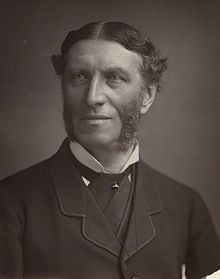
Matthew Arnold
(1)
Poem topics: , Print This Poem , Rhyme Scheme
Submit Spanish Translation
Submit German Translation
Submit French Translation
About The Scholar-gipsy
The Scholar-gipsy is a poem by Matthew Arnold. This page includes the poem text, poet information, related topics, comments, and similar poems.
Write your comment about The Scholar-gipsy poem by Matthew Arnold
Best Poems of Matthew Arnold