The Famous Speech-maker Of England Poem Rhyme Scheme and Analysis
Rhyme Scheme: A B CDEEFFF G HIEEJKLEELJJEMNNOOPP PQQQQBBDBBDNNRSTUDDE QVVQWWWQQXYZXNNA2A2P B2EEEQQBBC2C2QQQQND2 WWNE2E2IDDB2F2BBG2G2 QQH2DH2NVNI2J2J2QK2L 2K2QA2QXM2N2IE2NNTTT EEEJ2F2EEIUIB2O2QQQP 2Q2I2NE2E2E2R2R2TS2Q QS2NNDDEBBBBEQQQQQVV VEEENNNQQHHHT2T2DDQQ U2ENNU2V2W2BBQQDDNNJ 2X2Y2J2Z2Z2NNNXQQNNE NNPPNNBBEE N NNNNDDPPPDDPP| OR BARON ALIAS BARREN LOVEL'S CHARGE AT THE ASSIZES AT EXON APRIL IO | A |
| - | |
| Risum teneatis HORAT Ars Poetica | B |
| - | |
| From London to Exon | C |
| By special direction | D |
| Came down the world's wonder | E |
| Sir Salathiel Blunder | E |
| With a quoif on his head | F |
| As heavy as lead | F |
| And thus opened and said | F |
| - | |
| Gentlemen of the Grand Inquest | G |
| - | |
| Her majesty mark it | H |
| Appointed this circuit | I |
| For me and my brother | E |
| Before any other | E |
| To execute laws | J |
| As you may suppose | K |
| Upon such as offenders have been | L |
| So then not to scatter | E |
| More words on the matter | E |
| We're beginning just now to begin | L |
| But hold first and foremost I must enter a clause | J |
| As touching and concerning our excellent laws | J |
| Which here I aver | E |
| Are better by far | M |
| Than them all put together abroad and beyond sea | N |
| For I ne'er read the like nor e'er shall I fancy | N |
| The laws of our land | O |
| Don't abet but withstand | O |
| Inquisition and thrall | P |
| And whatever may gall | P |
| And fire withal | P |
| And sword that devours | Q |
| Wherever it scowers | Q |
| They preserve liberty and property for which men pull and haul so | Q |
| And they are made for the support of good government also | Q |
| Her majesty knowing | B |
| The best way of going | B |
| To work for the weal of the nation | D |
| Builds on that rock | B |
| Which all storms will mock | B |
| Since Religion is made the foundation | D |
| And I tell you to boot she | N |
| Resolves resolutely | N |
| No promotion to give | R |
| To the best man alive | S |
| In church or in state | T |
| I'm an instance of that | U |
| But only to such of a good reputation | D |
| For temper morality and moderation | D |
| Fire fire a wild fire | E |
| Which greatly disturbs the queen's peace | Q |
| Lies running about | V |
| And if you don't put it out | V |
| That's positive will increase | Q |
| And any may spy | W |
| With half of an eye | W |
| That it comes from our priests and Papistical fry | W |
| Ye have one of these fellows | Q |
| With fiery bellows | Q |
| Come hither to blow and to puff here | X |
| Who having been toss'd | Y |
| From pillar to post | Z |
| At last vents his rascally stuff here | X |
| Which to such as are honest must sound very oddly | N |
| When they ought to preach nothing but what's very godly | N |
| As here from this place we charge you to do | A2 |
| As ye'll answer to man besides ye know who | A2 |
| Ye have a Diocesan l | P |
| But I don't know the man | B2 |
| The man's a good liver | E |
| They tell me however | E |
| And fiery never | E |
| Now ye under pullers | Q |
| That wear such black colours | Q |
| How well would it look | B |
| If his measures ye took | B |
| Thus for head and for rump | C2 |
| Together to jump | C2 |
| For there's none deserve places | Q |
| I speak't to their faces | Q |
| But men of such graces | Q |
| And I hope he will never prefer any asses | Q |
| Especially when I'm so confident on't | N |
| For reasons of state that her majesty won't | D2 |
| Know I myself I | W |
| Was present and by | W |
| At the great trial where there was a great company | N |
| Of a turbulent preacher who cursedly hot | E2 |
| Turn'd the fifth of November even the gun powder plot | E2 |
| Into impudent railing and the devil knows what | I |
| Exclaiming like fury it was at Paul's London | D |
| How church was in danger and like to be undone | D |
| And so gave the lie to gracious Queen Anne | B2 |
| And which is far worse to our parliament men | F2 |
| And then printed a book | B |
| Into which men did look | B |
| True he made a good text | G2 |
| But what follow'd next | G2 |
| Was nought but a dunghill of sordid abuses | Q |
| Instead of sound doctrine with proofs to't and uses | Q |
| It was high time of day | H2 |
| That such inflammation | D |
| should be extinguish'd without more delay | H2 |
| But there was no engine could possibly do't | N |
| Till the commons play'd theirs and so quite put it out | V |
| So the man was tried for't | N |
| Before highest court | I2 |
| Now it's plain to be seen | J2 |
| It's his principles I mean | J2 |
| Where they suffer'd this noisy and his lawyers to bellow | Q |
| Which over the blade | K2 |
| A poor punishment had | L2 |
| For that racket he made | K2 |
| By which ye may know | Q |
| They thought as I do | A2 |
| That he is but at best an inconsiderable fellow | Q |
| Upon this I find here | X |
| And everywhere | M2 |
| That the country rides rusty and is all out of gear | N2 |
| And for what | I |
| May I not | E2 |
| In opinion vary | N |
| And think the contrary | N |
| But it must create | T |
| Unfriendly debate | T |
| And disunion straight | T |
| When no reason in nature | E |
| Can be given of the matter | E |
| Any more than for shapes or for different stature | E |
| If you love your dear selves your religion or queen | J2 |
| Ye ought in good manners to be peaceable men | F2 |
| For nothing disgusts her | E |
| Like making a bluster | E |
| And your making this riot | I |
| Is what she could cry at | U |
| Since all her concern's for our welfare and quiet | I |
| I would ask any man | B2 |
| Of them all that maintain | O2 |
| Their passive obedience | Q |
| With such mighty vehemence | Q |
| That damn'd doctrine I trow | Q |
| What he means by it ho' | P2 |
| To trump it up now | Q2 |
| Or to tell me in short | I2 |
| What need there is for't | N |
| Ye may say I am hot | E2 |
| I say I am not | E2 |
| Only warm as the subject on which I am got | E2 |
| There are those alive yet | R2 |
| If they do not forget | R2 |
| May remember what mischiefs it did church and state | T |
| Or at least must have heard | S2 |
| The deplorable calamities | Q |
| It drew upon families | Q |
| About sixty years ago and upward | S2 |
| And now do ye see | N |
| Whoever they be | N |
| That make such an oration | D |
| In our Protestant nation | D |
| As though church was all on a fire | E |
| With whatever cloak | B |
| They may cover their talk | B |
| And wheedle the folk | B |
| That the oaths they have took | B |
| As our governors strictly require | E |
| I say they are men and I'm a judge ye all know | Q |
| That would our most excellent laws overthrow | Q |
| For the greater part of them to church never go | Q |
| Or what's much the same it by very great chance is | Q |
| If e'er they partake of her wise ordinances | Q |
| Their aim is no doubt | V |
| Were they made to speak out | V |
| To pluck down the queen that they make all this rout | V |
| And to set up moreover | E |
| A bastardly brother | E |
| Or at least to prevent the House of Hanover | E |
| Ye gentlemen of the jury | N |
| What means all this fury | N |
| Of which I'm inform'd by good hands I assure ye | N |
| This insulting of persons by blows and rude speeches | Q |
| And breaking of windows which you know maketh breaches | Q |
| Ye ought to resent it | H |
| And in duty present it | H |
| For the law is against it | H |
| Not only the actors engaged in this job | T2 |
| But those that encourage and set on the mob | T2 |
| The mob a paw word and which I ne'er mention | D |
| But must in this place for the sake of distinction | D |
| I hear that some bailiffs and some justices | Q |
| Have strove what they could all this rage to suppress | Q |
| And I hope many more | U2 |
| Will exert the like power | E |
| Since none will depend on't | N |
| Get a jot of preferment | N |
| But men of this kidney as I told you before | U2 |
| I'll tell you a story Once upon a time | V2 |
| Some hot headed fellows must needs take a whim | W2 |
| And so were so weak | B |
| Twas a mighty mistake | B |
| To pull down and abuse | Q |
| Bawdy houses and stews | Q |
| Who tried by the laws of the realm for high treason | D |
| Were hang'd drawn and quarter'd for that very reason | D |
| When the time came about | N |
| For us all to set out | N |
| We went to take leave of the queen | J2 |
| Where were great men of worth | X2 |
| Great heads and so forth | Y2 |
| The greatest that ever were seen | J2 |
| And she gave us a large | Z2 |
| And particular charge | Z2 |
| Good part on't indeed | N |
| Is quite out of my head | N |
| But I remember she said | N |
| We should recommend peace and good neighbourhood wheresoever we came and so I do here | X |
| For that every one not only men and their wives | Q |
| Should do all that they can to lead peaceable lives | Q |
| And told us withal that she fully expected | N |
| A special account how ye all stood affected | N |
| When we've been at St James's you'll hear of the matter | E |
| Again then I charge ye | N |
| Ye men of the clergy | N |
| That ye follow the track all | P |
| Of your own Bishop Blackall | P |
| And preach as ye should | N |
| What's savoury and good | N |
| And together all cling | B |
| As it were in a string | B |
| Not falling out quarrelling one with another | E |
| Now we're treating with Monsieur that son of his mother | E |
| - | |
| Then proceeded on the common matters of the law and concluded | N |
| - | |
| Once more and no more since few words are best | N |
| I charge you all present by way of request | N |
| If ye honour as I do | N |
| Our dear royal widow | N |
| Or have any compassion | D |
| For church or the nation | D |
| And would live a long while | P |
| In continual smile | P |
| And eat roast and boil | P |
| And not be forgotten | D |
| When ye are dead and rotten | D |
| That ye would be quiet and peaceably dwell | P |
| And never fall out but p s all in a quill | P |
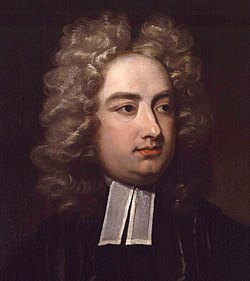
Jonathan Swift
(1)
Poem topics: , Print This Poem , Rhyme Scheme
Submit Spanish Translation
Submit German Translation
Submit French Translation
<< At An Inn In England (epigrams On Windows) Poem
Epigram By Mr. Bowyer Intended To Be Placed Under The Head Of Gulliver. 1733 Poem>>
About The Famous Speech-maker Of England
The Famous Speech-maker Of England is a poem by Jonathan Swift. This page includes the poem text, poet information, related topics, comments, and similar poems.
Write your comment about The Famous Speech-maker Of England poem by Jonathan Swift
Best Poems of Jonathan Swift