Tale Xxi Poem Rhyme Scheme and Analysis
Rhyme Scheme: A BBCCDDEEAAFFGGHHIIGG AAJJKLMMNNO PPQQRRSSTTC UU VWWUU BBXXYYZZVVA2A2B2B2KL C2C2IID2D2A2A2E2E2F2 F2G2H2 G2GGI2I2J2J2K2K2I2I2 I2L2L2M2M2IIN2N2O2O2 BBBH2H2CCYYP2 YCCYYYYYYCCYYQ2Q2YYK 2 YYYYBBR Q2R2YYYYCCYYE2E2AAYY YYYYYYYS2S2BBYYRRYYE 2| The Learned Boy | A |
| - | |
| An honest man was Farmer Jones and true | B |
| He did by all as all by him should do | B |
| Grave cautious careful fond of gain was he | C |
| Yet famed for rustic hospitality | C |
| Left with his children in a widow'd state | D |
| The quiet man submitted to his fate | D |
| Though prudent matrons waited for his call | E |
| With cool forbearance he avoided all | E |
| Though each profess'd a pure maternal joy | A |
| By kind attention to his feeble boy | A |
| And though a friendly Widow knew no rest | F |
| Whilst neighbour Jones was lonely and distress'd | F |
| Nay though the maidens spoke in tender tone | G |
| Their hearts' concern to see him left alone | G |
| Jones still persisted in that cheerless life | H |
| As if 'twere sin to take a second wife | H |
| Oh 'tis a precious thing when wives are dead | I |
| To find such numbers who will serve instead | I |
| And in whatever state a man be thrown | G |
| 'Tis that precisely they would wish their own | G |
| Left the departed infants then their joy | A |
| Is to sustain each lovely girl and boy | A |
| Whatever calling his whatever trade | J |
| To that their chief attention has been paid | J |
| His happy taste in all things they approve | K |
| His friends they honour and his food they love | L |
| His wish for order prudence in affairs | M |
| An equal temper thank their stars are theirs | M |
| In fact it seem'd to be a thing decreed | N |
| And fix'd as fate that marriage must succeed | N |
| Yet some like Jones with stubborn hearts and | O |
| - | |
| hard | P |
| Can hear such claims and show them no regard | P |
| Soon as our Farmer like a general found | Q |
| By what strong foes he was encompass'd round | Q |
| Engage he dared not and he could not fly | R |
| But saw his hope in gentle parley lie | R |
| With looks of kindness then and trembling heart | S |
| He met the foe and art opposed to art | S |
| Now spoke that foe insidious gentle tones | T |
| And gentle looks assumed for Farmer Jones | T |
| 'Three girls ' the Widow cried 'a lively three | C |
| To govern well indeed it cannot be ' | - |
| 'Yes ' he replied 'it calls for pains and care | U |
| But I must bear it ' 'Sir you cannot bear | U |
| Your son is weak and asks a mother's eye ' | - |
| 'That my kind friend a father's may supply ' | - |
| 'Such growing griefs your very soul will tease ' | - |
| 'To grieve another would not give me ease | V |
| I have a mother ' 'She poor ancient soul | W |
| Can she the spirits of the young control | W |
| Can she thy peace promote partake thy care | U |
| Procure thy comforts and thy sorrows share | U |
| Age is itself impatient uncontroll'd ' | - |
| But wives like mothers must at length be old ' | - |
| Thou hast shrewd servants they are evils sore ' | - |
| Yet a shrewd mistress might afflict me more ' | - |
| Wilt thou not be a weary wailing man ' | - |
| Alas and I must bear it as I can ' | - |
| Resisted thus the Widow soon withdrew | B |
| That in his pride the Hero might pursue | B |
| And off his wonted guard in some retreat | X |
| Find from a foe prepared entire defeat | X |
| But he was prudent for he knew in flight | Y |
| These Parthian warriors turn again and fight | Y |
| He but at freedom not at glory aim'd | Z |
| And only safety by his caution claim'd | Z |
| Thus when a great and powerful state decrees | V |
| Upon a small one in its love to seize | V |
| It vows in kindness to protect defend | A2 |
| And be the fond ally the faithful friend | A2 |
| It therefore wills that humbler state to place | B2 |
| Its hopes of safety in a fond embrace | B2 |
| Then must that humbler state its wisdom prove | K |
| By kind rejection of such pressing love | L |
| Must dread such dangerous friendship to commence | C2 |
| And stand collected in its own defence | C2 |
| Our Farmer thus the proffer'd kindness fled | I |
| And shunn'd the love that into bondage led | I |
| The Widow failing fresh besiegers came | D2 |
| To share the fate of this retiring dame | D2 |
| And each foresaw a thousand ills attend | A2 |
| The man that fled from so discreet a friend | A2 |
| And pray'd kind soul that no event might make | E2 |
| The harden'd heart of Farmer Jones to ache | E2 |
| But he still govern'd with resistless hand | F2 |
| And where he could not guide he would command | F2 |
| With steady view in course direct he steer'd | G2 |
| And his fair daughters loved him though they | H2 |
| - | |
| fear'd | G2 |
| Each had her school and as his wealth was known | G |
| Each had in time a household of her own | G |
| The Boy indeed was at the Grandam's side | I2 |
| Humour'd and train'd her trouble and her pride | I2 |
| Companions dear with speech and spirits mild | J2 |
| The childish widow and the vapourish child | J2 |
| This nature prompts minds uninform'd and weak | K2 |
| In such alliance ease and comfort seek | K2 |
| Push'd by the levity of youth aside | I2 |
| The cares of man his humour or his pride | I2 |
| They feel in their defenceless state allied | I2 |
| The child is pleased to meet regard from age | L2 |
| The old are pleased e'en children to engage | L2 |
| And all their wisdom scorn'd by proud mankind | M2 |
| They love to pour into the ductile mind | M2 |
| By its own weakness into error led | I |
| And by fond age with prejudices fed | I |
| The Father thankful for the good he had | N2 |
| Yet saw with pain a whining timid Lad | N2 |
| Whom he instructing led through cultured fields | O2 |
| To show what Man performs what Nature yields | O2 |
| But Stephen listless wander'd from the view | B |
| From beasts he fled for butterflies he flew | B |
| And idly gazed about in search of something new | B |
| The lambs indeed he loved and wish'd to play | H2 |
| With things so mild so harmless and so gay | H2 |
| Best pleased the weakest of the flock to see | C |
| With whom he felt a sickly sympathy | C |
| Meantime the Dame was anxious day and night | Y |
| To guide the notions of her babe aright | Y |
| And on the favourite mind to throw her glimmering | P2 |
| - | |
| light | Y |
| Her Bible stories she impress'd betimes | C |
| And fill'd his head with hymns and holy rhymes | C |
| On powers unseen the good and ill she dwelt | Y |
| And the poor Boy mysterious terrors felt | Y |
| From frightful dreams he waking sobb'd in dread | Y |
| Till the good lady came to guard his bed | Y |
| The Father wish'd such errors to correct | Y |
| But let them pass in duty and respect | Y |
| But more it grieved his worthy mind to see | C |
| That Stephen never would a farmer be | C |
| In vain he tried the shiftless Lad to guide | Y |
| And yet 'twas time that something should be tried | Y |
| He at the village school perchance might gain | Q2 |
| All that such mind could gather and retain | Q2 |
| Yet the good Dame affirm'd her favourite child | Y |
| Was apt and studious though sedate and mild | Y |
| 'That he on many a learned point could speak | K2 |
| And that his body not his mind was weak ' | - |
| The Father doubted but to school was sent | Y |
| The timid Stephen weeping as he went | Y |
| There the rude lads compell'd the child to fight | Y |
| And sent him bleeding to his home at night | Y |
| At this the Grandam more indulgent grew | B |
| And bade her Darling 'shun the beastly crew | B |
| Whom Satan ruled and who were sure to lie | R |
| Howling in torments when they came to die ' | - |
| This was such comfort that in high disdain | Q2 |
| He told their fate and felt their blows again | R2 |
| Yet if the Boy had not a hero's heart | Y |
| Within the school he play'd a better part | Y |
| He wrote a clean fine hand and at his slate | Y |
| With more success than many a hero sate | Y |
| He thought not much indeed but what depends | C |
| On pains and care was at his fingers' ends | C |
| This had his Father's praise who now espied | Y |
| A spark of merit with a blaze of pride | Y |
| And though a farmer he would never make | E2 |
| He might a pen with some advantage take | E2 |
| And as a clerk that instrument employ | A |
| So well adapted to a timid boy | A |
| A London Cousin soon a place obtain'd | Y |
| Easy but humble little could be gain'd | Y |
| The time arrived when youth and age must part | Y |
| Tears in each eye and sorrow in each heart | Y |
| The careful Father bade his Son attend | Y |
| To all his duties and obey his Friend | Y |
| To keep his church and there behave aright | Y |
| As one existing in his Maker's sight | Y |
| Till acts to habits led and duty to delight | Y |
| 'Then try my boy as quickly as you can | S2 |
| T'assume the looks and spirit of a man | S2 |
| I say be honest faithful civil true | B |
| And this you may and yet have courage too | B |
| Heroic men their country's boast and pride | Y |
| Have fear'd their God and nothing fear'd beside | Y |
| While others daring yet imbecile fly | R |
| The power of man and that of God defy | R |
| Be manly then though mild for sure as fate | Y |
| Thou art my Stephen too effeminate | Y |
| Here take my purse and make | E2 |
George Crabbe
(1)
Poem topics: , Print This Poem , Rhyme Scheme
Submit Spanish Translation
Submit German Translation
Submit French Translation
About Tale Xxi
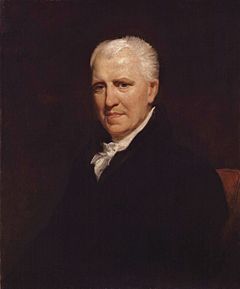
Tale Xxi is a poem by George Crabbe. This page includes the poem text, poet information, related topics, comments, and similar poems.
Write your comment about Tale Xxi poem by George Crabbe
Best Poems of George Crabbe