The Merchant's Tale Poem Rhyme Scheme and Analysis
Rhyme Scheme: ABCDCCEFGHIJCKLFMMNM CMDMFFO PM F Q MDMMMMPPRSTTMMDDMMUU PFVMFFFM MMPAPFMWMMMMMDMXDMPP F MPPDDDMMMPPPM WWMFWMFPMMMMWMMMLTDD MMVMPPMMPAYFMZPMPPA2 A2DDMMMPWMPPWMA2A2ST MMMMPPMMCDM| 'Weeping and wailing care and other sorrow | A |
| I have enough on even and on morrow ' | B |
| Quoth the Merchant 'and so have other mo' | C |
| That wedded be I trow that it be so believe | D |
| For well I wot it fareth so by me | C |
| I have a wife the worste that may be | C |
| For though the fiend to her y coupled were | E |
| She would him overmatch I dare well swear | F |
| Why should I you rehearse in special | G |
| Her high malice she is a shrew at all thoroughly in | H |
| There is a long and large difference everything wicked | I |
| Betwixt Griselda's greate patience | J |
| And of my wife the passing cruelty | C |
| Were I unbounden all so may I the thrive | K |
| I woulde never eft come in the snare again | L |
| We wedded men live in sorrow and care | F |
| Assay it whoso will and he shall find | M |
| That I say sooth by Saint Thomas of Ind | M |
| As for the more part I say not all | N |
| God shielde that it shoulde so befall forbid | M |
| Ah good Sir Host I have y wedded be | C |
| These moneths two and more not pardie | M |
| And yet I trow that he that all his life believe | D |
| Wifeless hath been though that men would him rive wound | M |
| Into the hearte could in no mannere | F |
| Telle so much sorrow as I you here | F |
| Could tellen of my wife's cursedness ' wickedness | O |
| - | |
| 'Now ' quoth our Host 'Merchant so God you bless | P |
| Since ye so muche knowen of that art | M |
| Full heartily I pray you tell us part ' | - |
| 'Gladly ' quoth he 'but of mine owen sore | F |
| For sorry heart I telle may no more ' | - |
| - | |
| - | |
| THE TALE | Q |
| - | |
| - | |
| Whilom there was dwelling in Lombardy | M |
| A worthy knight that born was at Pavie | D |
| In which he liv'd in great prosperity | M |
| And forty years a wifeless man was he | M |
| And follow'd aye his bodily delight | M |
| On women where as was his appetite | M |
| As do these fooles that be seculeres | P |
| And when that he was passed sixty years | P |
| Were it for holiness or for dotage | R |
| I cannot say but such a great corage inclination | S |
| Hadde this knight to be a wedded man | T |
| That day and night he did all that he can | T |
| To espy where that he might wedded be | M |
| Praying our Lord to grante him that he | M |
| Mighte once knowen of that blissful life | D |
| That is betwixt a husband and his wife | D |
| And for to live under that holy bond | M |
| With which God firste man and woman bond | M |
| 'None other life ' said he 'is worth a bean | U |
| For wedlock is so easy and so clean | U |
| That in this world it is a paradise ' | - |
| Thus said this olde knight that was so wise | P |
| And certainly as sooth as God is king true | F |
| To take a wife it is a glorious thing | V |
| And namely when a man is old and hoar especially | M |
| Then is a wife the fruit of his treasor | F |
| Then should he take a young wife and a fair | F |
| On which he might engender him an heir | F |
| And lead his life in joy and in solace mirth delight | M |
| Whereas these bachelors singen 'Alas ' | - |
| When that they find any adversity | M |
| In love which is but childish vanity | M |
| And truely it sits well to be so becomes befits | P |
| That bachelors have often pain and woe | A |
| On brittle ground they build and brittleness | P |
| They finde when they weene sickerness think that there | F |
| They live but as a bird or as a beast is security | M |
| In liberty and under no arrest check control | W |
| Whereas a wedded man in his estate | M |
| Liveth a life blissful and ordinate | M |
| Under the yoke of marriage y bound | M |
| Well may his heart in joy and bliss abound | M |
| For who can be so buxom as a wife obedient | M |
| Who is so true and eke so attentive | D |
| To keep him sick and whole as is his make care for mate | M |
| For weal or woe she will him not forsake | X |
| She is not weary him to love and serve | D |
| Though that he lie bedrid until he sterve die | M |
| And yet some clerkes say it is not so | P |
| Of which he Theophrast is one of tho those | P |
| What force though Theophrast list for to lie what matter | F |
| - | |
| 'Take no wife ' quoth he 'for husbandry thrift | M |
| As for to spare in household thy dispence | P |
| A true servant doth more diligence | P |
| Thy good to keep than doth thine owen wife | D |
| For she will claim a half part all her life | D |
| And if that thou be sick so God me save | D |
| Thy very friendes or a true knave servant | M |
| Will keep thee bet than she that waiteth aye ahways waits to | M |
| After thy good and hath done many a day ' inherit your property | M |
| This sentence and a hundred times worse | P |
| Writeth this man there God his bones curse | P |
| But take no keep of all such vanity notice | P |
| Defy Theophrast and hearken to me distrust | M |
| - | |
| A wife is Godde's gifte verily | W |
| All other manner giftes hardily truly | W |
| As handes rentes pasture or commune common land | M |
| Or mebles all be giftes of fortune furniture | F |
| That passen as a shadow on the wall | W |
| But dread thou not if plainly speak I shall doubt | M |
| A wife will last and in thine house endure | F |
| Well longer than thee list paraventure perhaps | P |
| Marriage is a full great sacrament | M |
| He which that hath no wife I hold him shent ruined | M |
| He liveth helpless and all desolate | M |
| I speak of folk in secular estate who are not | M |
| And hearken why I say not this for nought of the clergy | W |
| That woman is for manne's help y wrought | M |
| The highe God when he had Adam maked | M |
| And saw him all alone belly naked | M |
| God of his greate goodness saide then | L |
| Let us now make a help unto this man | T |
| Like to himself and then he made him Eve | D |
| Here may ye see and hereby may ye preve prove | D |
| That a wife is man s help and his comfort | M |
| His paradise terrestre and his disport | M |
| So buxom and so virtuous is she obedient complying | V |
| They muste needes live in unity | M |
| One flesh they be and one blood as I guess | P |
| With but one heart in weal and in distress | P |
| A wife Ah Saint Mary ben'dicite | M |
| How might a man have any adversity | M |
| That hath a wife certes I cannot say | P |
| The bliss the which that is betwixt them tway | A |
| There may no tongue it tell or hearte think | Y |
| If he be poor she helpeth him to swink labour | F |
| She keeps his good and wasteth never a deal whit | M |
| All that her husband list her liketh well pleaseth | Z |
| She saith not ones Nay when he saith Yea | P |
| 'Do this ' saith he 'All ready Sir ' saith she | M |
| O blissful order wedlock precious | P |
| Thou art so merry and eke so virtuous | P |
| And so commended and approved eke | A2 |
| That every man that holds him worth a leek | A2 |
| Upon his bare knees ought all his life | D |
| To thank his God that him hath sent a wife | D |
| Or elles pray to God him for to send | M |
| A wife to last unto his life's end | M |
| For then his life is set in sickerness security | M |
| He may not be deceived as I guess | P |
| So that he work after his wife's rede counsel | W |
| Then may he boldely bear up his head | M |
| They be so true and therewithal so wise | P |
| For which if thou wilt worken as the wise | P |
| Do alway so as women will thee rede counsel | W |
| Lo how that Jacob as these clerkes read | M |
| By good counsel of his mother Rebecc' | A2 |
| Bounde the kiddes skin about his neck | A2 |
| For which his father's benison he wan benediction | S |
| Lo Judith as the story telle can | T |
| By good counsel she Godde's people kept | M |
| And slew him Holofernes while he slept | M |
| Lo Abigail by good counsel how she | M |
| Saved her husband Nabal when that he | M |
| Should have been slain And lo Esther also | P |
| By counsel good deliver'd out of woe | P |
| The people of God and made him Mardoche | M |
| Of Assuere enhanced for to be advanced in dignity | M |
| There is nothing in gree superlative of higher esteem | C |
| As saith Senec above a humble wife | D |
| Suffer thy wife's tongue as Cato bit | M |
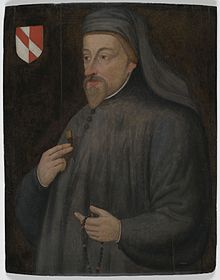
Geoffrey Chaucer
(1)
Poem topics: , Print This Poem , Rhyme Scheme
Submit Spanish Translation
Submit German Translation
Submit French Translation
About The Merchant's Tale
The Merchant's Tale is a poem by Geoffrey Chaucer. This page includes the poem text, poet information, related topics, comments, and similar poems.
Write your comment about The Merchant's Tale poem by Geoffrey Chaucer
Best Poems of Geoffrey Chaucer