The Canterbury Tales Poem Rhyme Scheme and Analysis
Rhyme Scheme: A B CCBBD DEEFF GGGGC CAACC HHFFC CCCCC EEGGG GEEII EEEEI GI IGG EEGGI IFFII EEJGF FGGCC CCIIE EHHII GGDDK CGGCC CCCCC CCCCC CGEEC CGGHH IIIIE EGGAA EEAAG GAALL CCEEC CCCII GGGGC C CCCC GGCCG GIIEE KII IAG| PROLOGUE | A |
| - | |
| Here bygynneth the Book of the tales of Caunterbury | B |
| - | |
| Whan that Aprille with hise shoures soote | C |
| The droghte of March hath perced to the roote | C |
| And bathed every veyne in swich licour | B |
| Of which vertu engendred is the flour | B |
| Whan Zephirus eek with his swete breeth | D |
| - | |
| Inspired hath in every holt and heeth | D |
| The tendre croppes and the yonge sonne | E |
| Hath in the Ram his halfe cours yronne | E |
| And smale foweles maken melodye | F |
| That slepen al the nyght with open eye | F |
| - | |
| So priketh hem Nature in hir corages | G |
| Thanne longen folk to goon on pilgrimages | G |
| And palmeres for to seken straunge strondes | G |
| To ferne halwes kowthe in sondry londes | G |
| And specially from every shires ende | C |
| - | |
| Of Engelond to Caunturbury they wende | C |
| The hooly blisful martir for the seke | A |
| That hem hath holpen whan that they were seeke | A |
| Bifil that in that seson on a day | C |
| In Southwerk at the Tabard as I lay | C |
| - | |
| Redy to wenden on my pilgrymage | H |
| To Caunterbury with ful devout corage | H |
| At nyght were come into that hostelrye | F |
| Wel nyne and twenty in a compaignye | F |
| Of sondry folk by aventure yfalle | C |
| - | |
| In felaweshipe and pilgrimes were they alle | C |
| That toward Caunterbury wolden ryde | C |
| The chambres and the stables weren wyde | C |
| And wel we weren esed atte beste | C |
| And shortly whan the sonne was to reste | C |
| - | |
| So hadde I spoken with hem everychon | E |
| That I was of hir felaweshipe anon | E |
| And made forward erly for to ryse | G |
| To take our wey ther as I yow devyse | G |
| But nathelees whil I have tyme and space | G |
| - | |
| Er that I ferther in this tale pace | G |
| Me thynketh it acordaunt to resoun | E |
| To telle yow al the condicioun | E |
| Of ech of hem so as it semed me | I |
| And whiche they weren and of what degree | I |
| - | |
| And eek in what array that they were inne | E |
| And at a knyght than wol I first bigynne | E |
| A knyght ther was and that a worthy man | E |
| That fro the tyme that he first bigan | E |
| To riden out he loved chivalrie | I |
| - | |
| Trouthe and honour fredom and curteisie | G |
| Ful worthy was he in his lordes werre | I |
| - | |
| And therto hadde he riden no man ferre | I |
| As wel in Cristendom as in Hethenesse | G |
| And evere honoured for his worthynesse | G |
| - | |
| At Alisaundre he was whan it was wonne | E |
| Ful ofte tyme he hadde the bord bigonne | E |
| Aboven alle nacions in Pruce | G |
| In Lettow hadde he reysed and in Ruce | G |
| No cristen man so ofte of his degree | I |
| - | |
| In Gernade at the seege eek hadde he be | I |
| Of Algezir and riden in Belmarye | F |
| At Lyeys was he and at Satalye | F |
| Whan they were wonne and in the Grete See | I |
| At many a noble arive hadde he be | I |
| - | |
| At mortal batailles hadde he been fiftene | E |
| And foughten for oure feith at Tramyssene | E |
| In lystes thries and ay slayn his foo | J |
| This ilke worthy knyght hadde been also | G |
| Somtyme with the lord of Palatye | F |
| - | |
| Agayn another hethen in Turkye | F |
| And everemoore he hadde a sovereyn prys | G |
| And though that he were worthy he was wys | G |
| And of his port as meeke as is a mayde | C |
| He nevere yet no vileynye ne sayde | C |
| - | |
| In al his lyf unto no maner wight | C |
| He was a verray parfit gentil knyght | C |
| But for to tellen yow of his array | I |
| His hors weren goode but he was nat gay | I |
| Of fustian he wered a gypoun | E |
| - | |
| Al bismotered with his habergeoun | E |
| For he was late ycome from his viage | H |
| And wente for to doon his pilgrymage | H |
| With hym ther was his sone a yong Squier | I |
| A lovyere and a lusty bacheler | I |
| - | |
| With lokkes crulle as they were leyd in presse | G |
| Of twenty yeer of age he was I gesse | G |
| Of his stature he was of evene lengthe | D |
| And wonderly delyvere and of greet strengthe | D |
| And he hadde been somtyme in chyvachie | K |
| - | |
| In Flaundres in Artoys and Pycardie | C |
| And born hym weel as of so litel space | G |
| In hope to stonden in his lady grace | G |
| Embrouded was he as it were a meede | C |
| Al ful of fresshe floures whyte and reede | C |
| - | |
| Syngynge he was or floytynge al the day | C |
| He was as fressh as is the monthe of May | C |
| Short was his gowne with sleves longe and wyde | C |
| Wel koude he sitte on hors and faire ryde | C |
| He koude songes make and wel endite | C |
| - | |
| Juste and eek daunce and weel purtreye and write | C |
| So hoote he lovede that by nyghtertale | C |
| He slepte namoore than dooth a nyghtyngale | C |
| Curteis he was lowely and servysable | C |
| And carf biforn his fader at the table | C |
| - | |
| A Yeman hadde he and servantz namo | C |
| At that tyme for hym liste ride soo | G |
| And he was clad in cote and hood of grene | E |
| A sheef of pecok arwes bright and kene | E |
| Under his belt he bar ful thriftily | C |
| - | |
| Wel koude he dresse his takel yemanly | C |
| Hise arwes drouped noght with fetheres lowe | G |
| And in his hand he baar a myghty bowe | G |
| A not heed hadde he with a broun visage | H |
| Of woodecraft wel koude he al the usage | H |
| - | |
| Upon his arm he baar a gay bracer | I |
| And by his syde a swerd and a bokeler | I |
| And on that oother syde a gay daggere | I |
| Harneised wel and sharpe as point of spere | I |
| A Cristophere on his brest of silver sheene | E |
| - | |
| An horn he bar the bawdryk was of grene | E |
| A Forster was he soothly as I gesse | G |
| Ther was also a Nonne a Prioresse | G |
| That of hir smylyng was ful symple and coy | A |
| Hir gretteste ooth was but by Seinte Loy | A |
| - | |
| And she was cleped Madame Eglentyne | E |
| Ful weel she soong the service dyvyne | E |
| Entuned in hir nose ful semely | A |
| And Frenssh she spak ful faire and fetisly | A |
| After the scole of Stratford atte Bowe | G |
| - | |
| For Frenssh of Parys was to hir unknowe | G |
| At mete wel ytaught was she withalle | A |
| She leet no morsel from hir lippes falle | A |
| Ne wette hir fyngres in hir sauce depe | L |
| Wel koude she carie a morsel and wel kepe | L |
| - | |
| That no drope ne fille upon hir brist | C |
| In curteisie was set ful muche hir list | C |
| Hire over lippe wyped she so clene | E |
| That in hir coppe ther was no ferthyng sene | E |
| Of grece whan she dronken hadde hir draughte | C |
| - | |
| Ful semely after hir mete she raughte | C |
| And sikerly she was of greet desport | C |
| And ful plesaunt and amyable of port | C |
| And peyned hir to countrefete cheere | I |
| Of court and been estatlich of manere | I |
| - | |
| And to ben holden digne of reverence | G |
| But for to speken of hir conscience | G |
| She was so charitable and so pitous | G |
| She wolde wepe if that she saugh a mous | G |
| Kaught in a trappe if it were deed or bledde | C |
| - | |
| Of smale houndes hadde she that she fedde | C |
| - | |
| With rosted flessh or milk and wastel breed | C |
| But soore weep she if oon of hem were deed | C |
| Or if men smoot it with a yerde smerte | C |
| And al was conscience and tendre herte | C |
| - | |
| Ful semyly hir wympul pynched was | G |
| Hire nose tretys hir eyen greye as glas | G |
| Hir mouth ful smal and therto softe and reed | C |
| But sikerly she hadde a fair forheed | C |
| It was almoost a spanne brood I trowe | G |
| - | |
| For hardily she was nat undergrowe | G |
| Ful fetys was hir cloke as I was war | I |
| Of smal coral aboute hir arm she bar | I |
| A peire of bedes gauded al with grene | E |
| An theron heng a brooch of gold ful sheene | E |
| - | |
| On which ther was first write a crowned A ' | - |
| And after Amor vincit omnia ' | - |
| Another Nonne with hir hadde she | K |
| That was hire Chapeleyne and preestes thre | I |
| A Monk ther was a fair for the maistrie | I |
| - | |
| An outridere that lovede venerie | I |
| A manly man to been an abbot able | A |
| Ful many a deyntee ho | G |
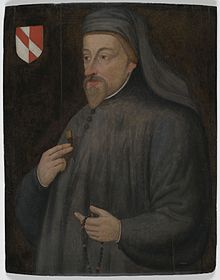
Geoffrey Chaucer
(1)
Poem topics: , Print This Poem , Rhyme Scheme
Submit Spanish Translation
Submit German Translation
Submit French Translation
About The Canterbury Tales
The Canterbury Tales is a poem by Geoffrey Chaucer. This page includes the poem text, poet information, related topics, comments, and similar poems.
Write your comment about The Canterbury Tales poem by Geoffrey Chaucer
Best Poems of Geoffrey Chaucer