Ruins Of Rome, By Bellay Poem Rhyme Scheme and Analysis
Rhyme Scheme: A BCCCDEDEFGHGII JKJKLCLCMLNDOO CGCGCPCPQLGLRR SITIUOVOGWGWCC CLCLXCYCCCCCZZ CCCCPLPLLGLGLL LWLWIGIGSCA2CTT CB2CB2LCLIPCPCC2C2 CPCPCILILILICC LCLCLLLLILILCC CLCLCCD2CCSCA2PP NINIWGWGLPLPGG ICIP| A | |
| - | |
| Ye heavenly spirits whose ashy cinders lie | B |
| Under deep ruins with huge walls opprest | C |
| But not your praise the which shall never die | C |
| Through your fair verses ne in ashes rest | C |
| If so be shrilling voice of wight alive | D |
| May reach from hence to depth of darkest hell | E |
| Then let those deep Abysses open rive | D |
| That ye may understand my shreiking yell | E |
| Thrice having seen under the heavens' vail | F |
| Your tomb's devoted compass over all | G |
| Thrice unto you with loud voice I appeal | H |
| And for your antique fury here do call | G |
| The whiles that I with sacred horror sing | I |
| Your glory fairest of all earthly thing | I |
| - | |
| - | |
| - | |
| - | |
| Great Babylon her haughty walls will praise | J |
| And sharp d steeples high shot up in air | K |
| Greece will the old Ephesian buildings blaze | J |
| And Nylus' nurslings their Pyramids fair | K |
| The same yet vaunting Greece will tell the story | L |
| Of Jove's great image in Olympus placed | C |
| Mausolus' work will be the Carian's glory | L |
| And Crete will boast the Labybrinth now 'rased | C |
| The antique Rhodian will likewise set forth | M |
| The great Colosse erect to Memory | L |
| And what else in the world is of like worth | N |
| Some greater learn d wit will magnify | D |
| But I will sing above all monuments | O |
| Seven Roman Hills the world's seven wonderments | O |
| - | |
| - | |
| - | |
| - | |
| Thou stranger which for Rome in Rome here seekest | C |
| And nought of Rome in Rome perceiv'st at all | G |
| These same old walls old arches which thou seest | C |
| Old Palaces is that which Rome men call | G |
| Behold what wreak what ruin and what waste | C |
| And how that she which with her mighty power | P |
| Tam'd all the world hath tam'd herself at last | C |
| The prey of time which all things doth devour | P |
| Rome now of Rome is th' only funeral | Q |
| And only Rome of Rome hath victory | L |
| Ne ought save Tyber hastening to his fall | G |
| Remains of all O world's inconstancy | L |
| That which is firm doth flit and fall away | R |
| And that is flitting doth abide and stay | R |
| - | |
| - | |
| - | |
| - | |
| She whose high top above the stars did soar | S |
| One foot on Thetis th' other on the Morning | I |
| One hand on Scythia th' other on the Moor | T |
| Both heaven and earth in roundness compassing | I |
| Jove fearing lest if she should greater grow | U |
| The old Giants should once again uprise | O |
| Her whelm'd with hills these seven hills which be now | V |
| Tombs of her greatness which did threat the skies | O |
| Upon her head he heaped Mount Saturnal | G |
| Upon her belly th' antique Palatine | W |
| Upon her stomach laid Mount Quirinal | G |
| On her left hand the noisome Esquiline | W |
| And C lian on the right but both her feet | C |
| Mount Viminall and Aventine do meet | C |
| - | |
| - | |
| - | |
| - | |
| Who lists to see what ever nature art | C |
| And heaven could do O Rome thee let him see | L |
| In case thy greatness he can guess in heart | C |
| By that which but the picture is of thee | L |
| Rome is no more but if the shade of Rome | X |
| May of the body yield a seeming sight | C |
| It's like a corse drawn forth out of the tomb | Y |
| By Magick skill out of eternal night | C |
| The corpse of Rome in ashes is entombed | C |
| And her great sprite rejoin d to the sprite | C |
| Of this great mass is in the same enwombed | C |
| But her brave writings which her famous merit | C |
| In spite of time out of the dust doth rear | Z |
| Do make her idol through the world appear | Z |
| - | |
| - | |
| - | |
| - | |
| Such as the Berecynthian Goddess bright | C |
| In her swift chariot with high turrets crowned | C |
| Proud that so many Gods she brought to light | C |
| Such was this City in her good days found | C |
| This city more than the great Phrygian mother | P |
| Renowned for fruit of famous progeny | L |
| Whose greatness by the greatness of none other | P |
| But by herself her equal match could see | L |
| Rome only might to Rome compar d be | L |
| And only Rome could make great Rome to tremble | G |
| So did the Gods by heavenly doom decree | L |
| That other deathly power should not resemble | G |
| Her that did match the whole earth's puissaunce | L |
| And did her courage to the heavens advance | L |
| - | |
| - | |
| - | |
| - | |
| Ye sacred ruins and ye tragic sights | L |
| Which only do the name of Rome retain | W |
| Old monuments which of so famous sprites | L |
| The honour yet in ashes do maintain | W |
| Triumphant arcs spires neighbors to the sky | I |
| That you to see doth th' heaven itself appall | G |
| Alas by little ye to nothing fly | I |
| The people's fable and the spoil of all | G |
| And though your frames do for a time make war | S |
| 'Gainst time yet time in time shall ruinate | C |
| Your works and names and your last relics mar | A2 |
| My sad desires rest therefore moderate | C |
| For if that time make ends of things so sure | T |
| It also will end the pain which I endure | T |
| - | |
| - | |
| - | |
| - | |
| Through arms and vassals Rome the world subdued | C |
| That one would ween that one sole City's strength | B2 |
| Both land and sea in roundess had surview'd | C |
| To be the measure of her breadth and length | B2 |
| This people's virtue yet so fruitful was | L |
| Of virtuous nephews that posterity | C |
| Striving in power their grandfathers to pass | L |
| The lowest earth join'd to the heaven high | I |
| To th' end that having all parts in their power | P |
| Nought from the Roman Empire might be 'quite | C |
| And that though time doth Commonwealths devour | P |
| Yet no time should so low embase their height | C |
| That her head earth'd in her foundations deep | C2 |
| Should not her name and endless honour keep | C2 |
| - | |
| - | |
| - | |
| - | |
| Ye cruel stars and eke ye Gods unkind | C |
| Heaven envious and bitter stepdame Nature | P |
| Be it by fortune or by course of kind | C |
| That ye do weld th' affairs of earthly creature | P |
| Why have your hands long sithence troubled | C |
| To frame this world that doth endure so long | I |
| Or why were not these Roman palaces | L |
| Made of some matter no less firm and strong | I |
| I say not as the common voice doth say | L |
| That all things which beneath the moon have being | I |
| Are temporal and subject to decay | L |
| But I say rather though not all agreeing | I |
| With some that ween the contrary in thought | C |
| That all this whole shall one day come to nought | C |
| - | |
| - | |
| - | |
| - | |
| As that brave son of Aeson which by charms | L |
| Achieved the golden fleece in Colchid land | C |
| Out of the earth engendered men of arms | L |
| Of Dragons' teetch sown in the sacred sand | C |
| So this brave town that in her youthly days | L |
| An Hydra was of warriors glorious | L |
| Did fill with her renown d nurslings praise | L |
| The firey sun's both one and other house | L |
| But they at last there being then not living | I |
| An Hercules so rank seed to repress | L |
| Amongst themselves with cruel fury striving | I |
| Mow'd down themselves with slaughter merciless | L |
| Renewing in themselves that rage unkind | C |
| Which whilom did those searthborn brethren blind | C |
| - | |
| - | |
| - | |
| - | |
| Mars shaming to have given so great head | C |
| To his off spring that mortal puissance | L |
| Puffed up with pride of Roman hardy head | C |
| Seem'd above heaven's power itself to advance | L |
| Cooling again his former kindled heat | C |
| With which he had those Roman spirits filled | C |
| Did blow new fire and with enflam d breath | D2 |
| Into the Gothic cold hot rage instill'd | C |
| Then 'gan that Nation th' earth's new Giant brood | C |
| To dart abroad the thunder bolts of war | S |
| And beating down these walls with furious mood | C |
| Into her mother's bosom all did mar | A2 |
| To th' end that none all were if Jove his sire | P |
| Should boast himself of the Roman Empire | P |
| - | |
| - | |
| - | |
| - | |
| Like as whilome the children of the earth | N |
| Heaped hills on hills to scale the starry sky | I |
| And fight against the Gods of heavenly birth | N |
| Whilst Jove at them his thunderbolts let fly | I |
| All suddenly with lightning overthrown | W |
| The furious squadrons down the ground did fall | G |
| That th' earth under her children's weight did groan | W |
| And th' heavens in glory triumphed over all | G |
| So did that haughty front which heap d was | L |
| On these seven Roman hills itself uprear | P |
| Over the world and lift her lofty face | L |
| Against the heaven that 'gan her force to fear | P |
| But now these scorned fields bemoan her fall | G |
| And Gods secure fear not her force at all | G |
| - | |
| - | |
| - | |
| - | |
| Nor the swift fury of the flames aspiring | I |
| Nor the deep wounds of victor's raging blade | C |
| Nor ruthless spoil of soldiers blood desiring | I |
| The which so oft thee Rome their | P |
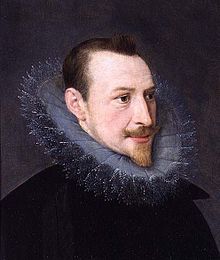
Edmund Spenser
(2)
Poem topics: , Print This Poem , Rhyme Scheme
Submit Spanish Translation
Submit German Translation
Submit French Translation
About Ruins Of Rome, By Bellay
Ruins Of Rome, By Bellay is a poem by Edmund Spenser. This page includes the poem text, poet information, related topics, comments, and similar poems.
Write your comment about Ruins Of Rome, By Bellay poem by Edmund Spenser
Best Poems of Edmund Spenser