The Lawyer's Second Tale Poem Rhyme Scheme and Analysis
Rhyme Scheme: A BBCCDDEEFFGGHHIIJJKK LLMMNOPPGGQQRRLSSLLL LLGGG TTMUVVWWCCK CC XXGGYYZZA2B2C2C2MMD2 D2E2E2GGUUD2D2KKGGF2 F2G2G2H2H2LLGGI2I2C2 C2F2CGGJ2J2MMUUK2K2L 2L2L2XXLL M2M2LLN2N2J2J2GG O2O2G2 O2O2P2P2O2O2O2O2Q2Q2 GGUUO2O2CCR2S2R2Q2Q2 LLGGR2R2O2 OOOO2O2T2T2O2O2GGGU2 U2UUGGTTV2V2LLC2 L2L2T Q2Q2W2X2GG O TTC E2E2GGY2Y2GGCCT2T2GG Z2Z2FFA3A3GGGGGGGGGG GGGGUUGGZ2Z2GGLLB3B3 C3C3D2D2GGGT GGT2T2D3D3GGA3V2T2 TGGT V2V2GGD2K2E3E3GGGGGG R2R2JF3GGGC3C3 F2 S2R2E3 CK2K2 LV2V2P2P2LLGGV2V2AAT TLLC GGLLCCTTUUGGGTTGGGGG G3G3NOOTTGGCCLLGGGLL GGGGGLLGGS2R2GGV2V2G GGTTLLLGGGGL2L2V2V2L LLR2R2GGTTGGV2V2C2C2 V2V2V2V2NNGGC3C3CCR2 R2GGLLV2V2FFFTTGGUUT 2T2T2R2R2LLGGGGGT2T2 T2LLGGFFT Z2Z2 GGV2V2V2GGUU| Christian | A |
| - | |
| - | |
| A highland inn among the western hills | B |
| A single parlour single bed that fills | B |
| With fisher or with tourist as may be | C |
| A waiting maid as fair as you can see | C |
| With hazel eyes and frequent blushing face | D |
| And ample brow and with a rustic grace | D |
| In all her easy quiet motions seen | E |
| Large of her age which haply is nineteen | E |
| Christian her name in full a pleasant name | F |
| Christian and Christie scarcely seem the same | F |
| A college fellow who has sent away | G |
| The pupils he has taught for many a day | G |
| And comes for fishing and for solitude | H |
| Perhaps a little pensive in his mood | H |
| An aspiration and a thought have failed | I |
| Where he had hoped another has prevailed | I |
| But to the joys of hill and stream alive | J |
| And in his boyhood yet at twenty five | J |
| A merry dance that made young people meet | K |
| And set them moving both with hands and feet | K |
| A dance in which he danced and nearer knew | L |
| The soft brown eyes and found them tender too | L |
| A dance that lit in two young hearts the fire | M |
| The low soft flame of loving sweet desire | M |
| And made him feel that he could feel again | N |
| The preface this what follows to explain | O |
| That night he kissed he held her in his arms | P |
| And felt the subtle virtue of her charms | P |
| Nor less bewildered on the following day | G |
| He kissed he found excuse near her to stay | G |
| Was it not love And yet the truth to speak | Q |
| Playing the fool for haply half a week | Q |
| He yet had fled so strong within him dwelt | R |
| The horror of the sin and such he felt | R |
| The miseries to the woman that ensue | L |
| He wearied long his brain with reasonings fine | S |
| But when at evening dusk he came to dine | S |
| In linsey petticoat and jacket blue | L |
| She stood so radiant and so modest too | L |
| All into air his strong conclusions flew | L |
| Now should he go But dim and drizzling too | L |
| For a night march to night will hardly do | L |
| A march of sixteen weary miles of way | G |
| No by the chances which our lives obey | G |
| No by the Heavens and this sweet face he'll stay | G |
| - | |
| A week he stayed and still was loth to go | T |
| But she grew anxious and would have it so | T |
| Her time of service shortly would be o'er | M |
| And she would leave her mistress knew before | U |
| Where would she go To Glasgow if she could | V |
| Her father's sister would be kind and good | V |
| An only child she was an orphan left | W |
| Of all her kindred save of this bereft | W |
| Said he 'Your guide to Glasgow let me be | C |
| You little know you have not tried the sea | C |
| Say at the ferry when are we to meet | K |
| Thither I guess you travel on your feet ' | - |
| She would 'be there on Tuesday next at three | C |
| 'O dear how glad and thankful she would be | C |
| But don't ' she said 'be troubled much for me ' | - |
| Punctual they met a second class he took | X |
| More naturally to her wants to look | X |
| And from her side was seldom far away | G |
| So quiet so indifferent yet were they | G |
| As fellow servants travelling south they seemed | Y |
| And no one of a love relation dreamed | Y |
| At Oban where the stormy darkness fell | Z |
| He got two chambers in a cheap hotel | Z |
| At Oban of discomfort one is sure | A2 |
| Little the difference whether rich or poor | B2 |
| Around the Mull the passage now to make | C2 |
| They go aboard and separate tickets take | C2 |
| First class for him and second class for her | M |
| No other first class passengers there were | M |
| And with the captain walking soon alone | D2 |
| This Highland girl he said to him was known | D2 |
| He had engaged to take her to her kin | E2 |
| Could she be put the ladies' cabin in | E2 |
| The difference gladly he himself would pay | G |
| The weather seemed but menacing to day | G |
| She ne'er had travelled from her home before | U |
| He wished to be at hand to hear about her more | U |
| Curious it seemed but he had such a tone | D2 |
| And kept at first so carefully alone | D2 |
| And she so quiet was and so discreet | K |
| So heedful ne'er to seek him or to meet | K |
| The first small wonder quickly passed away | G |
| And so from Oban's little land locked bay | G |
| Forth out to Jura Jura pictured high | F2 |
| With lofty peaks against the western sky | F2 |
| Jura that far o'erlooks the Atlantic seas | G2 |
| The loftiest of the Southern Hebrides | G2 |
| Through the main sea to Jura when we reach | H2 |
| Jura we turn to leftward to the breach | H2 |
| And southward strain the narrow channel through | L |
| And Colonsay we pass and Islay too | L |
| Cantire is on the left and all the day | G |
| A dull dead calm upon the waters lay | G |
| Sitting below after some length of while | I2 |
| He sought her and the tedium to beguile | I2 |
| He ventured some experiments to make | C2 |
| The measure of her intellect to take | C2 |
| Upon the cabin table chanced to lie | F2 |
| A book of popular astronomy | C |
| In this he tried her and discoursed away | G |
| Of Winter Summer and of Night and Day | G |
| Still to the task a reasoning power she brought | J2 |
| And followed slowly followed with the thought | J2 |
| How beautiful it was to see the stir | M |
| Of natural wonder waking thus in her | M |
| But loth was he to set on books to pore | U |
| An intellect so charming in the ore | U |
| And she perhaps had comprehended soon | K2 |
| Even the nodes so puzzling of the moon | K2 |
| But nearing now the Mull they met the gale | L2 |
| Right in their teeth and should the fuel fail | L2 |
| Thinking of her he grew a little pale | L2 |
| But bravely she the terrors miseries took | X |
| And met him with a sweet courageous look | X |
| Once at the worst unto his side she drew | L |
| And said a little tremulously too | L |
| 'If we must die please let me come to you ' | - |
| I know not by what change of wind or tide | M2 |
| Heading the Mull they gained the eastern side | M2 |
| But stiller now and sunny e'en it grew | L |
| Arran's high peaks unmantled to the view | L |
| While to the north far seen from left to right | N2 |
| The Highland range extended snowy white | N2 |
| Now in the Clyde he asked what would be thought | J2 |
| In Glasgow of the company she brought | J2 |
| 'You know ' he said 'how I desire to stay | G |
| We've played at strangers for so long a day | G |
| But for a while I yet would go away ' | - |
| She said O no indeed they must not part | O2 |
| Her father's sister had a kindly heart | O2 |
| 'I'll tell her all and O when you she sees | G2 |
| I think she'll not be difficult to please ' | - |
| Landed at Glasgow quickly they espied | O2 |
| Macfarlane grocer by the river side | O2 |
| To greet her niece the woman joyful ran | P2 |
| But looked with wonder on the tall young man | P2 |
| Into the house the women went and talked | O2 |
| He with the grocer in the doorway walked | O2 |
| He told him he was looking for a set | O2 |
| Of lodgings had he any he could let | O2 |
| The man was called to council with his wife | Q2 |
| They took the thing as what will be in life | Q2 |
| Half in a kind half in a worldly way | G |
| They said the lassie might play out her play | G |
| The gentleman should have the second floor | U |
| At thirty shillings for a week or more | U |
| Some days in this obscurity he stayed | O2 |
| Happy with her and some inquiry made | O2 |
| For friends he found and did his best to see | C |
| What hope of getting pupils there would be | C |
| This must he do 'twas evident 'twas clear | R2 |
| Marry and seek a humble maintenance here | S2 |
| Himself he had a hundred pounds a year | R2 |
| To this plain business he would bend his life | Q2 |
| And find his joy in children and in wife | Q2 |
| A wife so good so tender and so true | L |
| Mother to be of glorious children too | L |
| Half to excuse his present lawless way | G |
| He to the grocer happened once to say | G |
| Marriage would cost him more than others dear | R2 |
| Cost him indeed three hundred pounds a year | R2 |
| ''Deed ' said the man 'a heavy price no doubt | O2 |
| For a bit form that one can do without ' | - |
| And asked some questions pertinent and plain | O |
| Exacter information to obtain | O |
| He took a little trouble to explain | O |
| The College Audit now to last at least | O2 |
| Three weeks ere ending with the College Feast | O2 |
| He must attend a tedious dull affair | T2 |
| But he as junior Bursar must be there | T2 |
| Three weeks however quickly would be fled | O2 |
| And then he'd come he didn't say to wed | O2 |
| With plans of which he nothing yet would say | G |
| Preoccupied upon the parting day | G |
| He seemed a little absent and distrait | G |
| But she as knowing nothing was amiss | U2 |
| Gave him her fondest smile her sweetest kiss | U2 |
| A fortnight after or a little more | U |
| As at the Audit weary of the bore | U |
| He sat and of his future prospects thought | G |
| A letter in an unknown hand was brought | G |
| 'Twas from Macfarlane and to let him know | T |
| To South Australia they proposed to go | T |
| 'Rich friends we have who have advised us thus | V2 |
| Occasion offers suitable for us | V2 |
| Christie we take whate'er she find of new | L |
| She'll ne'er forget the joy she's had with you | L |
| 'Tis an expensive pilgrimage to make | C2 |
| You'll like to send a trifle for her sake ' | - |
| Nothing he said of when the ship would sail | L2 |
| That very night by swift returning mail | L2 |
| Ten pounds he sent for what he did not know | T |
| And 'In no case ' he said 'let Christian go ' | - |
| He in three days would come and for his life | Q2 |
| Would claim her and declare her as his wife | Q2 |
| Swift the night mail conveyed his missive on | W2 |
| He followed in three days and found them gone | X2 |
| All three had sailed he looked as though he dreamed | G |
| The money order had been cashed it seemed | G |
| - | |
| - | |
| - | |
| The Clergyman 'This story is mere pain ' | - |
| Exclaimed 'for if the women don't sustain | O |
| The moral standard all we do is vain ' | - |
| 'But what we want ' the Yankee said 'to know | T |
| Is if the girl went willingly or no | T |
| Sufficient motive though one does not see | C |
| 'Tis clear the grocer used some trickery ' | - |
| - | |
| - | |
| - | |
| He judged himself so strong the clinging in | E2 |
| This kind of people is to kith and kin | E2 |
| For if they went and she remained behind | G |
| No one she had if him she failed to find | G |
| Alas this lawless loving was the cause | Y2 |
| She did not dare to think how dear she was | Y2 |
| Justly his guilty tardiness he curst | G |
| He should have owned her when he left her first | G |
| And something added how upon the sea | C |
| She perilled too a life that was to be | C |
| A child that born in far Australia there | T2 |
| Would have no father and no father's care | T2 |
| So to the South a lonely man returned | G |
| For other scenes and busier life he burned | G |
| College he left and settled soon in town | Z2 |
| Wrote in the journals gained a swift renown | Z2 |
| Soon into high society he came | F |
| And still where'er he went outdid his fame | F |
| All the more liked and more esteemed the less | A3 |
| He seemed to make an object of success | A3 |
| An active literary life he spent | G |
| Towards lofty points of public practice bent | G |
| Was never man so carefully who read | G |
| Whose plans so well were fashioned in his head | G |
| Nor one who truths so luminously said | G |
| Some years in various labours thus he passed | G |
| A spotless course maintaining to the last | G |
| Twice upon Government Commissions served | G |
| With honour place which he declined deserved | G |
| He married then a marriage fit and good | G |
| That kept him where his worth was understood | G |
| A widow wealthy and of noble blood | G |
| Mr and Lady Mary are they styled | G |
| One grief is theirs to be without a child | G |
| I did not tell you how he went before | U |
| To South Australia vainly to explore | U |
| The ship had come to Adelaide no doubt | G |
| Watching the papers he had made it out | G |
| But of themselves in country or in town | Z2 |
| Nothing discovered travelling up and down | Z2 |
| Only an entry of uncertain sound | G |
| In an imperfect register he found | G |
| His son he thought but could not prove it true | L |
| The surname of the girl it chanced he never knew | L |
| But this uneasy feeling gathered strength | B3 |
| As years advanced and it became at length | B3 |
| His secret torture and his secret joy | C3 |
| To think about his lost Australian boy | C3 |
| Somewhere in wild colonial lands has grown | D2 |
| A child that is his true and very own | D2 |
| This strong parental passion fills his mind | G |
| To all the dubious chances makes him blind | G |
| Still he will seek and still he hopes to find | G |
| Again will go | T |
| - | |
| Said I 'O let him stay | G |
| And in a London drawing room some day | G |
| Rings on her fingers brilliants in her hair | T2 |
| The lady of the latest millionaire | T2 |
| She'll come and with a gathering slow surprise | D3 |
| On Lady Mary's husband turn her eyes | D3 |
| The soft brown eyes that in a former day | G |
| From his discretion lured him all astray | G |
| At home six bouncing girls who more or less | A3 |
| Are learning English of a governess | V2 |
| Six boisterous boys as like as pear to pear | T2 |
| Only the eldest has a different air ' | - |
| - | |
| 'You jest ' he said 'indeed it happened so ' | - |
| From a great party just about to go | T |
| He saw he knew and ere she saw him said | G |
| Swift to his wife as for the door he made | G |
| 'My Highland bride to escape a scene I go | T |
| Stay find her out great God and let me know ' | - |
| The Lady Mary turned to scrutinise | V2 |
| The lovely brow the beautiful brown eyes | V2 |
| One moment then performed her perfect part | G |
| And did her spiriting with simplest art | G |
| Was introduced her former friends had known | D2 |
| Say might she call to morrow afternoon | K2 |
| At three O yes At three she made her call | E3 |
| And told her who she was and told her all | E3 |
| Her lady manners all she laid aside | G |
| Like women the two women kissed and cried | G |
| Half overwhelmed sat Christian by her side | G |
| While she 'You know he never knew the day | G |
| When you would sail but he believed you'd stay | G |
| Because he wrote you never knew you say | G |
| Wrote that in three days' time they need not fear | R2 |
| He'd come and then would marry you my dear | R2 |
| You never knew And he had planned to live | J |
| At Glasgow lessons had arranged to give | F3 |
| Alas then to Australia he went out | G |
| All through the land to find you sought about | G |
| And found a trace which though it left a doubt | G |
| Sufficed to make it still his grief his joy | C3 |
| To think he had a child a living boy | C3 |
| Whom you my love ' | - |
| - | |
| 'His child is six foot high | F2 |
| I've kept him as the apple of my eye ' | - |
| Cried she 'he's riding or you'd see him here | S2 |
| O joy that he at last should see his father dear | R2 |
| As soon as he comes in I'll tell him all | E3 |
| And on his father he shall go and call ' | - |
| 'And you ' she said 'my husband will you see ' | - |
| 'O no it is not possible for me | C |
| The boy I'll send this very afternoon | K2 |
| O dear I know he cannot go too soon | K2 |
| And something I must write to write will do ' | - |
| So they embraced and sadly bade adieu | L |
| The boy came in his father went and saw | V2 |
| We will not wait this interview to draw | V2 |
| Ere long returned and to his mother ran | P2 |
| His father was a wonderful fine man | P2 |
| He said and looked at her the Lady too | L |
| Had done whatever it was kind to do | L |
| He loved his mother more than he could say | G |
| But if she wished he'd with his father stay | G |
| A little change she noticed in his face | V2 |
| E'en now the father's influence she could trace | V2 |
| From her the slight slight severance had begun | A |
| But simply she rejoiced that it was done | A |
| She smiled and kissed her boy and 'Long ago | T |
| When I was young I loved your father so | T |
| Together now we had been living too | L |
| Only the ship went sooner than he knew | L |
| In loving him you will be loving me | C |
| Father and mother are as one you see ' | - |
| Her letter caught him on the following day | G |
| As to the club he started on his way | G |
| From her he guessed the hand indeed was new | L |
| Back to his room he went and read it through | L |
| 'I know not how to write and dare not see | C |
| But it will take a load of grief from me | C |
| O what a load that you at last should know | T |
| The way in which I was compelled to go | T |
| Wretched I know and yet it seems 'twas more | U |
| Cruel and wretched than I knew before | U |
| So many years to think how on your day | G |
| Joyful you'd come and find me flown away | G |
| What would you think of me what would you say | G |
| O love this little let me call you so | T |
| What other name to use I do not know | T |
| O let me think that by your side I sit | G |
| And tell it you and weep a little bit | G |
| And you too weep with me for hearing it | G |
| Alone so long I've borne this dreadful weight | G |
| Such grief at times it almost turned to hate | G |
| O let me think you sit and listening long | G3 |
| Comfort me still and say I wasn't wrong | G3 |
| And pity me and far far hence again | N |
| Dismiss if haply any yet remain | O |
| Hard thoughts of me that in your heart have lain | O |
| O love to hear your voice I dare not go | T |
| But let me trust that you will judge me so | T |
| 'I think no sooner were you gone away | G |
| My aunt began to tell me of some pay | G |
| More than three hundred pounds a year 'twould be | C |
| Which you she said would lose by marrying me | C |
| Was this a thing a man of sense would do | L |
| Was I a fool to look for it from you | L |
| You were a handsome gentleman and kind | G |
| And to do right were every way inclined | G |
| But to this truth I must submit my mind | G |
| You would not marry Speak and tell me true | L |
| Say has he ever said one word to you | L |
| That meant as much O love I knew you would | G |
| I've read it in your eyes so kind and good | G |
| Although you did not speak I understood | G |
| Though for myself indeed I sought it not | G |
| It seemed so high so undeserved a lot | G |
| But for the child when it should come I knew | L |
| O I was certain what you meant to do | L |
| She said We quit the land will it be right | G |
| Or kind to leave you for a single night | G |
| Just on the chance that he will come down here | S2 |
| And sacrifice three hundred pounds a year | R2 |
| And all his hopes and prospects fling away | G |
| And has already had his will as one may say | G |
| Go you with us and find beyond the seas | V2 |
| Men by the score to choose from if you please | V2 |
| I said my will and duty was to stay | G |
| Would they not help me to some decent way | G |
| To wait and surely near was now the day | G |
| Quite they refused had they to let you know | T |
| Written I asked to say we were to go | T |
| They told me yes they showed a letter too | L |
| Post office order that had come from you | L |
| Alas I could not read or write they knew | L |
| I think they meant me though they did not say | G |
| To think you wanted me to go away | G |
| O love I'm thankful nothing of the kind | G |
| Ever so much as came into my mind | G |
| 'To morrow was the day that would not fail | L2 |
| For Adelaide the vessel was to sail | L2 |
| All night I hoped some dreadful wind would rise | V2 |
| And lift the seas and rend the very skies | V2 |
| All night I lay and listened hard for you | L |
| Twice to the door I went the bolt I drew | L |
| And called to you scarce what I did I knew | L |
| 'Morning grew light the house was emptied clear | R2 |
| The ship would go the boat was lying near | R2 |
| They had my money how was I to stay | G |
| Who could I go to when they went away | G |
| Out in the streets I could not lie you know | T |
| O dear but it was terrible to go | T |
| Yet yet I looked I do not know what passed | G |
| I think they took and carried me at last | G |
| Twelve hours I lay and sobbed in my distress | V2 |
| But in the night let be this idleness | V2 |
| I said I'll bear it for my baby's sake | C2 |
| Lest of my going mischief it should take | C2 |
| Advice will seek and every caution use | V2 |
| My love I've lost his child I must not lose | V2 |
| 'How oft I thought when sailing on the seas | V2 |
| Of our dear journey through the Hebrides | V2 |
| When you the kindest were and best of men | N |
| O love I did not love you right till then | N |
| O and myself how willingly I blamed | G |
| So simple who had been and was ashamed | G |
| So mindful only of the present joy | C3 |
| When you had anxious cares your busy mind to employ | C3 |
| Ah well I said but now at least he's free | C |
| He will not have to lower himself for me | C |
| He will not lose three hundred pounds a year | R2 |
| In many ways my love has cost him dear | R2 |
| 'Upon the passage great was my delight | G |
| A lady taught me how to read and write | G |
| She saw me much and fond of me she grew | L |
| Only I durst not talk to her of you | L |
| 'We had a quiet time upon the seas | V2 |
| And reached our port of Adelaide with ease | V2 |
| At Adelaide my lovely baby came | F |
| Philip he took his father's Christian name | F |
| And my poor maiden surname to my shame | F |
| O but I little cared I loved him so | T |
| 'Twas such a joy to watch and see him grow | T |
| At Adelaide we made no length of stay | G |
| Our friends to Melbourne just had gone away | G |
| We followed shortly where they led before | U |
| To Melbourne went and flourished more and more | U |
| My aunt and uncle both are buried there | T2 |
| I closed their eyes and I was left their heir | T2 |
| They meant me well I loved them for their care | T2 |
| 'Ten years ago I married Robert dear | R2 |
| And well he loved and waited many a year | R2 |
| Selfish it seemed to turn from one so true | L |
| And I of course was desperate of you | L |
| I've borne him children six we've left behind | G |
| Three little ones whom soon I hope to find | G |
| To my dear boy he ever has been kind | G |
| 'Next week we sail and I should be so glad | G |
| Only to leave my boy will make me sad | G |
| But yours he is by right the grief I'll bear | T2 |
| And at his age more easy he can spare | T2 |
| Perhaps a mother's than a father's care | T2 |
| Indeed I think him like his father too | L |
| He will be happier probably with you | L |
| 'Tis best I know nor will he quite forget | G |
| Some day he'll come perhaps and see his mother yet | G |
| O heaven farewell perhaps I've been to blame | F |
| To write as if it all were still the same | F |
| Farewell write not I will not seek to know | T |
| Whether you ever think of me or no ' | - |
| O love love love too late the tears fell down | Z2 |
| He dried them up and slowly walked to town | Z2 |
| - | |
| To bed with busy thoughts the following day | G |
| Bore us expectant into Boston Bay | G |
| With dome and steeple on the yellow skies | V2 |
| Upon the left we watched with curious eyes | V2 |
| The Puritan great Mother City rise | V2 |
| Among the islets winding in and round | G |
| The great ship moved to her appointed ground | G |
| We bade adieu shook hands and went ashore | U |
| I and my friend have seen our friends no more | U |
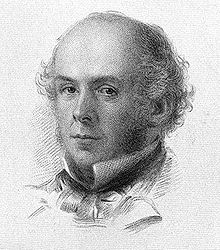
Arthur Hugh Clough
(1)
Poem topics: , Print This Poem , Rhyme Scheme
Submit Spanish Translation
Submit German Translation
Submit French Translation
About The Lawyer's Second Tale
The Lawyer's Second Tale is a poem by Arthur Hugh Clough. This page includes the poem text, poet information, related topics, comments, and similar poems.
Write your comment about The Lawyer's Second Tale poem by Arthur Hugh Clough
Best Poems of Arthur Hugh Clough