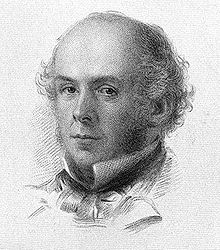
Amours De Voyage. Poem Rhyme Scheme and Analysis
Rhyme Scheme: ABC CA BD EDE F BGBHIJAKCL E CCADBAFLBBEECBEMNBIM ODM E BMDLEEBMECDBBBBC B PEMEBBEDELBBQC E BLEBEBEDEDAEEEEBABDE DB E BEEEBEBRBDCEAMLEESES BDEEELML E DELBBMAMEEDBMSBDBEES E AEMCLECELDMCEDADD E BLEDBEMRTCLAAODA E BEEAELLEPMEECEEMLA E ABEBEPEAAEEEUMME E BMDCBEESEAB EAADAEEDBBOMMM E CBELMEEEBEDDBLBBDCFD BCFAMB B BEDEBEBB BEBB B EEDBO COABDLCABSRBCC| Oh you are sick of self love Malvolio | A |
| And taste with a distempered appetite | B |
| SHAKSPEARE | C |
| - | |
| I doutait de tout m me de l'arnour | C |
| FRENCH NOVEL | A |
| - | |
| Solvitur ambulando | B |
| SOLUTIO SOPHISMATUM | D |
| - | |
| Flevit amores | E |
| Non elaboratum ad pedem | D |
| HORACE | E |
| - | |
| CANTO I | F |
| - | |
| Over the great windy waters and over the clear crested summit | B |
| Unto the sun and the sky and unto the perfecter earth | G |
| Come let us go to a land wherein gods of the old time wandered | B |
| Where every breath even now changes to ether divine | H |
| Come let us go though withal a voice whisper 'The world that we live in | I |
| Whithersoever we turn still is the same narrow crib | J |
| 'Tis but to prove limitation and measure a cord that we travel | A |
| Let who would 'scape and be free go to his chamber and think | K |
| 'Tis but to change idle fancies for memories wilfully falser | C |
| 'Tis but to go and have been ' Come little bark let us go | L |
| - | |
| - | |
| - | |
| I CLAUDE TO EUSTACE | E |
| - | |
| Dear Eustatio I write that you may write me an answer | C |
| Or at the least to put us again en rapport with each other | C |
| Rome disappoints me much St Peter's perhaps in especial | A |
| Only the Arch of Titus and view from the Lateran please me | D |
| This however perhaps is the weather which truly is horrid | B |
| Greece must be better surely and yet I am feeling so spiteful | A |
| That I could travel to Athens to Delphi and Troy and Mount Sinai | F |
| Though but to see with my eyes that these are vanity also | L |
| Rome disappoints me much I hardly as yet understand but | B |
| Rubbishy seems the word that most exactly would suit it | B |
| All the foolish destructions and all the sillier savings | E |
| All the incongruous things of past incompatible ages | E |
| Seem to be treasured up here to make fools of present and future | C |
| Would to Heaven the old Goths had made a cleaner sweep of it | B |
| Would to Heaven some new ones would come and destroy these churches | E |
| However one can live in Rome as also in London | M |
| It is a blessing no doubt to be rid at least for a time of | N |
| All one's friends and relations yourself forgive me included | B |
| All the assujettissement of having been what one has been | I |
| What one thinks one is or thinks that others suppose one | M |
| Yet in despite of all we turn like fools to the English | O |
| Vernon has been my fate who is here the same that you knew him | D |
| Making the tour it seems with friends of the name of Trevellyn | M |
| - | |
| - | |
| - | |
| II CLAUDE TO EUSTACE | E |
| - | |
| Rome disappoints me still but I shrink and adapt myself to it | B |
| Somehow a tyrannous sense of a superincumbent oppression | M |
| Still wherever I go accompanies ever and makes me | D |
| Feel like a tree shall I say buried under a ruin of brickwork | L |
| Rome believe me my friend is like its own Monte Testaceo | E |
| Merely a marvellous mass of broken and castaway wine pots | E |
| Ye gods what do I want with this rubbish of ages departed | B |
| Things that nature abhors the experiments that she has failed in | M |
| What do I find in the Forum An archway and two or three pillars | E |
| Well but St Peter's Alas Bernini has filled it with sculpture | C |
| No one can cavil I grant at the size of the great Coliseum | D |
| Doubtless the notion of grand and capacious and massive amusement | B |
| This the old Romans had but tell me is this an idea | B |
| Yet of solidity much but of splendour little is extant | B |
| 'Brickwork I found thee and marble I left thee ' their Emperor vaunted | B |
| 'Marble I thought thee and brickwork I find thee ' the Tourist may answer | C |
| - | |
| - | |
| - | |
| III GEORGINA TREVELLYN TO LOUISA | B |
| - | |
| At last dearest Louisa I take up my pen to address you | P |
| Here we are you see with the seven and seventy boxes | E |
| Courier Papa and Mamma the children and Mary and Susan | M |
| Here we all are at Rome and delighted of course with St Peter's | E |
| And very pleasantly lodged in the famous Piazza di Spagna | B |
| Rome is a wonderful place but Mary shall tell you about it | B |
| Not very gay however the English are mostly at Naples | E |
| There are the A 's we hear and most of the W party | D |
| George however is come did I tell you about his mustachios | E |
| Dear I must really stop for the carriage they tell me is waiting | L |
| Mary will finish and Susan is writing they say to Sophia | B |
| Adieu dearest Louise evermore your faithful Georgina | B |
| Who can a Mr Claude be whom George has taken to be with | Q |
| Very stupid I think but George says so very clever | C |
| - | |
| - | |
| - | |
| IV CLAUDE TO EUSTACE | E |
| - | |
| No the Christian faith as at any rate I understood it | B |
| With its humiliations and exaltations combining | L |
| Exaltations sublime and yet diviner abasements | E |
| Aspirations from something most shameful here upon earth and | B |
| In our poor selves to something most perfect above in the heavens | E |
| No the Christian faith as I at least understood it | B |
| Is not here O Rome in any of these thy churches | E |
| Is not here but in Freiburg or Rheims or Westminster Abbey | D |
| What in thy Dome I find in all thy recenter efforts | E |
| Is a something I think more rational far more earthly | D |
| Actual less ideal devout not in scorn and refusal | A |
| But in a positive calm Stoic Epicurean acceptance | E |
| This I begin to detect in St Peter's and some of the churches | E |
| Mostly in all that I see of the sixteenth century masters | E |
| Overlaid of course with infinite gauds and gewgaws | E |
| Innocent playful follies the toys and trinkets of childhood | B |
| Forced on maturer years as the serious one thing needful | A |
| By the barbarian will of the rigid and ignorant Spaniard | B |
| Curious work meantime re entering society how we | D |
| Walk a livelong day great Heaven and watch our shadows | E |
| What our shadows seem forsooth we will ourselves be | D |
| Do I look like that you think me that then I am that | B |
| - | |
| - | |
| - | |
| V CLAUDE TO EUSTACE | E |
| - | |
| Luther they say was unwise like a half taught German he could not | B |
| See that old follies were passing most tranquilly out of remembrance | E |
| Leo the Tenth was employing all efforts to clear out abuses | E |
| Jupiter Juno and Venus Fine Arts and Fine Letters the Poets | E |
| Scholars and Sculptors and Painters were quietly clearing away the | B |
| Martyrs and Virgins and Saints or at any rate Thomas Aquinas | E |
| He must forsooth make a fuss and distend his huge Wittenberg lungs and | B |
| Bring back Theology once yet again in a flood upon Europe | R |
| Lo you for forty days from the windows of heaven it fell the | B |
| Waters prevail on the earth yet more for a hundred and fifty | D |
| Are they abating at last the doves that are sent to explore are | C |
| Wearily fain to return at the best with a leaflet of promise | E |
| Fain to return as they went to the wandering wave tost vessel | A |
| Fain to re enter the roof which covers the clean and the unclean | M |
| Luther they say was unwise he didn't see how things were going | L |
| Luther was foolish but O great God what call you Ignatius | E |
| O my tolerant soul be still I but you talk of barbarians | E |
| Alaric Attila Genseric why they came they killed they | S |
| Ravaged and went on their way but these vile tyrannous Spaniards | E |
| These are here still how long O ye heavens in the country of Dante | S |
| These that fanaticized Europe which now can forget them release not | B |
| This their choicest of prey this Italy here you see them | D |
| Here with emasculate pupils and gimcrack churches of Gesu | E |
| Pseudo learning and lies confessional boxes and postures | E |
| Here with metallic beliefs and regimental devotions | E |
| Here overcrusting with slime perverting defacing debasing | L |
| Michael Angelo's dome that had hung the Pantheon in heaven | M |
| Raphael's Joys and Graces and thy clear stars Galileo | L |
| - | |
| - | |
| - | |
| VI CLAUDE TO EUSTACE | E |
| - | |
| Which of three Misses Trevellyn it is that Vernon shall marry | D |
| Is not a thing to be known for our friend is one of those natures | E |
| Which have their perfect delight in the general tender domestic | L |
| So that he trifles with Mary's shawl ties Susan's bonnet | B |
| Dances with all but at home is most they say with Georgina | B |
| Who is however too silly in my apprehension for Vernon | M |
| I as before when I wrote continue to see them a little | A |
| Not that I like them much or care a bajocco for Vernon | M |
| But I am slow at Italian have not many English acquaintance | E |
| And I am asked in short and am not good at excuses | E |
| Middle class people these bankers very likely not wholly | D |
| Pure of the taint of the shop will at table d'h te and restaurant | B |
| Have their shilling's worth their penny's pennyworth even | M |
| Neither man's aristocracy this nor God's God' knoweth | S |
| Yet they are fairly descended they give you to know well connected | B |
| Doubtless somewhere in some neighbourhood have and are careful to keep some | D |
| Threadbare genteel relations who in their turn are enchanted | B |
| Grandly among county people to introduce at assemblies | E |
| To the unpennied cadets our cousins with excellent fortunes | E |
| Neither man's aristocracy this nor God's God knoweth | S |
| - | |
| - | |
| - | |
| VII CLAUDE TO EUSTACE | E |
| - | |
| Ah what a shame indeed to abuse these most worthy people | A |
| Ah what a sin to have sneered at their innocent rustic pretensions | E |
| Is it not laudable really this reverent worship of station | M |
| Is it not fitting that wealth should tender this homage to culture | C |
| Is it not touching to witness these efforts if little availing | L |
| Painfully made to perform the old ritual service of manners | E |
| Shall not devotion atone for the absence of knowledge and fervour | C |
| Palliate cover the fault of a superstitious observance | E |
| Dear dear what do I say but alas just now like Iago | L |
| I can be nothing at all if it is not critical wholly | D |
| So in fantastic height in coxcomb exultation | M |
| Here in the garden I walk can freely concede to the Maker | C |
| That the works of His hand are all very good His creatures | E |
| Beast of the field and fowl He brings them before me I name them | D |
| That which I name them they are the bird the beast and the cattle | A |
| But for Adam alas poor critical coxcomb Adam | D |
| But for Adam there is not found an help meet for him | D |
| - | |
| - | |
| - | |
| VIII CLAUDE TO EUSTACE | E |
| - | |
| No great Dome of Agrippa thou art not Christian canst not | B |
| Strip and replaster and daub and do what they will with thee be so | L |
| Here underneath the great porch of colossal Corinthian columns | E |
| Here as I walk do I dream of the Christian belfries above them | D |
| Or on a bench as I sit and abide for long hours till thy whole vast | B |
| Round grows dim as in dreams to my eyes I repeople thy niches | E |
| Not with the Martyrs and Saints and Confessors and Virgins and children | M |
| But with the mightier forms of an older austerer worship | R |
| And I recite to myself how | T |
| Eager for battle here | C |
| Stood Vulcan here matronal Juno | L |
| And with the bow to his shoulder faithful | A |
| He who with pure dew laveth of Castaly | A |
| His flowing locks who holdeth of Lycia | O |
| The oak forest and the wood that bore him | D |
| Delos' and Patara's own Apollo | A |
| - | |
| - | |
| - | |
| IX CLAUDE TO EUSTACE | E |
| - | |
| Yet it is pleasant I own it to be in their company pleasant | B |
| Whatever else it may be to abide in the feminine presence | E |
| Pleasant but wrong will you say But this happy serene coexistence | E |
| Is to some poor soft souls I fear a necessity simple | A |
| Meat and drink and life and music filling with sweetness | E |
| Thrilling with melody sweet with harmonies strange overwhelming | L |
| All the long silent strings of an awkward meaningless fabric | L |
| Yet as for that I could live I believe with children to have those | E |
| Pure and delicate forms encompassing moving about you | P |
| This were enough I could think and truly with glad resignation | M |
| Could from the dream of Romance from the fever of flushed adolescence | E |
| Look to escape and subside into peaceful avuncular functions | E |
| Nephews and nieces alas for as yet I have none and moreover | C |
| Mothers are jealous I fear me too often too rightfully fathers | E |
| Think they have title exclusive to spoiling their own little darlings | E |
| And by the law of the land in despite of Malthusian doctrine | M |
| No sort of proper provision is made for that most patriotic | L |
| Most meritorious subject the childless and bachelor uncle | A |
| - | |
| - | |
| - | |
| X CLAUDE TO EUSTACE | E |
| - | |
| Ye too marvellous Twain that erect on the Monte Cavallo | A |
| Stand by your rearing steeds in the grace of your motionless movement | B |
| Stand with your upstretched arms and tranquil regardant faces | E |
| Stand as instinct with life in the might of immutable manhood | B |
| O ye mighty and strange ye ancient divine ones of Hellas | E |
| Are ye Christian too to convert and redeem and renew you | P |
| Will the brief form have sufficed that a Pope has set up on the apex | E |
| Of the Egyptian stone that o'ertops you the Christian symbol | A |
| And ye silent supreme in serene and victorious marble | A |
| Ye that encircle the walls of the stately Vatican chambers | E |
| Juno and Ceres Minerva Apollo the Muses and Bacchus | E |
| Ye unto whom far and near come posting the Christian pilgrims | E |
| Ye that are ranged in the halls of the mystic Christian Pontiff | U |
| Are ye also baptized are ye of the kingdom of Heaven | M |
| Utter O some one the word that shall reconcile Ancient and Modern | M |
| Am I to turn me from this unto thee great Chapel of Sixtus | E |
| - | |
| - | |
| - | |
| XI CLAUDE TO EUSTACE | E |
| - | |
| These are the facts The uncle the elder brother the squire a | B |
| Little embarrassed I fancy resides in the family place in | M |
| Cornwall of course 'Papa is in business ' Mary informs me | D |
| He's a good sensible man whatever his trade is The mother | C |
| Is shall I call it fine herself she would tell you refined and | B |
| Greatly I fear me looks down on my bookish and maladroit manners | E |
| Somewhat affecteth the blue would talk to me often of poets | E |
| Quotes which I hate Childe Harold but also appreciates Wordsworth | S |
| Sometimes adventures on Schiller and then to religion diverges | E |
| Questions me much about Oxford and yet in her loftiest flights still | A |
| Grates the fastidious ear with the slightly mercantile accent | B |
| - | |
| Is it contemptible Eustace I'm perfectly ready to think so | E |
| Is it the horrible pleasure of pleasing inferior people | A |
| I am ashamed my own self and yet true it is if disgraceful | A |
| That for the first time in life I am living and moving with freedom | D |
| I who never could talk to the people I meet with my uncle | A |
| I who have always failed I trust me can suit the Trevellyns | E |
| I believe me great conquest am liked by the country bankers | E |
| And I am glad to be liked and like in return very kindly | D |
| So it proceeds Laissez faire laissez aller such is the watch word | B |
| Well I know there are thousands as pretty and hundreds as pleasant | B |
| Girls by the dozen as good and girls in abundance with polish | O |
| Higher and manners more perfect than Susan or Mary Trevellyn | M |
| Well I know after all it is only juxtaposition | M |
| Juxtaposition in short and what is juxtaposition | M |
| - | |
| - | |
| - | |
| XII CLAUDE TO EUSTACE | E |
| - | |
| But I am in for it now laissez faire of a truth laissez aller | C |
| Yes I am going I feel it I feel and cannot recall it | B |
| Fusing with this thing and that entering into all sorts of relations | E |
| Tying I know not what ties which whatever they are I know one thing | L |
| Will and must woe is me be one day painfully broken | M |
| Broken with painful remorses with shrinkings of soul and relentings | E |
| Foolish delays more foolish evasions most foolish renewals | E |
| But I have made the step have quitted the ship of Ulysses | E |
| Quitted the sea and the shore passed into the magical island | B |
| Yet on my lips is the moly medicinal offered of Hermes | E |
| I have come into the precinct the labyrinth closes around me | D |
| Path into path rounding slyly I pace slowly on and the fancy | D |
| Struggling awhile to sustain the long sequences weary bewildered | B |
| Fain must collapse in despair I yield I am lost and know nothing | L |
| Yet in my bosom unbroken remaineth the clue I shall use it | B |
| Lo with the rope on my loins I descend through the fissure I sink yet | B |
| Inly secure in the strength of invisible arms up above me | D |
| Still wheresoever I swing wherever to shore or to shelf or | C |
| Floor of cavern untrodden shell sprinkled enchanting I know I | F |
| Yet shall one time feel the strong cord tighten about me | D |
| Feel it relentless upbear me from spots I would rest in and though the | B |
| Rope sway wildly I faint crags wound me from crag unto crag re | C |
| Bounding or wide in the void I die ten deaths ere the end I | F |
| Yet shall plant firm foot on the broad lofty spaces I quit shall | A |
| Feel underneath me again the great massy strengths of abstraction | M |
| Look yet abroad from the height o'er the sea whose salt wave I have tasted | B |
| - | |
| - | |
| - | |
| XIII GEORGINA TREVELLYN TO LOUISA | B |
| - | |
| Dearest Louisa Inquire if you please about Mr Claude | B |
| He has been once at R and remembers meeting the H 's | E |
| Harriet L perhaps may be able to tell you about him | D |
| It is an awkward youth but still with very good manners | E |
| Not without prospects we hear and George says highly connected | B |
| Georgy declares it absurd but Mamma is alarmed and insists he has | E |
| Taken up strange opinions and may be turning a Papist | B |
| Certainly once he spoke of a daily service he went to | B |
| 'Where ' we asked and he laughed and answered 'At the Pantheon ' | - |
| This was a temple you know and now is a Catholic church and | B |
| Though it is said that Mazzini has sold it for Protestant service | E |
| Yet I suppose this change can hardly as yet be effected | B |
| Adieu again evermore my dearest your loving Georgina | B |
| - | |
| - | |
| - | |
| P S BY MARY TREVELLYN | B |
| - | |
| I am to tell you you say what I think of our last new acquaintance | E |
| Well then I think that George has a very fair right to be jealous | E |
| I do not like him much though I do not dislike being with him | D |
| He is what people call I suppose a superior man and | B |
| Certainly seems so to me but I think he is terribly selfish | O |
| - | |
| Alba thou findest me still and Alba thou findest me ever | C |
| Now from the Capitol steps now over Titus's Arch | O |
| Here from the large grassy spaces that spread from the Lateran portal | A |
| Towering o'er aqueduct lines lost in perspective between | B |
| Or from a Vatican window or bridge or the high Coliseum | D |
| Clear by the garlanded line cut of the Flavian ring | L |
| Beautiful can I not call thee and yet thou hast power to o'ermaster | C |
| Power of mere beauty in dreams Alba thou hauntest me still | A |
| Is it religion I ask me or is it a vain superstition | B |
| Slavery abject and gross service too feeble of truth | S |
| Is it an idol I bow to or is it a god that I worship | R |
| Do I sink back on the old or do I soar from the mean | B |
| So through the city I wander and question unsatisfied ever | C |
| Reverent so I accept doubtful because I revere | C |
Arthur Hugh Clough
(1)
Poem topics: , Print This Poem , Rhyme Scheme
Submit Spanish Translation
Submit German Translation
Submit French Translation
About Amours De Voyage.
Amours De Voyage. is a poem by Arthur Hugh Clough. This page includes the poem text, poet information, related topics, comments, and similar poems.
Write your comment about Amours De Voyage. poem by Arthur Hugh Clough
Best Poems of Arthur Hugh Clough