Amours De Voyage, Canto I Poem Rhyme Scheme and Analysis
Rhyme Scheme: ABCDEFGHIJ K IIGLMGNJOPQRIPRSTMES UVSSWS K PSLJKKMSKIXYZYA2I Z B2KSKZPKLKJZZC2I K PJKD2KPKLKLGKKKKE2GC LKLF2 K G2KKKZKD2H2ZLIKGSJKK I2KI2G2J2KKKJSJ K LKJOZSGJ| Over the great windy waters and over the clear crested summits | A |
| Unto the sun and the sky and unto the perfecter earth | B |
| Come let us go to a land wherein gods of the old time wandered | C |
| Where every breath even now changes to ether divine | D |
| Come let us go though withal a voice whisper 'The world that we live in | E |
| Whithersoever we turn still is the same narrow crib | F |
| 'Tis but to prove limitation and measure a cord that we travel | G |
| Let who would 'scape and be free go to his chamber and think | H |
| 'Tis but to change idle fancies for memories wilfully falser | I |
| 'Tis but to go and have been ' Come little bark let us go | J |
| - | |
| - | |
| - | |
| I Claude to Eustace | K |
| - | |
| Dear Eustatio I write that you may write me an answer | I |
| Or at the least to put us again en rapport with each other | I |
| Rome disappoints me much St Peter's perhaps in especial | G |
| Only the Arch of Titus and view from the Lateran please me | L |
| This however perhaps is the weather which truly is horrid | M |
| Greece must be better surely and yet I am feeling so spiteful | G |
| That I could travel to Athens to Delphi and Troy and Mount Sinai | N |
| Though but to see with my eyes that these are vanity also | J |
| Rome disappoints me much I hardly as yet understand it but | O |
| Rubbishy seems the word that most exactly would suit it | P |
| All the foolish destructions and all the sillier savings | Q |
| All the incongruous things of past incompatible ages | R |
| Seem to be treasured up here to make fools of present and future | I |
| Would to Heaven the old Goths had made a cleaner sweep of it | P |
| Would to Heaven some new ones would come and destroy these churches | R |
| However one can live in Rome as also in London | S |
| It is a blessing no doubt to be rid at least for a time of | T |
| All one's friends and relations yourself forgive me included | M |
| All the assujettissement of having been what one has been | E |
| What one thinks one is or thinks that others suppose one | S |
| Yet in despite of all we turn like fools to the English | U |
| Vernon has been my fate who is here the same that you knew him | V |
| Making the tour it seems with friends of the name of Trevellyn | S |
| The Oxford Edition edited by A L P Norrington | S |
| includes a line immediately following this | W |
| Rome is better than London because it is other than London | S |
| - | |
| - | |
| - | |
| II Claude to Eustace | K |
| - | |
| Rome disappoints me still but I shrink and adapt myself to it | P |
| Somehow a tyrannous sense of a superincumbent oppression | S |
| Still wherever I go accompanies ever and makes me | L |
| Feel like a tree shall I say buried under a ruin of brickwork | J |
| Rome believe me my friend is like its own Monte Testaceo | K |
| Merely a marvellous mass of broken and castaway wine pots | K |
| Ye gods what do I want with this rubbish of ages departed | M |
| Things that Nature abhors the experiments that she has failed in | S |
| What do I find in the Forum An archway and two or three pillars | K |
| Well but St Peter's Alas Bernini has filled it with sculpture | I |
| No one can cavil I grant at the size of the great Coliseum | X |
| Doubtless the notion of grand and capacious and massive amusement | Y |
| This the old Romans had but tell me is this an idea | Z |
| Yet of solidity much but of splendour little is extant | Y |
| 'Brickwork I found thee and marble I left thee ' their Emperor vaunted | A2 |
| 'Marble I thought thee and brickwork I find thee ' the Tourist may answer | I |
| - | |
| - | |
| - | |
| III Georgina Trevellyn to Louisa | Z |
| - | |
| At last dearest Louisa I take up my pen to address you | B2 |
| Here we are you see with the seven and seventy boxes | K |
| Courier Papa and Mamma the children and Mary and Susan | S |
| Here we all are at Rome and delighted of course with St Peter's | K |
| And very pleasantly lodged in the famous Piazza di Spagna | Z |
| Rome is a wonderful place but Mary shall tell you about it | P |
| Not very gay however the English are mostly at Naples | K |
| There are the A 's we hear and most of the W party | L |
| George however is come did I tell you about his mustachios | K |
| Dear I must really stop for the carriage they tell me is waiting | J |
| Mary will finish and Susan is writing they say to Sophia | Z |
| Adieu dearest Louise evermore your faithful Georgina | Z |
| Who can a Mr Claude be whom George has taken to be with | C2 |
| Very stupid I think but George says so very clever | I |
| - | |
| - | |
| - | |
| IV Claude to Eustace | K |
| - | |
| No the Christian faith as at any rate I understood it | P |
| With its humiliations and exaltations combining | J |
| Exaltations sublime and yet diviner abasements | K |
| Aspirations from something most shameful here upon earth and | D2 |
| In our poor selves to something most perfect above in the heavens | K |
| No the Christian faith as I at least understood it | P |
| Is not here O Rome in any of these thy churches | K |
| Is not here but in Freiburg or Rheims or Westminster Abbey | L |
| What in thy Dome I find in all thy recenter efforts | K |
| Is a something I think more rational far more earthly | L |
| Actual less ideal devout not in scorn and refusal | G |
| But in a positive calm Stoic Epicurean acceptance | K |
| This I begin to detect in St Peter's and some of the churches | K |
| Mostly in all that I see of the sixteenth century masters | K |
| Overlaid of course with infinite gauds and gewgaws | K |
| Innocent playful follies the toys and trinkets of childhood | E2 |
| Forced on maturer years as the serious one thing needful | G |
| By the barbarian will of the rigid and ignorant Spaniard | C |
| Curious work meantime re entering society how we | L |
| Walk a livelong day great Heaven and watch our shadows | K |
| What our shadows seem forsooth we will ourselves be | L |
| Do I look like that you think me that then I am that | F2 |
| - | |
| - | |
| - | |
| V Claude to Eustace | K |
| - | |
| Luther they say was unwise like a half taught German he could not | G2 |
| See that old follies were passing most tranquilly out of remembrance | K |
| Leo the Tenth was employing all efforts to clear out abuses | K |
| Jupiter Juno and Venus Fine Arts and Fine Letters the Poets | K |
| Scholars and Sculptors and Painters were quietly clearing away the | Z |
| Martyrs and Virgins and Saints or at any rate Thomas Aquinas | K |
| He must forsooth make a fuss and distend his huge Wittenberg lungs and | D2 |
| Bring back Theology once yet again in a flood upon Europe | H2 |
| Lo you for forty days from the windows of heaven it fell the | Z |
| Waters prevail on the earth yet more for a hundred and fifty | L |
| Are they abating at last the doves that are sent to explore are | I |
| Wearily fain to return at the best with a leaflet of promise | K |
| Fain to return as they went to the wandering wave tost vessel | G |
| Fain to re enter the roof which covers the clean and the unclean | S |
| Luther they say was unwise he didn't see how things were going | J |
| Luther was foolish but O great God what call you Ignatius | K |
| O my tolerant soul be still but you talk of barbarians | K |
| Alaric Attila Genseric why they came they killed they | I2 |
| Ravaged and went on their way but these vile tyrannous Spaniards | K |
| These are here still how long O ye heavens in the country of Dante | I2 |
| These that fanaticized Europe which now can forget them release not | G2 |
| This their choicest of prey this Italy here you see them | J2 |
| Here with emasculate pupils and gimcrack churches of Gesu | K |
| Pseudo learning and lies confessional boxes and postures | K |
| Here with metallic beliefs and regimental devotions | K |
| Here overcrusting with slime perverting defacing debasing | J |
| Michael Angelo's Dome that had hung the Pantheon in heaven | S |
| Raphael's Joys and Graces and thy clear stars Galileo | J |
| - | |
| - | |
| - | |
| VI Claude to Eustace | K |
| - | |
| Which of three Misses Trevellyn it is that Vernon shall marry | L |
| Is not a thing to be known for our friend is one of those natures | K |
| Which have their perfect delight in the general tender domestic | J |
| So that he trifles with Mary's shawl ties Susan's bonnet | O |
| Dances with all but at home is most they say with Georgina | Z |
| Who is however too silly in my apprehension for Vernon | S |
| I as before when I wrote continue to see them a little | G |
| Not that I like them muc | J |
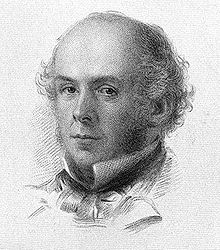
Arthur Hugh Clough
(1)
Poem topics: , Print This Poem , Rhyme Scheme
Submit Spanish Translation
Submit German Translation
Submit French Translation
About Amours De Voyage, Canto I
Amours De Voyage, Canto I is a poem by Arthur Hugh Clough. This page includes the poem text, poet information, related topics, comments, and similar poems.
Write your comment about Amours De Voyage, Canto I poem by Arthur Hugh Clough
Best Poems of Arthur Hugh Clough