The Thorn Poem Rhyme Scheme and Analysis
Rhyme Scheme: AA BCDCEFGGFHH HIJIKLMMLNN OPQPRSTT UU HVJVSHUUH S UVWVJSXXSUU HJYJKXZZXS VA2B2A2C2XD2D2XS VHIHH D2D2 X E2XF2X CG2G2CU X IHX HCD2D2CH2I2 X CJ2K2J2L2MCCMM2M2 X XHHHN2HO2O2HP2Q2 X BEHEXHR2R2HS2S2 T2U2EU2HV2W2W2V2YY VX2Y2X2Z2W2NUW2XX HU2ZU2A3VB3B3VXX HNXNXHHHHLL XX HHC3C3H X TNX XXTTXUU X W2D3XE2H XX HH X XH| A | |
| A | |
| - | |
| - | |
| - | |
| - | |
| - | |
| - | |
| I | - |
| - | |
| 'There is a Thorn it looks so old | B |
| In truth you'd find it hard to say | C |
| How it could ever have been young | D |
| It looks so old and grey | C |
| Not higher than a two years' child | E |
| It stands erect this aged Thorn | F |
| No leaves it has no prickly points | G |
| It is a mass of knotted joints | G |
| A wretched thing forlorn | F |
| It stands erect and like a stone | H |
| With lichens is it overgrown | H |
| - | |
| II | - |
| - | |
| 'Like rock or stone it is o'ergrown | H |
| With lichens to the very top | I |
| And hung with heavy tufts of moss | J |
| A melancholy crop | I |
| Up from the earth these mosses creep | K |
| And this poor Thorn they clasp it round | L |
| So close you'd say that they are bent | M |
| With plain and manifest intent | M |
| To drag it to the ground | L |
| And all have joined in one endeavour | N |
| To bury this poor Thorn for ever | N |
| - | |
| III | - |
| - | |
| 'High on a mountain's highest ridge | O |
| Where oft the stormy winter gale | P |
| Cuts like a scythe while through the clouds | Q |
| It sweeps from vale to vale | P |
| Not five yards from the mountain path | R |
| This Thorn you on your left espy | S |
| And to the left three yards beyond | T |
| You see a little muddy pond | T |
| Of water never dry | - |
| Though but of compass small and bare | U |
| To thirsty suns and parching air | U |
| - | |
| IV | - |
| - | |
| 'And close beside this aged Thorn | H |
| There is a fresh and lovely sight | V |
| A beauteous heap a hill of moss | J |
| Just half a foot in height | V |
| All lovely colours there you see | S |
| All colours that were ever seen | H |
| And mossy network too is there | U |
| As if by hand of lady fair | U |
| The work had woven been | H |
| And cups the darlings of the eye | - |
| So deep is their vermilion dye | - |
| - | |
| V | S |
| - | |
| 'Ah me what lovely tints are there | U |
| Of olive green and scarlet bright | V |
| In spikes in branches and in stars | W |
| Green red and pearly white | V |
| This heap of earth o'ergrown with moss | J |
| Which close beside the Thorn you see | S |
| So fresh in all its beauteous dyes | X |
| Is like an infant's grave in size | X |
| As like as like can be | S |
| But never never any where | U |
| An infant's grave was half so fair | U |
| - | |
| VI | - |
| - | |
| 'Now would you see this aged Thorn | H |
| This pond and beauteous hill of moss | J |
| You must take care and choose your time | Y |
| The mountain when to cross | J |
| For oft there sits between the heap | K |
| So like an infant's grave in size | X |
| And that same pond of which I spoke | Z |
| A Woman in a scarlet cloak | Z |
| And to herself she cries | X |
| 'Oh misery oh misery | S |
| Oh woe is me oh misery ' | - |
| - | |
| VII | - |
| - | |
| 'At all times of the day and night | V |
| This wretched Woman thither goes | A2 |
| And she is known to every star | B2 |
| And every wind that blows | A2 |
| And there beside the Thorn she sits | C2 |
| When the blue daylight's in the skies | X |
| And when the whirlwind's on the hill | D2 |
| Or frosty air is keen and still | D2 |
| And to herself she cries | X |
| 'Oh misery oh misery | S |
| Oh woe is me oh misery '' | - |
| - | |
| VIII | - |
| - | |
| 'Now wherefore thus by day and night | V |
| In rain in tempest and in snow | H |
| Thus to the dreary mountain top | I |
| Does this poor Woman go | H |
| And why sits she beside the Thorn | H |
| When the blue daylight's in the sky | - |
| Or when the whirlwind's on the hill | D2 |
| Or frosty air is keen and still | D2 |
| And wherefore does she cry | - |
| O wherefore wherefore tell me why | - |
| Does she repeat that doleful cry ' | - |
| - | |
| IX | X |
| - | |
| 'I cannot tell I wish I could | E2 |
| For the true reason no one knows | X |
| But would you gladly view the spot | F2 |
| The spot to which she goes | X |
| The hillock like an infant's grave | - |
| The pond and Thorn so old and grey | C |
| Pass by her door 'tis seldom shut | G2 |
| And if you see her in her hut | G2 |
| Then to the spot away | C |
| I never heard of such as dare | U |
| Approach the spot when she is there ' | - |
| - | |
| X | X |
| - | |
| 'But wherefore to the mountain top | I |
| Can this unhappy Woman go | H |
| Whatever star is in the skies | X |
| Whatever wind may blow ' | - |
| 'Full twenty years are past and gone | H |
| Since she her name is Martha Ray | C |
| Gave with a maiden's true good will | D2 |
| Her company to Stephen Hill | D2 |
| And she was blithe and gay | C |
| While friends and kindred all approved | H2 |
| Of him whom tenderly she loved | I2 |
| - | |
| XI | X |
| - | |
| 'And they had fixed the wedding day | C |
| The morning that must wed them both | J2 |
| But Stephen to another Maid | K2 |
| Had sworn another oath | J2 |
| And with this other Maid to church | L2 |
| Unthinking Stephen went | M |
| Poor Martha on that woeful day | C |
| A pang of pitiless dismay | C |
| Into her soul was sent | M |
| A fire was kindled in her breast | M2 |
| Which might not burn itself to rest | M2 |
| - | |
| XII | X |
| - | |
| 'They say full six months after this | X |
| While yet the summer leaves were green | H |
| She to the mountain top would go | H |
| And there was often seen | H |
| What could she seek or wish to hide | N2 |
| Her state to any eye was plain | H |
| She was with child and she was mad | O2 |
| Yet often was she sober sad | O2 |
| From her exceeding pain | H |
| O guilty Father would that death | P2 |
| Had saved him from that breach of faith | Q2 |
| - | |
| XIII | X |
| - | |
| Sad case for such a brain to hold | B |
| Communion with a stirring child | E |
| Sad case as you may think for one | H |
| Who had a brain so wild | E |
| Last Christmas eve we talked of this | X |
| And grey haired Wilfred of the glen | H |
| Held that the unborn infant wrought | R2 |
| About its mother's heart and brought | R2 |
| Her senses back again | H |
| And when at last her time drew near | S2 |
| Her looks were calm her senses clear | S2 |
| - | |
| XIV | - |
| - | |
| 'More know I not I wish I did | T2 |
| And it should all be told to you | U2 |
| For what became of this poor child | E |
| No mortal ever knew | U2 |
| Nay if a child to her was born | H |
| No earthly tongue could ever tell | V2 |
| And if 'twas born alive or dead | W2 |
| Far less could this with proof be said | W2 |
| But some remember well | V2 |
| That Martha Ray about this time | Y |
| Would up the mountain often climb | Y |
| - | |
| XV | - |
| - | |
| 'And all that winter when at night | V |
| The wind blew from the mountain peak | X2 |
| 'Twas worth your while though in the dark | Y2 |
| The churchyard path to seek | X2 |
| For many a time and oft were heard | Z2 |
| Cries coming from the mountain head | W2 |
| Some plainly living voices were | N |
| And others I've heard many swear | U |
| Were voices of the dead | W2 |
| I cannot think whate'er they say | X |
| They had to do with Martha Ray | X |
| - | |
| XVI | - |
| - | |
| 'But that she goes to this old Thorn | H |
| The Thorn which I described to you | U2 |
| And there sits in a scarlet cloak | Z |
| I will be sworn is true | U2 |
| For one day with my telescope | A3 |
| To view the ocean wide and bright | V |
| When to this country first I came | B3 |
| Ere I had heard of Martha's name | B3 |
| I climbed the mountain's height | V |
| A storm came on and I could see | X |
| No object higher than my knee | X |
| - | |
| XVII | - |
| - | |
| ''Twas mist and rain and storm and rain | H |
| No screen no fence could I discover | N |
| And then the wind in sooth it was | X |
| A wind full ten times over | N |
| I looked around I thought I saw | X |
| A jutting crag and off I ran | H |
| Head foremost through the driving rain | H |
| The shelter of the crag to gain | H |
| And as I am a man | H |
| Instead of jutting crag I found | L |
| A Woman seated on the ground | L |
| - | |
| XVIII | - |
| - | |
| 'I did not speak I saw her face | X |
| Her face it was enough for me | X |
| I turned about and heard her cry | - |
| 'Oh misery oh misery ' | - |
| And there she sits until the moon | H |
| Through half the clear blue sky will go | H |
| And when the little breezes make | C3 |
| The waters of the pond to shake | C3 |
| As all the country know | H |
| She shudders and you hear her cry | - |
| 'Oh misery oh misery '' | - |
| - | |
| XIX | X |
| - | |
| 'But what's the Thorn and what the pond | T |
| And what the hill of moss to her | N |
| And what the creeping breeze that comes | X |
| The little pond to stir ' | - |
| 'I cannot tell but some will say | X |
| She hanged her baby on the tree | X |
| Some say she drowned it in the pond | T |
| Which is a little step beyond | T |
| But all and each agree | X |
| The little Babe was buried there | U |
| Beneath that hill of moss so fair | U |
| - | |
| XX | X |
| - | |
| 'I've heard the moss is spotted red | W2 |
| With drops of that poor infant's blood | D3 |
| But kill a new born infant thus | X |
| I do not think she could | E2 |
| Some say if to the pond you go | H |
| And fix on it a steady view | - |
| The shadow of a babe you trace | X |
| A baby and a baby's face | X |
| And that it looks at you | - |
| Whene'er you look on it 'tis plain | H |
| The baby looks at you again | H |
| - | |
| XXI | X |
| - | |
| 'And some had sworn an oath that she | X |
| Should be to public justice broug | H |
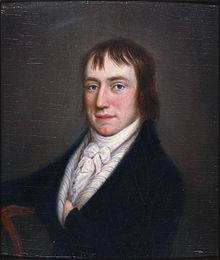
William Wordsworth
(1)
Poem topics: , Print This Poem , Rhyme Scheme
Submit Spanish Translation
Submit German Translation
Submit French Translation
About The Thorn
The Thorn is a poem by William Wordsworth. This page includes the poem text, poet information, related topics, comments, and similar poems.
Write your comment about The Thorn poem by William Wordsworth
Best Poems of William Wordsworth