Epitaphs Translated From Chiabrera Poem Rhyme Scheme and Analysis
Rhyme Scheme: A BCCDEFGHIJKL A MINOPQRSTUVWCXHYZA2B 2C2D2 A E2F2G2H2MI2J2K2L2JM2 C2N2O2P2Q2R2JS2T2 A2 A2MU2V2W2X2MY2Z2A3C2 B3C3C2ID3E3K2F3G3AFH 3G3I3K2C2G3J3HL2 H HK3OL3M3PSN3O3P3QHQ3 R3S3D3T3HU3HV3Q2G3 A HW3X3R3Y3Z3A4H2MOB4C 4D4E4E2A2 A2 H2F4C2G4H4I4N2G2A4A4 A4GA2C2HH4A4J4 A2 HK4A4S2A4G2L4A4J4A2K 4KM4WA4H4N4C2A4HO4HP 4A4 P4 P4Q4HA4P4A4S2K4A4A4A 4A2P4HR4P4A4R3S4| I | A |
| - | |
| WEEP not beloved Friends nor let the air | B |
| For me with sighs be troubled Not from life | C |
| Have I been taken this is genuine life | C |
| And this alone the life which now I live | D |
| In peace eternal where desire and joy | E |
| Together move in fellowship without end | F |
| Francesco Ceni willed that after death | G |
| His tombstone thus should speak for him And surely | H |
| Small cause there is for that fond wish of ours | I |
| Long to continue in this world a world | J |
| That keeps not faith nor yet can point a hope | K |
| To good whereof itself is destitute | L |
| - | |
| II | A |
| - | |
| PERHAPS some needful service of the State | M |
| Drew TITUS from the depth of studious bowers | I |
| And doomed him to contend in faithless courts | N |
| Where gold determines between right and wrong | O |
| Yet did at length his loyalty of heart | P |
| And his pure native genius lead him back | Q |
| To wait upon the bright and gracious Muses | R |
| Whom he had early loved And not in vain | S |
| Such course he held Bologna's learned schools | T |
| Were gladdened by the Sage's voice and hung | U |
| With fondness on those sweet Nestorian strains | V |
| There pleasure crowned his days and all his thoughts | W |
| A roseate fragrance breathed O human life | C |
| That never art secure from dolorous change | X |
| Behold a high injunction suddenly | H |
| To Arno's side hath brought him and he charmed | Y |
| A Tuscan audience but full soon was called | Z |
| To the perpetual silence of the grave | A2 |
| Mourn Italy the loss of him who stood | B2 |
| A Champion stedfast and invincible | C2 |
| To quell the rage of literary War | D2 |
| - | |
| III | A |
| - | |
| O THOU who movest onward with a mind | E2 |
| Intent upon thy way pause though in haste | F2 |
| 'Twill be no fruitless moment I was born | G2 |
| Within Savona's walls of gentle blood | H2 |
| On Tiber's banks my youth was dedicate | M |
| To sacred studies and the Roman Shepherd | I2 |
| Gave to my charge Urbino's numerous flock | J2 |
| Well did I watch much laboured nor had power | K2 |
| To escape from many and strange indignities | L2 |
| Was smitten by the great ones of the world | J |
| But did not fall for Virtue braves all shocks | M2 |
| Upon herself resting immoveably | C2 |
| Me did a kindlier fortune then invite | N2 |
| To serve the glorious Henry King of France | O2 |
| And in his hands I saw a high reward | P2 |
| Stretched out for my acceptance but Death came | Q2 |
| Now Reader learn from this my fate how false | R2 |
| How treacherous to her promise is the world | J |
| And trust in God to whose eternal doom | S2 |
| Must bend the sceptred Potentates of earth | T2 |
| - | |
| IV | A2 |
| - | |
| THERE never breathed a man who when his life | A2 |
| Was closing might not of that life relate | M |
| Toils long and hard The warrior will report | U2 |
| Of wounds and bright swords flashing in the field | V2 |
| And blast of trumpets He who hath been doomed | W2 |
| To bow his forehead in the courts of kings | X2 |
| Will tell of fraud and never ceasing hate | M |
| Envy and heart inquietude derived | Y2 |
| From intricate cabals of treacherous friends | Z2 |
| I who on shipboard lived from earliest youth | A3 |
| Could represent the countenance horrible | C2 |
| Of the vexed waters and the indignant rage | B3 |
| Of Auster and Bootes Fifty years | C3 |
| Over the well steered galleys did I rule | C2 |
| From huge Pelorus to the Atlantic pillars | I |
| Rises no mountain to mine eyes unknown | D3 |
| And the broad gulfs I traversed oft and oft | E3 |
| Of every cloud which in the heavens might stir | K2 |
| I knew the force and hence the rough sea's pride | F3 |
| Availed not to my Vessel's overthrow | G3 |
| What noble pomp and frequent have not I | A |
| On regal decks beheld yet in the end | F |
| I learned that one poor moment can suffice | H3 |
| To equalise the lofty and the low | G3 |
| We sail the sea of life a 'Calm' One finds | I3 |
| And One a 'Tempest' and the voyage o'er | K2 |
| Death is the quiet haven of us all | C2 |
| If more of my condition ye would know | G3 |
| Savona was my birth place and I sprang | J3 |
| Of noble parents seventy years and three | H |
| Lived I then yielded to a slow disease | L2 |
| - | |
| V | H |
| - | |
| TRUE is it that Ambrosio Salinero | H |
| With an untoward fate was long involved | K3 |
| In odious litigation and full long | O |
| Fate harder still had he to endure assaults | L3 |
| Of racking malady And true it is | M3 |
| That not the less a frank courageous heart | P |
| And buoyant spirit triumphed over pain | S |
| And he was strong to follow in the steps | N3 |
| Of the fair Muses Not a covert path | O3 |
| Leads to the dear Parnassian forest's shade | P3 |
| That might from him be hidden not a track | Q |
| Mounts to pellucid Hippocrene but he | H |
| Had traced its windings This Savona knows | Q3 |
| Yet no sepulchral honours to her Son | R3 |
| She paid for in our age the heart is ruled | S3 |
| Only by gold And now a simple stone | D3 |
| Inscribed with this memorial here is raised | T3 |
| By his bereft his lonely Chiabrera | H |
| Think not O Passenger who read'st the lines | U3 |
| That an exceeding love hath dazzled me | H |
| No he was One whose memory ought to spread | V3 |
| Where'er Permessus bears an honoured name | Q2 |
| And live as long as its pure stream shall flow | G3 |
| - | |
| VI | A |
| - | |
| DESTINED to war from very infancy | H |
| Was I Roberto Dati and I took | W3 |
| In Malta the white symbol of the Cross | X3 |
| Nor in life's vigorous season did I shun | R3 |
| Hazard or toil among the sands was seen | Y3 |
| Of Libya and not seldom on the banks | Z3 |
| Of wide Hungarian Danube 'twas my lot | A4 |
| To hear the sanguinary trumpet sounded | H2 |
| So lived I and repined not at such fate | M |
| This only grieves me for it seems a wrong | O |
| That stripped of arms I to my end am brought | B4 |
| On the soft down of my paternal home | C4 |
| Yet haply Arno shall be spared all cause | D4 |
| To blush for me Thou loiter not nor halt | E4 |
| In thy appointed way and bear in mind | E2 |
| How fleeting and how frail is human life | A2 |
| - | |
| VII | A2 |
| - | |
| O FLOWER of all that springs from gentle blood | H2 |
| And all that generous nurture breeds to make | F4 |
| Youth amiable O friend so true of soul | C2 |
| To fair Aglaia by what envy moved | G4 |
| Lelius has death cut short thy brilliant day | H4 |
| In its sweet opening and what dire mishap | I4 |
| Has from Savona torn her best delight | N2 |
| For thee she mourns nor e'er will cease to mourn | G2 |
| And should the out pourings of her eyes suffice not | A4 |
| For her heart's grief she will entreat Sebeto | A4 |
| Not to withhold his bounteous aid Sebeto | A4 |
| Who saw thee on his margin yield to death | G |
| In the chaste arms of thy beloved Love | A2 |
| What profit riches what does youth avail | C2 |
| Dust are our hopes I weeping bitterly | H |
| Penned these sad lines nor can forbear to pray | H4 |
| That every gentle Spirit hither led | A4 |
| May read them not without some bitter tears | J4 |
| - | |
| VIII | A2 |
| - | |
| NOT without heavy grief of heart did He | H |
| On whom the duty fell for at that time | K4 |
| The father sojourned in a distant land | A4 |
| Deposit in the hollow of this tomb | S2 |
| A brother's Child most tenderly beloved | A4 |
| FRANCESCO was the name the Youth had borne | G2 |
| POZZOBONNELLI his illustrious house | L4 |
| And when beneath this stone the Corse was laid | A4 |
| The eyes of all Savona streamed with tears | J4 |
| Alas the twentieth April of his life | A2 |
| Had scarcely flowered and at this early time | K4 |
| By genuine virtue he inspired a hope | K |
| That greatly cheered his country to his kin | M4 |
| He promised comfort and the flattering thoughts | W |
| His friends had in their fondness entertained | A4 |
| He suffered not to languish or decay | H4 |
| Now is there not good reason to break forth | N4 |
| Into a passionate lament O Soul | C2 |
| Short while a Pilgrim in our nether world | A4 |
| Do thou enjoy the calm empyreal air | H |
| And round this earthly tomb let roses rise | O4 |
| An everlasting spring in memory | H |
| Of that delightful fragrance which was once | P4 |
| From thy mild manners quietly exhaled | A4 |
| - | |
| IX | P4 |
| - | |
| PAUSE courteous Spirit Balbi supplicates | P4 |
| That Thou with no reluctant voice for him | Q4 |
| Here laid in mortal darkness wouldst prefer | H |
| A prayer to the Redeemer of the world | A4 |
| This to the dead by sacred right belongs | P4 |
| All else is nothing Did occasion suit | A4 |
| To tell his worth the marble of this tomb | S2 |
| Would ill suffice for Plato's lore sublime | K4 |
| And all the wisdom of the Stagyrite | A4 |
| Enriched and beautified his studious mind | A4 |
| With Archimedes also he conversed | A4 |
| As with a chosen friend nor did he leave | A2 |
| Those laureat wreaths ungathered which the Nymphs | P4 |
| Twine near their loved Permessus Finally | H |
| Himself above each lower thought uplifting | R4 |
| His ears he closed to listen to the songs | P4 |
| Which Sion's Kings did consecrate of old | A4 |
| And his Permessus found on Lebanon | R3 |
| A blessed Ma | S4 |
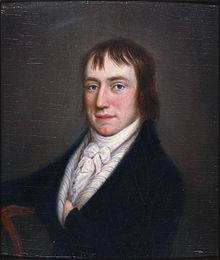
William Wordsworth
(1)
Poem topics: , Print This Poem , Rhyme Scheme
Submit Spanish Translation
Submit German Translation
Submit French Translation
About Epitaphs Translated From Chiabrera
Epitaphs Translated From Chiabrera is a poem by William Wordsworth. This page includes the poem text, poet information, related topics, comments, and similar poems.
Write your comment about Epitaphs Translated From Chiabrera poem by William Wordsworth
Best Poems of William Wordsworth