The Rival Poet Sonnets (78 - 86) Poem Rhyme Scheme and Analysis
Rhyme Scheme: A BCDCEFEGHGHGIJ J KJKJLMNMOAPAJJ J QRQRJSJTUVUVJJ J WXWXAFAFJYJYMM J JWJWZJZJA2B2A2B2B2B2 J B2B2B2B2B2C2B2C2B2D2 B2E2JJ A F2ZF2ZG2GG2GB2TB2SJJ A H2B2H2B2JZJZ F2ZF2B2B2 A JZJZB2B2B2B2B2JB2JZZ| LXXVIII | A |
| - | |
| So oft have I invoked thee for my Muse | B |
| And found such fair assistance in my verse | C |
| As every alien pen hath got my use | D |
| And under thee their poesy disperse | C |
| Thine eyes that taught the dumb on high to sing | E |
| And heavy ignorance aloft to fly | F |
| Have added feathers to the learned's wing | E |
| And given grace a double majesty | G |
| Yet be most proud of that which I compile | H |
| Whose influence is thine and born of thee | G |
| In others' works thou dost but mend the style | H |
| And arts with thy sweet graces graced be | G |
| But thou art all my art and dost advance | I |
| As high as learning my rude ignorance | J |
| - | |
| LXXIX | J |
| - | |
| Whilst I alone did call upon thy aid | K |
| My verse alone had all thy gentle grace | J |
| But now my gracious numbers are decay'd | K |
| And my sick Muse doth give an other place | J |
| I grant sweet love thy lovely argument | L |
| Deserves the travail of a worthier pen | M |
| Yet what of thee thy poet doth invent | N |
| He robs thee of and pays it thee again | M |
| He lends thee virtue and he stole that word | O |
| From thy behaviour beauty doth he give | A |
| And found it in thy cheek he can afford | P |
| No praise to thee but what in thee doth live | A |
| Then thank him not for that which he doth say | J |
| Since what he owes thee thou thyself dost pay | J |
| - | |
| LXXX | J |
| - | |
| O how I faint when I of you do write | Q |
| Knowing a better spirit doth use your name | R |
| And in the praise thereof spends all his might | Q |
| To make me tongue tied speaking of your fame | R |
| But since your worth wide as the ocean is | J |
| The humble as the proudest sail doth bear | S |
| My saucy bark inferior far to his | J |
| On your broad main doth wilfully appear | T |
| Your shallowest help will hold me up afloat | U |
| Whilst he upon your soundless deep doth ride | V |
| Or being wrack'd I am a worthless boat | U |
| He of tall building and of goodly pride | V |
| Then if he thrive and I be cast away | J |
| The worst was this my love was my decay | J |
| - | |
| LXXXI | J |
| - | |
| Or I shall live your epitaph to make | W |
| Or you survive when I in earth am rotten | X |
| From hence your memory death cannot take | W |
| Although in me each part will be forgotten | X |
| Your name from hence immortal life shall have | A |
| Though I once gone to all the world must die | F |
| The earth can yield me but a common grave | A |
| When you entombed in men's eyes shall lie | F |
| Your monument shall be my gentle verse | J |
| Which eyes not yet created shall o'er read | Y |
| And tongues to be your being shall rehearse | J |
| When all the breathers of this world are dead | Y |
| You still shall live such virtue hath my pen | M |
| Where breath most breathes even in the mouths of men | M |
| - | |
| LXXXII | J |
| - | |
| I grant thou wert not married to my Muse | J |
| And therefore mayst without attaint o'erlook | W |
| The dedicated words which writers use | J |
| Of their fair subject blessing every book | W |
| Thou art as fair in knowledge as in hue | Z |
| Finding thy worth a limit past my praise | J |
| And therefore art enforced to seek anew | Z |
| Some fresher stamp of the time bettering days | J |
| And do so love yet when they have devis'd | A2 |
| What strained touches rhetoric can lend | B2 |
| Thou truly fair wert truly sympathiz'd | A2 |
| In true plain words by thy true telling friend | B2 |
| And their gross painting might be better usd | B2 |
| Where cheeks need blood in thee it is abusd | B2 |
| - | |
| LXXXIII | J |
| - | |
| I never saw that you did painting need | B2 |
| And therefore to your fair no painting set | B2 |
| I found or thought I found you did exceed | B2 |
| The barren tender of a poet's debt | B2 |
| And therefore have I slept in your report | B2 |
| That you yourself being extant well might show | C2 |
| How far a modern quill doth come too short | B2 |
| Speaking of worth what worth in you doth grow | C2 |
| This silence for my sin you did impute | B2 |
| Which shall be most my glory being dumb | D2 |
| For I impair not beauty being mute | B2 |
| When others would give life and bring a tomb | E2 |
| There lives more life in one of your fair eyes | J |
| Than both your poets can in praise devise | J |
| - | |
| LXXXIV | A |
| - | |
| Who is it that says most which can say more | F2 |
| Than this rich praise that you alone are you | Z |
| In whose confine immured is the store | F2 |
| Which should example where your equal grew | Z |
| Lean penury within that pen doth dwell | G2 |
| That to his subject lends not some small glory | G |
| But he that writes of you if he can tell | G2 |
| That you are you so dignifies his story | G |
| Let him but copy what in you is writ | B2 |
| Not making worse what nature made so clear | T |
| And such a counterpart shall fame his wit | B2 |
| Making his style admired every where | S |
| You to your beauteous blessings add a curse | J |
| Being fond on praise which makes your praises worse | J |
| - | |
| LXXXV | A |
| - | |
| My tongue tied Muse in manners holds her still | H2 |
| While comments of your praise richly compiled | B2 |
| Reserve thy character with golden quill | H2 |
| And precious phrase by all the Muses filed | B2 |
| I think good thoughts whilst others write good words | J |
| And like unlettered clerk still cry 'Amen' | Z |
| To every hymn that able spirit affords | J |
| In polished form of well refined pen | Z |
| Hearing you praised I say ''tis so 'tis true ' | - |
| And to the most of praise add something more | F2 |
| But that is in my thought whose love to you | Z |
| Though words come hindmost holds his rank before | F2 |
| Then others for the breath of words respect | B2 |
| Me for my dumb thoughts speaking in effect | B2 |
| - | |
| LXXXVI | A |
| - | |
| Was it the proud full sail of his great verse | J |
| Bound for the prize of all too precious you | Z |
| That did my ripe thoughts in my brain inhearse | J |
| Making their tomb the womb wherein they grew | Z |
| Was it his spirit by spirits taught to write | B2 |
| Above a mortal pitch that struck me dead | B2 |
| No neither he nor his compeers by night | B2 |
| Giving him aid my verse astonished | B2 |
| He nor that affable familiar ghost | B2 |
| Which nightly gulls him with intelligence | J |
| As victors of my silence cannot boast | B2 |
| I was not sick of any fear from thence | J |
| But when your countenance filled up his line | Z |
| Then lacked I matter that enfeebled mine | Z |
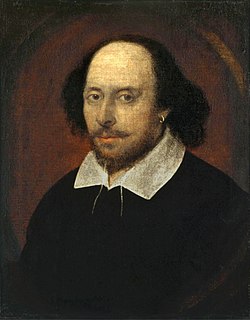
William Shakespeare
(1)
Poem topics: , Print This Poem , Rhyme Scheme
Submit Spanish Translation
Submit German Translation
Submit French Translation
About The Rival Poet Sonnets (78 - 86)
The Rival Poet Sonnets (78 - 86) is a poem by William Shakespeare. This page includes the poem text, poet information, related topics, comments, and similar poems.
Write your comment about The Rival Poet Sonnets (78 - 86) poem by William Shakespeare
Best Poems of William Shakespeare