Eclogue Vi Poem Rhyme Scheme and Analysis
Rhyme Scheme: A BCDEAFGAHIAJAKLAMKNO PQRSTUAIVWAVXYZRA2SA SB2VXC2FAD2AAE2F2TG2 WG2H2I2WCWAJ2K2RAA2A L2A2AAAASM2ASN2AO2AP 2JWA2Q2SA2B2R2AS2L2S JT2FH2U2V2B2AE2P2W2S X2WU2| TO VARUS | A |
| - | |
| First my Thalia stooped in sportive mood | B |
| To Syracusan strains nor blushed within | C |
| The woods to house her When I sought to tell | D |
| Of battles and of kings the Cynthian god | E |
| Plucked at mine ear and warned me 'Tityrus | A |
| Beseems a shepherd wight to feed fat sheep | F |
| But sing a slender song ' Now Varus I | G |
| For lack there will not who would laud thy deeds | A |
| And treat of dolorous wars will rather tune | H |
| To the slim oaten reed my silvan lay | I |
| I sing but as vouchsafed me yet even this | A |
| If if but one with ravished eyes should read | J |
| Of thee O Varus shall our tamarisks | A |
| And all the woodland ring nor can there be | K |
| A page more dear to Phoebus than the page | L |
| Where foremost writ the name of Varus stands | A |
| Speed ye Pierian Maids Within a cave | M |
| Young Chromis and Mnasyllos chanced to see | K |
| Silenus sleeping flushed as was his wont | N |
| With wine of yesterday Not far aloof | O |
| Slipped from his head the garlands lay and there | P |
| By its worn handle hung a ponderous cup | Q |
| Approaching for the old man many a time | R |
| Had balked them both of a long hoped for song | S |
| Garlands to fetters turned they bind him fast | T |
| Then Aegle fairest of the Naiad band | U |
| Aegle came up to the half frightened boys | A |
| Came and as now with open eyes he lay | I |
| With juice of blood red mulberries smeared him o'er | V |
| Both brow and temples Laughing at their guile | W |
| And crying 'Why tie the fetters loose me boys | A |
| Enough for you to think you had the power | V |
| Now list the songs you wish for songs for you | X |
| Another meed for her' forthwith began | Y |
| Then might you see the wild things of the wood | Z |
| With Fauns in sportive frolic beat the time | R |
| And stubborn oaks their branchy summits bow | A2 |
| Not Phoebus doth the rude Parnassian crag | S |
| So ravish nor Orpheus so entrance the heights | A |
| Of Rhodope or Ismarus for he sang | S |
| How through the mighty void the seeds were driven | B2 |
| Of earth air ocean and of liquid fire | V |
| How all that is from these beginnings grew | X |
| And the young world itself took solid shape | C2 |
| Then 'gan its crust to harden and in the deep | F |
| Shut Nereus off and mould the forms of things | A |
| Little by little and how the earth amazed | D2 |
| Beheld the new sun shining and the showers | A |
| Fall as the clouds soared higher what time the woods | A |
| 'Gan first to rise and living things to roam | E2 |
| Scattered among the hills that knew them not | F2 |
| Then sang he of the stones by Pyrrha cast | T |
| Of Saturn's reign and of Prometheus' theft | G2 |
| And the Caucasian birds and told withal | W |
| Nigh to what fountain by his comrades left | G2 |
| The mariners cried on Hylas till the shore | H2 |
| 'Then Re echoed 'Hylas Hylas soothed | I2 |
| Pasiphae with the love of her white bull | W |
| Happy if cattle kind had never been | C |
| O ill starred maid what frenzy caught thy soul | W |
| The daughters too of Proetus filled the fields | A |
| With their feigned lowings yet no one of them | J2 |
| Of such unhallowed union e'er was fain | K2 |
| As with a beast to mate though many a time | R |
| On her smooth forehead she had sought for horns | A |
| And for her neck had feared the galling plough | A2 |
| O ill starred maid thou roamest now the hills | A |
| While on soft hyacinths he his snowy side | L2 |
| Reposing under some dark ilex now | A2 |
| Chews the pale herbage or some heifer tracks | A |
| Amid the crowding herd Now close ye Nymphs | A |
| Ye Nymphs of Dicte close the forest glades | A |
| If haply there may chance upon mine eyes | A |
| The white bull's wandering foot prints him belike | S |
| Following the herd or by green pasture lured | M2 |
| Some kine may guide to the Gortynian stalls | A |
| Then sings he of the maid so wonder struck | S |
| With the apples of the Hesperids and then | N2 |
| With moss bound bitter bark rings round the forms | A |
| Of Phaethon's fair sisters from the ground | O2 |
| Up towering into poplars Next he sings | A |
| Of Gallus wandering by Permessus' stream | P2 |
| And by a sister of the Muses led | J |
| To the Aonian mountains and how all | W |
| The choir of Phoebus rose to greet him how | A2 |
| The shepherd Linus singer of songs divine | Q2 |
| Brow bound with flowers and bitter parsley spake | S |
| 'These reeds the Muses give thee take them thou | A2 |
| Erst to the aged bard of Ascra given | B2 |
| Wherewith in singing he was wont to draw | R2 |
| Time rooted ash trees from the mountain heights | A |
| With these the birth of the Grynean grove | S2 |
| Be voiced by thee that of no grove beside | L2 |
| Apollo more may boast him ' Wherefore speak | S |
| Of Scylla child of Nisus who 'tis said | J |
| Her fair white loins with barking monsters girt | T2 |
| Vexed the Dulichian ships and in the deep | F |
| Swift eddying whirlpool with her sea dogs tore | H2 |
| The trembling mariners or how he told | U2 |
| Of the changed limbs of Tereus what a feast | V2 |
| What gifts to him by Philomel were given | B2 |
| How swift she sought the desert with what wings | A |
| Hovered in anguish o'er her ancient home | E2 |
| All that of old Eurotas happy stream | P2 |
| Heard as Apollo mused upon the lyre | W2 |
| And bade his laurels learn Silenus sang | S |
| Till from Olympus loth at his approach | X2 |
| Vesper advancing bade the shepherds tell | W |
| Their tale of sheep and pen them in the fold | U2 |
Virgil
(1)
Poem topics: , Print This Poem , Rhyme Scheme
Submit Spanish Translation
Submit German Translation
Submit French Translation
About Eclogue Vi
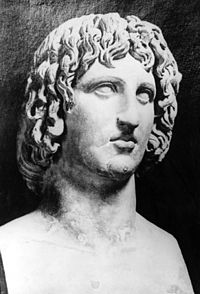
Eclogue Vi is a poem by Virgil. This page includes the poem text, poet information, related topics, comments, and similar poems.
Write your comment about Eclogue Vi poem by Virgil
Best Poems of Virgil