The Lay Of The Last Minstrel: Canto V. Poem Rhyme Scheme and Analysis
Rhyme Scheme: ABCBCDDEEAAFF AGHIIJJKKLLBBMMHHJJH HAAEEJJ ANNCCOPHHNN FHQHQHHRSSSBBBBTB FSSSSSHHBFFBSSEEESSF FCC FJSJSBBCCSHHSSSBHHBS SSSS FHHSSHSSKBBUVVSHHS FSSEEHHJJHHHHQQ CESESEESSHBBBH CSFSFFFFSSSCCSSS CSSSSESESCCCCJJSCCS CEEWSSXSSXCCSFFS CSSSSSSSSQSSF| I | A |
| Call it not vain they do not err | B |
| Who say that when the Poet dies | C |
| Mute Nature mourns her worshipper | B |
| And celebrates his obsequies | C |
| Who say tall cliff and cavern lone | D |
| For the departed Bard make moan | D |
| That mountains weep in crystal rill | E |
| That flowers in tears of balm distill | E |
| Through his lov'd groves that breezes sigh | A |
| And oaks in deeper groan reply | A |
| And rivers teach their rushing wave | F |
| To murmur dirges round his grave | F |
| - | |
| II | A |
| Not that in sooth o'er mortal urn | G |
| Those things inanimate can mourn | H |
| But that the stream the wood the gale | I |
| Is vocal with the plaintive wail | I |
| Of those who else forgotten long | J |
| Liv'd in the poet's faithful song | J |
| And with the poet's parting breath | K |
| Whose memory feels a second death | K |
| The Maid's pale shade who wails her lot | L |
| That love true love should be forgot | L |
| From rose and hawthorn shakes the tear | B |
| Upon the gentle Minstrel's bier | B |
| The phantom Knight his glory fled | M |
| Mourns o'er the field he heap'd with dead | M |
| Mounts the wild blast that sweeps amain | H |
| And shrieks along the battle plain | H |
| The Chief whose antique crownlet long | J |
| Still sparkled in the feudal song | J |
| Now from the mountain's misty throne | H |
| Sees in the thanedom once his own | H |
| His ashes undistinguish'd lie | A |
| His place his power his memory die | A |
| His groans the lonely caverns fill | E |
| His tears of rage impel the rill | E |
| All mourn the Minstrel's harp unstrung | J |
| Their name unknown their praise unsung | J |
| - | |
| III | A |
| Scarcely the hot assault was staid | N |
| The terms of truce were scarcely made | N |
| When they could spy from Branksome's towers | C |
| The advancing march of martial powers | C |
| Thick clouds of dust afar appear'd | O |
| And trampling steeds were faintly heard | P |
| Bright spears above the columns dun | H |
| Glanced momentary to the sun | H |
| And feudal banners fair display'd | N |
| The bands that moved to Branksome's aid | N |
| - | |
| IV | F |
| Vails not to tell each hardy clan | H |
| From the fair Middle Marches came | Q |
| The Bloody Heart blaz'd in the van | H |
| Announcing Douglas dreaded name | Q |
| Vails not to tell what steeds did spurn | H |
| Where the Seven Spears of Wedderburne | H |
| Their men in battle order set | R |
| And Swinton laid the lance in rest | S |
| That tamed of yore the sparkling crest | S |
| Of Clarence's Plantagenet | S |
| Nor list I say what hundreds more | B |
| From the rich Merse and Lammermore | B |
| And Tweed's fair borders to the war | B |
| Beneath the crest of Old Dunbar | B |
| And Hepburn's mingled banners come | T |
| Down the steep mountain glittering far | B |
| And shouting still 'A Home a Home ' | - |
| - | |
| V | F |
| Now squire and knight from Branksome sent | S |
| On many a courteous message went | S |
| To every chief and lord they paid | S |
| Meet thanks for prompt and powerful aid | S |
| And told them how a truce was made | S |
| And how a day of fight was ta'en | H |
| 'Twixt Musgrave and stout Deloraine | H |
| And how the Ladye pray'd them dear | B |
| That all would stay the fight to see | F |
| And deign in love and courtesy | F |
| To taste of Branksome cheer | B |
| Nor while they bade to feast each Scot | S |
| Were England's noble Lords forgot | S |
| Himself the hoary Seneschal | E |
| Rode forth in seemly terms to call | E |
| Those gallant foes to Branksome Hall | E |
| Accepted Howard than whom knight | S |
| Was never dubb'd more bold in fight | S |
| Nor when from war and armor free | F |
| More fam'd for stately courtesy | F |
| But angry Dacre rather chose | C |
| In his pavilion to repose | C |
| - | |
| VI | F |
| Now noble Dame perchance you ask | J |
| How these two hostile armies met | S |
| Deeming it were no easy task | J |
| To keep the truce which here was set | S |
| Where martial spirits all on fire | B |
| Breathed only blood and mortal ire | B |
| By mutual inroads mutual blows | C |
| By habit and by nation foes | C |
| They met on Teviot's strand | S |
| They met and sate them mingled down | H |
| Without a threat without a frown | H |
| As brothers meet in foreign land | S |
| The hands the spear that lately grasp'd | S |
| Still in the mailed gauntlet clasp'd | S |
| Were interchang'd in greeting dear | B |
| Visors were raised and faces shown | H |
| And many a friend to friend made known | H |
| Partook of social cheer | B |
| Some drove the jolly bowl about | S |
| With dice and draughts some chas'd the day | S |
| And some with many a merry shout | S |
| In riot revelry and rout | S |
| Pursued the foot ball play | S |
| - | |
| VII | F |
| Yet be it known had bugles blown | H |
| Or sign of war been seen | H |
| Those bands so fair together rang'd | S |
| Those hands so frankly interchang'd | S |
| Had dyed with gore the green | H |
| The merry shout by Teviot side | S |
| Had sunk in war cries wild and wide | S |
| And in the groan of death | K |
| And whingers now in friendship bare | B |
| The social meal to part and share | B |
| Had found a bloody sheath | U |
| 'Twixt truce and war such sudden change | V |
| Was not infrequent nor held strange | V |
| In the old Border day | S |
| But yet on Branksome's towers and town | H |
| In peaceful merriment sunk down | H |
| The sun's declining ray | S |
| - | |
| VIII | F |
| The blithsome signs of wassel gay | S |
| Decay'd not with the dying day | S |
| Soon through the lattic'd windows tall | E |
| Of lofty Branksome's lordly hall | E |
| Divided square by shafts of stone | H |
| Huge flakes of ruddy lustre shone | H |
| Nor less the gilded rafters rang | J |
| With merry harp and beakers' clang | J |
| And frequent on the darkening plain | H |
| Loud hollo whoop or whistle ran | H |
| As bands their stragglers to regain | H |
| Give the shrill watchword of their clan | H |
| And revellers o'er their bowls proclaim | Q |
| Douglas or Dacre's conquering name | Q |
| - | |
| IX | C |
| Less frequent heard and fainter still | E |
| At length the various clamors died | S |
| And you might hear from Branksome hill | E |
| No sound but Teviot's rushing tide | S |
| Save when the changing sentinel | E |
| The challenge of his watch could tell | E |
| And save where through the dark profound | S |
| The clanging axe and hammer's sound | S |
| Rung from the nether lawn | H |
| For many a busy hand toil'd there | B |
| Strong pales to shape and beams to square | B |
| The lists' dread barriers to prepare | B |
| Against the morrow's dawn | H |
| - | |
| X | C |
| Margaret from hall did soon retreat | S |
| Despite the Dame's reproving eye | F |
| Nor mark'd she as she left her seat | S |
| Full many a stifled sigh | F |
| For many a noble warrior strove | F |
| To win the Flower of Teviot's love | F |
| And many a bold ally | F |
| With throbbing head and anxious heart | S |
| All in her lonely bower apart | S |
| In broken sleep she lay | S |
| Betimes from silken couch she rose | C |
| While yet the banner'd hosts repose | C |
| She view'd the dawning day | S |
| Of all the hundreds sunk to rest | S |
| First woke the loveliest and the best | S |
| - | |
| XI | C |
| She gaz'd upon the inner court | S |
| Which in the tower's tall shadow lay | S |
| Where coursers' clang and stamp and snort | S |
| Had rung the livelong yesterday | S |
| Now still as death till stalking slow | E |
| The jingling spurs announc'd his tread | S |
| A stately warrior pass'd below | E |
| But when he rais'd his plumed head | S |
| Bless'd Mary can it be | C |
| Secure as if in Ousenam bowers | C |
| He walks through Branksome's hostile towers | C |
| With fearless step and free | C |
| She dar'd not sign she dar'd not speak | J |
| Oh if one page's slumbers break | J |
| His blood the price must pay | S |
| Not all the pearls Queen Mary wears | C |
| Not Margaret's yet more precious tears | C |
| Shall buy his life a day | S |
| - | |
| XII | C |
| Yet was his hazard small for well | E |
| You may bethink you of the spell | E |
| Of that sly urchin page | W |
| This to his lord he did impart | S |
| And made him seem by glamour art | S |
| A knight from Hermitage | X |
| Unchalleng'd thus the warder's post | S |
| The court unchalleng'd thus he cross'd | S |
| For all the vassalage | X |
| But O what magic's quaint disguise | C |
| Could blind fair Margaret s azure eyes | C |
| She started from her seat | S |
| While with surprise and fear she strove | F |
| And both could scarcely master love | F |
| Lord Henry's at her feet | S |
| - | |
| XIII | C |
| Oft have I mus'd what purpose bad | S |
| That foul malicious urchin had | S |
| To bring this meeting round | S |
| For happy love's a heavenly sight | S |
| And by a vile malignant sprite | S |
| In such no joy is found | S |
| And oft I've deem'd perchance he thought | S |
| Their erring passion might have wrought | S |
| Sorrow and sin and shame | Q |
| And death to Cranstoun's gallant Knight | S |
| And to the gentle ladye bright | S |
| Disgrace and loss of | F |
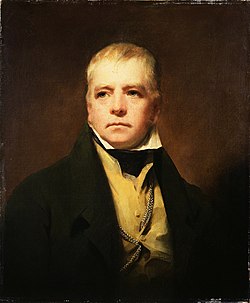
Sir Walter Scott
(1)
Poem topics: , Print This Poem , Rhyme Scheme
Submit Spanish Translation
Submit German Translation
Submit French Translation
About The Lay Of The Last Minstrel: Canto V.
The Lay Of The Last Minstrel: Canto V. is a poem by Sir Walter Scott. This page includes the poem text, poet information, related topics, comments, and similar poems.
Write your comment about The Lay Of The Last Minstrel: Canto V. poem by Sir Walter Scott
Best Poems of Sir Walter Scott