The Field Of Waterloo Poem Rhyme Scheme and Analysis
Rhyme Scheme: ABBCDECFFGHHGAAIJJIK KLMNNL AOOOHPQHRRHIISTTS AAAFFKKUVWXXWYIHGGHM MMGZZGA2A2 AHB2AIIIIAGGC2D2D2D2 AE2E2F2G2G2H2I2I2I2I KKKI AJ2J2J2K2L2L2L2M2N2N 2O2O2GZZG AP2P2Q2R2R2R2Q2AAAQ2 KKKKQ2KQ2 AAAAS2T2T2S2K2K2U2AA U2MMMKV2V2KKKK ATTD2KKD2W2W2U2U2IIX 2X2Y2Y2Y2Y2IZ2A3Y AD2D2K2AAA R2R2KKB3B3B3U2AA AS2S2C3C3KD3D3KKKKKK E3E3D2D2D2 ALF3Z2Z2NMKKII| I | A |
| Fair Brussels thou art far behind | B |
| Though lingering on the morning wind | B |
| We yet may hear the hour | C |
| Pealed over orchard and canal | D |
| With voice prolonged and measured fall | E |
| From proud St Michael's tower | C |
| Thy wood dark Soignies holds us now | F |
| Where the tall beeches' glossy bough | F |
| For many a league around | G |
| With birch and darksome oak between | H |
| Spreads deep and far a pathless screen | H |
| Of tangled forest ground | G |
| Stems planted close by stems defy | A |
| The adventurous foot the curious eye | A |
| For access seeks in vain | I |
| And the brown tapestry of leaves | J |
| Strewed on the blighted ground receives | J |
| Nor sun nor air nor rain | I |
| No opening glade dawns on our way | K |
| No streamlet glancing to the ray | K |
| Our woodland path has crossed | L |
| And the straight causeway which we tread | M |
| Prolongs a line of dull arcade | N |
| Unvarying through the unvaried shade | N |
| Until in distance lost | L |
| - | |
| II | A |
| A brighter livelier scene succeeds | O |
| In groups the scattering wood recedes | O |
| Hedge rows and huts and sunny meads | O |
| And corn fields glance between | H |
| The peasant at his labour blithe | P |
| Plies the hooked staff and shortened scythe | Q |
| But when these ears were green | H |
| Placed close within destruction's scope | R |
| Full little was that rustic's hope | R |
| Their ripening to have seen | H |
| And lo a hamlet and its fane | I |
| Let not the gazer with disdain | I |
| Their architecture view | S |
| For yonder rude ungraceful shrine | T |
| And disproportioned spire are thine | T |
| Immortal WATERLOO | S |
| - | |
| III | A |
| Fear not the heat though full and high | A |
| The sun has scorched the autumn sky | A |
| And scarce a forest straggler now | F |
| To shade us spreads a greenwood bough | F |
| These fields have seen a hotter day | K |
| Than e'er was fired by sunny ray | K |
| Yet one mile on yon shattered hedge | U |
| Crests the soft hill whose long smooth ridge | V |
| Looks on the field below | W |
| And sinks so gently on the dale | X |
| That not the folds of Beauty's veil | X |
| In easier curves can flow | W |
| Brief space from thence the ground again | Y |
| Ascending slowly from the plain | I |
| Forms an opposing screen | H |
| Which with its crest of upland ground | G |
| Shuts the horizon all around | G |
| The softened vale between | H |
| Slopes smooth and fair for courser's tread | M |
| Not the most timid maid need dread | M |
| To give her snow white palfrey head | M |
| On that wide stubble ground | G |
| Nor wood nor tree nor bush are there | Z |
| Her course to intercept or scare | Z |
| Nor fosse nor fence are found | G |
| Save where from out her shattered bowers | A2 |
| Rise Hougomont's dismantled towers | A2 |
| - | |
| IV | A |
| Now see'st thou aught in this lone scene | H |
| Can tell of that which late hath been | B2 |
| A stranger might reply | A |
| 'The bare extent of stubble plain | I |
| Seems lately lightened of its grain | I |
| And yonder sable tracks remain | I |
| Marks of the peasant's ponderous wain | I |
| When harvest home was nigh | A |
| On these broad spots of trampled ground | G |
| Perchance the rustics danced such round | G |
| As Teniers loved to draw | C2 |
| And where the earth seems scorched by flame | D2 |
| To dress the homely feast they came | D2 |
| And toiled the kerchiefed village dame | D2 |
| Around her fire of straw ' | - |
| - | |
| V | A |
| So deem'st thou so each mortal deems | E2 |
| Of that which is from that which seems | E2 |
| But other harvest here | F2 |
| Than that which peasant's scythe demands | G2 |
| Was gathered in by sterner hands | G2 |
| With bayonet blade and spear | H2 |
| No vulgar crop was theirs to reap | I2 |
| No stinted harvest thin and cheap | I2 |
| Heroes before each fatal sweep | I2 |
| Fell thick as ripened grain | I |
| And ere the darkening of the day | K |
| Piled high as autumn shocks there lay | K |
| The ghastly harvest of the fray | K |
| The corpses of the slain | I |
| - | |
| VI | A |
| Ay look again that line so black | J2 |
| And trampled marks the bivouac | J2 |
| Yon deep graved ruts the artillery's track | J2 |
| So often lost and won | K2 |
| And close beside the hardened mud | L2 |
| Still shows where fetlock deep in blood | L2 |
| The fierce dragoon through battle's flood | L2 |
| Dashed the hot war horse on | M2 |
| These spots of excavation tell | N2 |
| The ravage of the bursting shell | N2 |
| And feel'st thou not the tainted steam | O2 |
| That reeks against the sultry beam | O2 |
| From yonder trenched mound | G |
| The pestilential fumes declare | Z |
| That Carnage has replenished there | Z |
| Her garner house profound | G |
| - | |
| VII | A |
| Far other harvest home and feast | P2 |
| Than claims the boor from scythe released | P2 |
| On these scorched fields were known | Q2 |
| Death hovered o'er the maddening rout | R2 |
| And in the thrilling battle shout | R2 |
| Sent for the bloody banquet out | R2 |
| A summons of his own | Q2 |
| Through rolling smoke the Demon's eye | A |
| Could well each destined guest espy | A |
| Well could his ear in ecstasy | A |
| Distinguish every tone | Q2 |
| That filled the chorus of the fray | K |
| From cannon roar and trumpet bray | K |
| From charging squadrons' wild hurra | K |
| From the wild clang that marked their way | K |
| Down to the dying groan | Q2 |
| And the last sob of life's decay | K |
| When breath was all but flown | Q2 |
| - | |
| VIII | A |
| Feast on stern foe of mortal life | A |
| Feast on but think not that a strife | A |
| With such promiscuous carnage rife | A |
| Protracted space may last | S2 |
| The deadly tug of war at length | T2 |
| Must limits find in human strength | T2 |
| And cease when these are past | S2 |
| Vain hope that morn's o'erclouded sun | K2 |
| Heard the wild shout of fight begun | K2 |
| Ere he attained his height | U2 |
| And through the war smoke volumed high | A |
| Still peals that unremitted cry | A |
| Though now he stoops to night | U2 |
| For ten long hours of doubt and dread | M |
| Fresh succours from the extended head | M |
| Of either hill the contest fed | M |
| Still down the slope they drew | K |
| The charge of columns paused not | V2 |
| Nor ceased the storm of shell and shot | V2 |
| For all that war could do | K |
| Of skill and force was proved that day | K |
| And turned not yet the doubtful fray | K |
| On bloody Waterloo | K |
| - | |
| IX | A |
| Pale Brussels then what thoughts were thine | T |
| When ceaseless from the distant line | T |
| Continued thunders came | D2 |
| Each burgher held his breath to hear | K |
| These forerunners of havoc near | K |
| Of rapine and of flame | D2 |
| What ghastly sights were thine to meet | W2 |
| When rolling through thy stately street | W2 |
| The wounded showed their mangled plight | U2 |
| In token of the unfinished fight | U2 |
| And from each anguish laden wain | I |
| The blood drops laid thy dust like rain | I |
| How often in the distant drum | X2 |
| Heard'st thou the fell Invader come | X2 |
| While Ruin shouting to his band | Y2 |
| Shook high her torch and gory brand | Y2 |
| Cheer thee fair City From yon stand | Y2 |
| Impatient still his outstretched hand | Y2 |
| Points to his prey in vain | I |
| While maddening in his eager mood | Z2 |
| And all unwont to be withstood | A3 |
| He fires the fight again | Y |
| - | |
| X | A |
| 'On On ' was still his stern exclaim | D2 |
| 'Confront the battery's jaws of flame | D2 |
| Rush on the levelled gun | K2 |
| My steel clad cuirassiers advance | A |
| Each Hulan forward with his lance | A |
| My Guard my Chosen charge for France | A |
| France and Napoleon ' | - |
| Loud answered their acclaiming shout | R2 |
| Greeting the mandate which sent out | R2 |
| Their bravest and their best to dare | K |
| The fate their leader shunned to share | K |
| But HE his country's sword and shield | B3 |
| Still in the battle front revealed | B3 |
| Where danger fiercest swept the field | B3 |
| Came like a beam of light | U2 |
| In action prompt in sentence brief | A |
| 'Soldiers stand firm ' exclaimed the Chief | A |
| 'England shall tell the fight ' | - |
| - | |
| XI | A |
| On came the whirlwind like the last | S2 |
| But fiercest sweep of tempest blast | S2 |
| On came the whirlwind steel gleams broke | C3 |
| Like lightning through the rolling smoke | C3 |
| The war was waked anew | K |
| Three hundred cannon mouths roared loud | D3 |
| And from their throats with flash and cloud | D3 |
| Their showers of iron threw | K |
| Beneath their fire in full career | K |
| Rushed on the ponderous cuirassier | K |
| The lancer couched his ruthless spear | K |
| And hurrying as to havoc near | K |
| The cohorts' eagles flew | K |
| In one dark torrent broad and strong | E3 |
| The advancing onset rolled along | E3 |
| Forth harbingered by fierce acclaim | D2 |
| That from the shroud of smoke and flame | D2 |
| Pealed wildly the imperial name | D2 |
| - | |
| XII | A |
| But on the British heart were lost | L |
| The terrors of the charging host | F3 |
| For not an eye the storm that viewed | Z2 |
| Changed its proud glance of fortitude | Z2 |
| Nor was one forward footstep stayed | N |
| As dropped the dying and the dead | M |
| Fast as their ranks the thunders tear | K |
| Fast they renewed each serried square | K |
| And on the wounded and the slain | I |
| Closed their dimini | I |
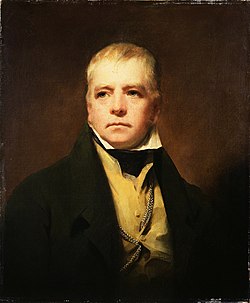
Sir Walter Scott
(1)
Poem topics: , Print This Poem , Rhyme Scheme
Submit Spanish Translation
Submit German Translation
Submit French Translation
About The Field Of Waterloo
The Field Of Waterloo is a poem by Sir Walter Scott. This page includes the poem text, poet information, related topics, comments, and similar poems.
Write your comment about The Field Of Waterloo poem by Sir Walter Scott
Best Poems of Sir Walter Scott