Rokeby: Canto V. Poem Rhyme Scheme and Analysis
Rhyme Scheme: ABBCDEEFFGGHHBBIIDJ AKKLLMMNNFFOOPPQQRRL LSTUUVV AWWGGXXGGYBZZJJA2A2A AB2B2 TC2C2D2D2E2E2D2D2DJF 2F2G2G2XXH2I2YYTTJJJ 2J2GGGB2B2NNK2L2 TM2M2N2O2P2P2AAH2H2E 2E2Q2Q2D2D2R2R2S2S2T 2C2XXD2 AQQU2U2V2V2UUH2H2A2A 2IIW2W2NNIIAAH2H2J2J 2PP AH2H2X2X2Y2Y2 Z2 WWGGA3 TTI C2T2 B3C3C3D3D3E3 PPY2 TV2V2EEF3G3H3H3HHP2 W2W2D2D2DDI3I3T2 I3B3 NND2D2GG M2M2TTA3A3 O2O2Y2Y2T| I | A |
| The sultry summer day is done | B |
| The western hills have hid the sun | B |
| But mountain peak and village spire | C |
| Retain reflection of his fire | D |
| Old Barnard's towers are purple still | E |
| To those that gaze from Toller hill | E |
| Distant and high the tower of Bowes | F |
| Like steel upon the anvil glows | F |
| And Stanmore's ridge behind that lay | G |
| Rich with the spoils of parting day | G |
| In crimson and in gold array'd | H |
| Streaks yet awhile the closing shade | H |
| Then slow resigns to darkening heaven | B |
| The tints which brighter hours had given | B |
| Thus aged men full loth and slow | I |
| The vanities of life forego | I |
| And count their youthful follies o'er | D |
| Till Memory lends her light no more | J |
| - | |
| II | A |
| The eve that slow on upland fades | K |
| Has darker closed on Rokeby's glades | K |
| Where sunk within their banks profound | L |
| Her guardian streams to meeting wound | L |
| The stately oaks whose sombre frown | M |
| Of noontide made a twilight brown | M |
| Impervious now to fainter light | N |
| Of twilight make an early night | N |
| Hoarse into middle air arose | F |
| The vespers of the roosting crows | F |
| And with congenial murmurs seem | O |
| To wake the Genii of the stream | O |
| For louder clamour'd Greta's tide | P |
| And Tees in deeper voice replied | P |
| And fitful waked the evening wind | Q |
| Fitful in sighs its breath resign'd | Q |
| Wilfrid whose fancy nurtured soul | R |
| Felt in the scene a soft control | R |
| With lighter footstep press'd the ground | L |
| And often paused to look around | L |
| And though his path was to his love | S |
| Could not but linger in the grove | T |
| To drink the thrilling interest dear | U |
| Of awful pleasure check'd by fear | U |
| Such inconsistent moods have we | V |
| Even when our passions strike the key | V |
| - | |
| III | A |
| Now through the wood's dark mazes past | W |
| The opening lawn he reach'd at last | W |
| Where silver'd by the moonlight ray | G |
| The ancient Hall before him lay | G |
| Those martial terrors long were fled | X |
| That frown'd of old around its head | X |
| The battlements the turrets gray | G |
| Seem'd half abandon'd to decay | G |
| On barbican and keep of stone | Y |
| Stern Time the foeman's work had done | B |
| Where banners the invader braved | Z |
| The harebell now and wallflower waved | Z |
| In the rude guard room where of yore | J |
| Their weary hours the warders wore | J |
| Now while the cheerful fagots blaze | A2 |
| On the paved floor the spindle plays | A2 |
| The flanking guns dismounted lie | A |
| The moat is ruinous and dry | A |
| The grim portcullis gone and all | B2 |
| The fortress turn'd to peaceful Hall | B2 |
| - | |
| IV | T |
| But yet precautions lately ta'en | C2 |
| Show'd danger's day revived again | C2 |
| The court yard wall show'd marks of care | D2 |
| The fall'n defences to repair | D2 |
| Lending such strength as might withstand | E2 |
| The insult of marauding band | E2 |
| The beams once more were taught to bear | D2 |
| The trembling drawbridge into air | D2 |
| And not till question'd o'er and o'er | D |
| For Wilfrid oped the jealous door | J |
| And when he entered bolt and bar | F2 |
| Resumed their place with sullen jar | F2 |
| Then as he cross'd the vaulted porch | G2 |
| The old grey porter raised his torch | G2 |
| And view'd him o'er from foot to head | X |
| Ere to the hall his steps he led | X |
| That huge old hall of nightly state | H2 |
| Dismantled seem'd and desolate | I2 |
| The moon through transom shafts of stone | Y |
| Which cross'd the latticed oriels shone | Y |
| And by the mournful light she gave | T |
| The Gothic vault seem'd funeral cave | T |
| Pennon and banner waved no more | J |
| O'er beams of stag and tusks of boar | J |
| Nor glimmering arms were marshall'd seen | J2 |
| To glance those sylvan spoils between | J2 |
| Those arms those ensigns borne away | G |
| Accomplish'd Rokeby's brave array | G |
| But all were lost on Marston's day | G |
| Yet here and there the moonbeams fall | B2 |
| Where armour yet adorns the wall | B2 |
| Cumbrous of size uncouth to sight | N |
| And useless in the modern fight | N |
| Like veteran relic of the wars | K2 |
| Known only by neglected scars | L2 |
| - | |
| V | T |
| Matilda soon to greet him came | M2 |
| And bade them light the evening flame | M2 |
| Said all for parting was prepared | N2 |
| And tarried but for Wilfrid's guard | O2 |
| But then reluctant to unfold | P2 |
| His father's avarice of gold | P2 |
| He hinted that lest jealous eye | A |
| Should on their precious burden pry | A |
| He judged it best the castle gate | H2 |
| To enter when the night wore late | H2 |
| And therefore he had left command | E2 |
| With those he trusted of his band | E2 |
| That they should be at Rokeby met | Q2 |
| What time the midnight watch was set | Q2 |
| Now Redmond came whose anxious care | D2 |
| Till then was busied to prepare | D2 |
| All needful meetly to arrange | R2 |
| The mansion for its mournful change | R2 |
| With Wilfrid's care and kindness pleased | S2 |
| His cold unready hand he seized | S2 |
| And press'd it till his kindly strain | T2 |
| The gentle youth return'd again | C2 |
| Seem'd as between them this was said | X |
| 'Awhile let jealousy be dead | X |
| And let our contest be whose care | D2 |
| Shall best assist this helpless fair ' | - |
| - | |
| VI | A |
| There was no speech the truce to bind | Q |
| It was a compact of the mind | Q |
| A generous thought at once impress'd | U2 |
| On either rival's generous breast | U2 |
| Matilda well the secret took | V2 |
| From sudden change of mien and look | V2 |
| And for not small had been her fear | U |
| Of jealous ire and danger near | U |
| Felt even in her dejected state | H2 |
| A joy beyond the reach of fate | H2 |
| They closed beside the chimney's blaze | A2 |
| And talk'd and hoped for happier days | A2 |
| And lent their spirits' rising glow | I |
| Awhile to gild impending woe | I |
| High privilege of youthful time | W2 |
| Worth all the pleasures of our prime | W2 |
| The bickering fagot sparkled bright | N |
| And gave the scene of love to sight | N |
| Bade Wilfrid's cheek more lively glow | I |
| Play'd on Matilda's neck of snow | I |
| Her nut brown curls and forehead high | A |
| And laugh'd in Redmond's azure eye | A |
| Two lovers by the maiden sate | H2 |
| Without a glance of jealous hate | H2 |
| The maid her lovers sat between | J2 |
| With open brow and equal mien | J2 |
| It is a sight but rarely spied | P |
| Thanks to man's wrath and woman's pride | P |
| - | |
| VI | A |
| While thus in peaceful guise they sate | H2 |
| A knock alarm'd the outer gate | H2 |
| And ere the tardy porter stirr'd | X2 |
| The tinkling of a harp was heard | X2 |
| A manly voice of mellow swell | Y2 |
| Bore burden to the music well | Y2 |
| - | |
| SONG | Z2 |
| - | |
| 'Summer eve is gone and past | W |
| Summer dew is falling fast | W |
| I have wander'd all the day | G |
| Do not bid me farther stray | G |
| Gentle hearts of gentle kin | A3 |
| Take the wandering harper in ' | - |
| - | |
| But the stern porter answer gave | T |
| With 'Get thee hence thou strolling knave | T |
| The king wants soldiers war I trow | I |
| Were meeter trade for such as thou ' | - |
| At this unkind reproof again | C2 |
| Answer'd the ready Minstrel's strain | T2 |
| - | |
| SONG RESUMED | B3 |
| Bid not me in battle field | C3 |
| Buckler lift or broadsword wield | C3 |
| All my strength and all my art | D3 |
| Is to touch the gentle heart | D3 |
| With the wizard notes that ring | E3 |
| From the peaceful minstrel string ' | - |
| - | |
| The porter all unmoved replied | P |
| 'Depart in peace with Heaven to guide | P |
| If longer by the gate thou dwell | Y2 |
| Trust me thou shalt not part so well ' | - |
| - | |
| VIII | T |
| With somewhat of appealing look | V2 |
| The harper's part young Wilfrid took | V2 |
| 'These notes so wild and ready thrill | E |
| They show no vulgar minstrel's skill | E |
| Hard were his task to seek a home | F3 |
| More distant since the night is come | G3 |
| And for his faith I dare engage | H3 |
| Your Harpool's blood is sour'd by age | H3 |
| His gate once readily display'd | H |
| To greet the friend the poor to aid | H |
| Now even to me though known of old | P2 |
| Did but reluctantly unfold ' | - |
| ' blame not as poor Harpool's crime | W2 |
| An evil of this evil time | W2 |
| He deems dependent on his care | D2 |
| The safety of his patron's heir | D2 |
| Nor judges meet to ope the tower | D |
| To guest unknown at parting hour | D |
| Urging his duty to excess | I3 |
| Of rough and stubborn faithfulness | I3 |
| For this poor harper I would fain | T2 |
| He may relax Hark to his strain ' | - |
| - | |
| IX | I3 |
| SONG RESUMED | B3 |
| - | |
| 'I have song of war for knight | N |
| Lay of love for lady bright | N |
| Fairy tale to lull the heir | D2 |
| Goblin grim the maids to scare | D2 |
| Dark the night and long till day | G |
| Do not bid me farther stray | G |
| - | |
| 'Rokeby's lords of martial fame | M2 |
| I can count them name by name | M2 |
| Legends of their line there be | T |
| Known to few but known to me | T |
| If you honour Rokeby's kin | A3 |
| Take the wandering harper in | A3 |
| - | |
| 'Rokeby's lords had fair regard | O2 |
| For the harp and for the bard | O2 |
| Baron's race throve never well | Y2 |
| Where the curse of minstrel fell | Y2 |
| If you love that nob | T |
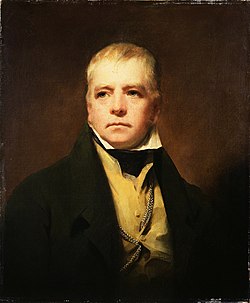
Sir Walter Scott
(1)
Poem topics: , Print This Poem , Rhyme Scheme
Submit Spanish Translation
Submit German Translation
Submit French Translation
About Rokeby: Canto V.
Rokeby: Canto V. is a poem by Sir Walter Scott. This page includes the poem text, poet information, related topics, comments, and similar poems.
Write your comment about Rokeby: Canto V. poem by Sir Walter Scott
Best Poems of Sir Walter Scott