The Harp Poem Rhyme Scheme and Analysis
Rhyme Scheme: ABABCDBBEFGHIIJKIKII ILJLMILINIIOOPP QQ RRR STOOUUIVRRWCRXXYZA2C CB2B2C2C2OOD2D2OOIIE 2E2F2F2F2F2TTIIIIPPR RF2F2IIG2G2H2H2I2D2C 2C2TTRRPP RROOIIIIJ2RRK2K2J2F2 F2L2L2M2M2M2| One musician is sure | A |
| His wisdom will not fail | B |
| He has not tasted wine impure | A |
| Nor bent to passion frail | B |
| Age cannot cloud his memory | C |
| Nor grief untune his voice | D |
| Ranging down the ruled scale | B |
| From tone of joy to inward wail | B |
| Tempering the pitch of all | E |
| In his windy cave | F |
| He all the fables knows | G |
| And in their causes tells | H |
| Knows Nature's rarest moods | I |
| Ever on her secret broods | I |
| The Muse of men is coy | J |
| Oft courted will not come | K |
| In palaces and market squares | I |
| Entreated she is dumb | K |
| But my minstrel knows and tells | I |
| The counsel of the gods | I |
| Knows of Holy Book the spells | I |
| Knows the law of Night and Day | L |
| And the heart of girl and boy | J |
| The tragic and the gay | L |
| And what is writ on Table Round | M |
| Of Arthur and his peers | I |
| What sea and land discoursing say | L |
| In sidereal years | I |
| He renders all his lore | N |
| In numbers wild as dreams | I |
| Modulating all extremes | I |
| What the spangled meadow saith | O |
| To the children who have faith | O |
| Only to children children sing | P |
| Only to youth will spring be spring | P |
| - | |
| Who is the Bard thus magnified | Q |
| When did he sing and where abide | Q |
| - | |
| Chief of song where poets feast | R |
| Is the wind harp which thou seest | R |
| In the casement at my side | R |
| - | |
| Aeolian harp | S |
| How strangely wise thy strain | T |
| Gay for youth gay for youth | O |
| Sweet is art but sweeter truth | O |
| In the hall at summer eve | U |
| Fate and Beauty skilled to weave | U |
| From the eager opening strings | I |
| Rung loud and bold the song | V |
| Who but loved the wind harp's note | R |
| How should not the poet doat | R |
| On its mystic tongue | W |
| With its primeval memory | C |
| Reporting what old minstrels told | R |
| Of Merlin locked the harp within | X |
| Merlin paying the pain of sin | X |
| Pent in a dungeon made of air | Y |
| And some attain his voice to hear | Z |
| Words of pain and cries of fear | A2 |
| But pillowed all on melody | C |
| As fits the griefs of bards to be | C |
| And what if that all echoing shell | B2 |
| Which thus the buried Past can tell | B2 |
| Should rive the Future and reveal | C2 |
| What his dread folds would fain conceal | C2 |
| It shares the secret of the earth | O |
| And of the kinds that owe her birth | O |
| Speaks not of self that mystic tone | D2 |
| But of the Overgods alone | D2 |
| It trembles to the cosmic breath | O |
| As it heareth so it saith | O |
| Obeying meek the primal Cause | I |
| It is the tongue of mundane laws | I |
| And this at least I dare affirm | E2 |
| Since genius too has bound and term | E2 |
| There is no bard in all the choir | F2 |
| Not Homer's self the poet sire | F2 |
| Wise Milton's odes of pensive pleasure | F2 |
| Or Shakspeare whom no mind can measure | F2 |
| Nor Collins' verse of tender pain | T |
| Nor Byron's clarion of disdain | T |
| Scott the delight of generous boys | I |
| Or Wordsworth Pan's recording voice | I |
| Not one of all can put in verse | I |
| Or to this presence could rehearse | I |
| The sights and voices ravishing | P |
| The boy knew on the hills in spring | P |
| When pacing through the oaks he heard | R |
| Sharp queries of the sentry bird | R |
| The heavy grouse's sudden whir | F2 |
| The rattle of the kingfisher | F2 |
| Saw bonfires of the harlot flies | I |
| In the lowland when day dies | I |
| Or marked benighted and forlorn | G2 |
| The first far signal fire of morn | G2 |
| These syllables that Nature spoke | H2 |
| And the thoughts that in him woke | H2 |
| Can adequately utter none | I2 |
| Save to his ear the wind harp lone | D2 |
| Therein I hear the Parcae reel | C2 |
| The threads of man at their humming wheel | C2 |
| The threads of life and power and pain | T |
| So sweet and mournful falls the strain | T |
| And best can teach its Delphian chord | R |
| How Nature to the soul is moored | R |
| If once again that silent string | P |
| As erst it wont would thrill and ring | P |
| - | |
| Not long ago at eventide | R |
| It seemed so listening at my side | R |
| A window rose and to say sooth | O |
| I looked forth on the fields of youth | O |
| I saw fair boys bestriding steeds | I |
| I knew their forms in fancy weeds | I |
| Long long concealed by sundering fates | I |
| Mates of my youth yet not my mates | I |
| Stronger and bolder far than I | J2 |
| With grace with genius well attired | R |
| And then as now from far admired | R |
| Followed with love | K2 |
| They knew not of | K2 |
| With passion cold and shy | J2 |
| O joy for what recoveries rare | F2 |
| Renewed I breathe Elysian air | F2 |
| See youth's glad mates in earliest bloom | L2 |
| Break not my dream obtrusive tomb | L2 |
| Or teach thou Spring the grand recoil | M2 |
| Of life resurgent from the soil | M2 |
| Wherein was dropped the mortal spoil | M2 |
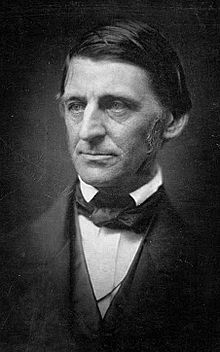
Ralph Waldo Emerson
(1)
Poem topics: , Print This Poem , Rhyme Scheme
Submit Spanish Translation
Submit German Translation
Submit French Translation
About The Harp
The Harp is a poem by Ralph Waldo Emerson. This page includes the poem text, poet information, related topics, comments, and similar poems.
Write your comment about The Harp poem by Ralph Waldo Emerson
Best Poems of Ralph Waldo Emerson