Eclogue Poem Rhyme Scheme and Analysis
Rhyme Scheme: AAABBCCDCEEFFGGAAAAA ADHIIAAGGAAHHJJGGGGA CCGGIKGGGGLLMMNOG GGGGBBGGPPQRAAGGBBGC GGGGGGIKGGCCCCGGL SSTUGGBBGGBBAA P V PPCCWWXXGGYG P A AAAAZLGGGGA2G P B SSCCWWGGGGG U G B2B2GGCCC2WGGPG U B2 UUGGGGCCGGAG P K UUSSD2WCCGGUG P W B2B2E2E2P| ALLOPHANES | A |
| UNSEASONABLE man statue of ice | A |
| What could to countries solitude entice | A |
| Thee in this year's cold and decrepit time | B |
| Nature's instinct draws to the warmer clime | B |
| Even smaller birds who by that courage dare | C |
| In numerous fleets sail through their sea the air | C |
| What delicacy can in fields appear | D |
| Whilst Flora herself doth a frieze jerkin wear | C |
| Whilst winds do all the trees and hedges strip | E |
| Of leaves to furnish rods enough to whip | E |
| Thy madness from thee and all springs by frost | F |
| Have taken cold and their sweet murmurs lost | F |
| If thou thy faults or fortunes wouldst lament | G |
| With just solemnity do it in Lent | G |
| At court the spring already advanced is | A |
| The sun stays longer up and yet not his | A |
| The glory is far other other fires | A |
| First zeal to prince and state then love's desires | A |
| Burn in one breast and like heaven's two great lights | A |
| The first doth govern days the other nights | A |
| And then that early light which did appear | D |
| Before the sun and moon created were | H |
| The princes favour is diffused o'er all | I |
| From which all fortunes names and natures fall | I |
| Then from those wombs of stars the bride's bright eyes | A |
| At every glance a constellation flies | A |
| And sows the court with stars and doth prevent | G |
| In light and power the all eyed firmament | G |
| First her eyes kindle other ladies' eyes | A |
| Then from their beams their jewels' lustres rise | A |
| And from their jewels torches do take fire | H |
| And all is warmth and light and good desire | H |
| Most other courts alas are like to hell | J |
| Where in dark places fire without light doth dwell | J |
| Or but like stoves for lust and envy get | G |
| Continual but artificial heat | G |
| Here zeal and love grown one all clouds digest | G |
| And make our court an everlasting east | G |
| And canst thou be from thence | A |
| - | |
| IDIOS No I am there | C |
| As heaven to men disposed is everywhere | C |
| So are those courts whose princes animate | G |
| Not only all their house but all their state | G |
| Let no man think because he's full he hath all | I |
| Kings as their pattern God are liberal | K |
| Not only in fullness but capacity | G |
| Enlarging narrow men to feel and see | G |
| And comprehend the blessings they bestow | G |
| So reclused hermits oftentimes do know | G |
| More of heaven's glory than a worldling can | L |
| As man is of the world the heart of man | L |
| Is an epitome of God's great book | M |
| Of creatures and man need no farther look | M |
| So is the country of courts where sweet peace doth | N |
| As their one common soul give life to both | O |
| And am I then from court | G |
| - | |
| ALLOPHANES Dreamer thou art | G |
| Think'st thou fantastic that thou hast a part | G |
| In the Indian fleet because thou hast | G |
| A little spice or amber in thy taste | G |
| Because thou art not frozen art thou warm | B |
| Seest thou all good because thou seest no harm | B |
| The earth doth in her inner bowels hold | G |
| Stuff well disposed and which would fain be gold | G |
| But never shall except it chance to lie | P |
| So upward that heaven gild it with his eye | P |
| As for divine things faith comes from above | Q |
| So for best civil use all tinctures move | R |
| From higher powers from God religion springs | A |
| Wisdom and honour from the use of kings | A |
| Then unbeguile thyself and know with me | G |
| That angels though on earth employ'd they be | G |
| Are still in heaven so is he still at home | B |
| That doth abroad to honest actions come | B |
| Chide thyself then O fool which yesterday | G |
| Mightst have read more than all thy books bewray | C |
| Hast thou a history which doth present | G |
| A court where all affections do assent | G |
| Unto the king's and that that king's are just | G |
| And where it is no levity to trust | G |
| Where there is no ambition but to obey | G |
| Where men need whisper nothing and yet may | G |
| Where the king's favours are so placed that all | I |
| Find that the king therein is liberal | K |
| To them in him because his favours bend | G |
| To virtue to the which they all pretend | G |
| Thou hast no such yet here was this and more | C |
| An earnest lover wise then and before | C |
| Our little Cupid hath sued livery | C |
| And is no more in his minority | C |
| He is admitted now into that breast | G |
| Where the king's counsels and his secrets rest | G |
| What hast thou lost O ignorant man | L |
| - | |
| IDIOS I knew | S |
| All this and only therefore I withdrew | S |
| To know and feel all this and not to have | T |
| Words to express it makes a man a grave | U |
| Of his own thoughts I would not therefore stay | G |
| At a great feast having no grace to say | G |
| And yet I 'scaped not here for being come | B |
| Full of the common joy I utter'd some | B |
| Read then this nuptial song which was not made | G |
| Either the court or men's hearts to invade | G |
| But since I am dead and buried I could frame | B |
| No epitaph which might advance my fame | B |
| So much as this poor song which testifies | A |
| I did unto that day some sacrifice | A |
| - | |
| - | |
| I | P |
| - | |
| THE TIME OF THE MARRIAGE | V |
| - | |
| Thou art reprieved old year thou shalt not die | P |
| Though thou upon thy death bed lie | P |
| And should'st within five days expire | C |
| Yet thou art rescued by a mightier fire | C |
| Than thy old soul the sun | W |
| When he doth in his largest circle run | W |
| The passage of the west or east would thaw | X |
| And open wide their easy liquid jaw | X |
| To all our ships could a Promethean art | G |
| Either unto the northern pole impart | G |
| The fire of these inflaming eyes or of this loving | Y |
| heart | G |
| - | |
| - | |
| II | P |
| - | |
| EQUALITY OF PERSONS | A |
| - | |
| But undiscerning Muse which heart which eyes | A |
| In this new couple dost thou prize | A |
| When his eye as inflaming is | A |
| As hers and her heart loves as well as his | A |
| Be tried by beauty and then | Z |
| The bridegroom is a maid and not a man | L |
| If by that manly courage they be tried | G |
| Which scorns unjust opinion then the bride | G |
| Becomes a man Should chance or envy's art | G |
| Divide these two whom nature scarce did part | G |
| Since both have the inflaming eye and both the | A2 |
| loving heart | G |
| - | |
| - | |
| III | P |
| - | |
| RAISING OF THE BRIDEGROOM | B |
| - | |
| Though it be some divorce to think of you | S |
| Single so much one are you two | S |
| Let me here contemplate thee | C |
| First cheerful bridegroom and first let me see | C |
| How thou prevent'st the sun | W |
| And his red foaming horses dost outrun | W |
| How having laid down in thy Sovereign's breast | G |
| All businesses from thence to reinvest | G |
| Them when these triumphs cease thou forward art | G |
| To show to her who doth the like impart | G |
| The fire of thy inflaming eyes and of thy loving heart | G |
| - | |
| - | |
| IV | U |
| - | |
| RAISING OF THE BRIDE | G |
| - | |
| But now to thee fair bride it is some wrong | B2 |
| To think thou wert in bed so long | B2 |
| Since soon thou liest down first 'tis fit | G |
| Thou in first rising shouldst allow for it | G |
| Powder thy radiant hair | C |
| Which if without such ashes thou wouldst wear | C |
| Thou which to all which come to look upon | C2 |
| Wert meant for Phoebus wouldst be Pha ton | W |
| For our ease give thine eyes th' unusual part | G |
| Of joy a tear so quench'd thou mayst impart | G |
| To us that come thy inflaming eyes to him thy | P |
| loving heart | G |
| - | |
| - | |
| V | U |
| - | |
| HER APPARELLING | B2 |
| - | |
| Thus thou descend'st to our infirmity | U |
| Who can the sun in water see | U |
| So dost thou when in silk and gold | G |
| Thou cloud'st thyself since we which do behold | G |
| Are dust and worms 'tis just | G |
| Our objects be the fruits of worms and dust | G |
| Let every jewel be a glorious star | C |
| Yet stars are not so pure as their spheres are | C |
| And though thou stoop to appear to us in part | G |
| Still in that picture thou entirely art | G |
| Which thy inflaming eyes have made within his | A |
| loving heart | G |
| - | |
| - | |
| VI | P |
| - | |
| GOING TO THE CHAPEL | K |
| - | |
| Now from your easts you issue forth and we | U |
| As men which through a cypress see | U |
| The rising sun do think it two | S |
| So as you go to church do think of you | S |
| But that veil being gone | D2 |
| By the church rites you are from thenceforth one | W |
| The church triumphant made this match before | C |
| And now the militant doth strive no more | C |
| Then reverend priest who God's Recorder art | G |
| Do from his dictates to these two impart | G |
| All blessings which are seen or thought by angel's | U |
| eye or heart | G |
| - | |
| - | |
| VII | P |
| - | |
| THE BENEDICTION | W |
| - | |
| Blest pair of swans O may you interbring | B2 |
| Daily new joys and never sing | B2 |
| Live till all grounds of wishes fail | E2 |
| Till honour yea till wisdom grow so stale | E2 |
| That new great heights to try | P |
John Donne
(1)
Poem topics: , Print This Poem , Rhyme Scheme
Submit Spanish Translation
Submit German Translation
Submit French Translation
About Eclogue
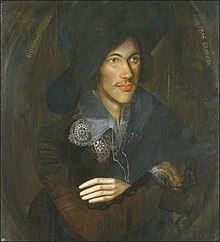
Eclogue is a poem by John Donne. This page includes the poem text, poet information, related topics, comments, and similar poems.
Write your comment about Eclogue poem by John Donne
Best Poems of John Donne