Virgil's First Eclogue Poem Rhyme Scheme and Analysis
Rhyme Scheme: ABACDEA AFGAFF AAHBIAJFGFK AFABEAFFA AK AABLKKEMNK AAOAAB APAAAGQ AKCAGJAAFDKOAAA AGQFAM AAAFKFRAFFSFIAMTBQFM AKAAAA| MELIBOEUS | A |
| Tityrus thou in the shade of a spreading beech tree reclining | B |
| Meditatest with slender pipe the Muse of the woodlands | A |
| We our country's bounds and pleasant pastures relinquish | C |
| We our country fly thou Tityrus stretched in the shadow | D |
| Teachest the woods to resound with the name of the fair | E |
| Amaryllis | A |
| - | |
| TITYRUS | A |
| O Meliboeus a god for us this leisure created | F |
| For he will be unto me a god forever his altar | G |
| Oftentimes shall imbue a tender lamb from our sheepfolds | A |
| He my heifers to wander at large and myself as thou seest | F |
| On my rustic reed to play what I will hath permitted | F |
| - | |
| MELIBOEUS | A |
| Truly I envy not I marvel rather on all sides | A |
| In all the fields is such trouble Behold my goats I am | H |
| driving | B |
| Heartsick further away this one scarce Tityrus lead I | I |
| For having here yeaned twins just now among the dense hazels | A |
| Hope of the flock ah me on the naked flint she hath left them | J |
| Often this evil to me if my mind had not been insensate | F |
| Oak trees stricken by heaven predicted as now I remember | G |
| Often the sinister crow from the hollow ilex predicted | F |
| Nevertheless who this god may be O Tityrus tell me | K |
| - | |
| TITYRUS | A |
| O Meliboeus the city that they call Rome I imagined | F |
| Foolish I to be like this of ours where often we shepherds | A |
| Wonted are to drive down of our ewes the delicate offspring | B |
| Thus whelps like unto dogs had I known and kids to their | E |
| mothers | A |
| Thus to compare great things with small had I been accustomed | F |
| But this among other cities its head as far hath exalted | F |
| As the cypresses do among the lissome viburnums | A |
| - | |
| MELIBOEUS | A |
| And what so great occasion of seeing Rome hath possessed thee | K |
| - | |
| TITYRUS | A |
| Liberty which though late looked upon me in my inertness | A |
| After the time when my beard fell whiter front me in shaving | B |
| Yet she looked upon me and came to me after a long while | L |
| Since Amaryllis possesses and Galatea hath left me | K |
| For I will even confess that while Galatea possessed me | K |
| Neither care of my flock nor hope of liberty was there | E |
| Though from my wattled folds there went forth many a victim | M |
| And the unctuous cheese was pressed for the city ungrateful | N |
| Never did my right hand return home heavy with money | K |
| - | |
| MELIBOEUS | A |
| I have wondered why sad thou invokedst the gods Amaryllis | A |
| And for whom thou didst suffer the apples to hang on the | O |
| branches | A |
| Tityrus hence was absent Thee Tityrus even the pine trees | A |
| Thee the very fountains the very copses were calling | B |
| - | |
| TITYRUS | A |
| What could I do No power had I to escape from my bondage | P |
| Nor had I power elsewhere to recognize gods so propitious | A |
| Here I beheld that youth to whom each year Meliboeus | A |
| During twice six days ascends the smoke of our altars | A |
| Here first gave he response to me soliciting favor | G |
| 'Feed as before your heifers ye boys and yoke up your | Q |
| bullocks ' | - |
| - | |
| MELIBOEUS | A |
| Fortunate old man So then thy fields will be left thee | K |
| And large enough for thee though naked stone and the marish | C |
| All thy pasture lands with the dreggy rush may encompass | A |
| No unaccustomed food thy gravid ewes shall endanger | G |
| Nor of the neighboring flock the dire contagion inject them | J |
| Fortunate old man Here among familiar rivers | A |
| And these sacred founts shalt thou take the shadowy coolness | A |
| On this side a hedge along the neighboring cross road | F |
| Where Hyblaean bees ever feed on the flower of the willow | D |
| Often with gentle susurrus to fall asleep shall persuade thee | K |
| Yonder beneath the high rock the pruner shall sing to the | O |
| breezes | A |
| Nor meanwhile shalt thy heart's delight the hoarse wood pigeons | A |
| Nor the turtle dove cease to mourn from aerial elm trees | A |
| - | |
| TITYRUS | A |
| Therefore the agile stags shall sooner feed in the ether | G |
| And the billows leave the fishes bare on the sea shore | Q |
| Sooner the border lands of both overpassed shall the exiled | F |
| Parthian drink of the Soane or the German drink of the Tigris | A |
| Than the face of him shall glide away from my bosom | M |
| - | |
| MELIBOEUS | A |
| But we hence shall go a part to the thirsty Afries | A |
| Part to Scythia come and the rapid Cretan Oaxes | A |
| And to the Britons from all the universe utterly sundered | F |
| Ah shall I ever a long time hence the bounds of my country | K |
| And the roof of my lowly cottage covered with greensward | F |
| Seeing with wonder behold my kingdoms a handful of | R |
| wheat ears | A |
| Shall an impious soldier possess these lands newly cultured | F |
| And these fields of corn a barbarian Lo whither dicord | F |
| Us wretched people hath brought for whom our fields we have | S |
| planted | F |
| Graft Meliboeus thy pear trees now put in order thy | I |
| vine yards | A |
| Go my goats go hence my flocks so happy aforetime | M |
| Never again henceforth outstretched in my verdurous cavern | T |
| Shall I behold you afar from the bushy precipice hanging | B |
| Songs no more shall I sing not with me ye goats as your | Q |
| shepherd | F |
| Shall ye browse on the bitter willow or blooming laburnum | M |
| - | |
| TITYRUS | A |
| Nevertheless this night together with me canst thou rest thee | K |
| Here on the verdant leaves for us there are mellowing apples | A |
| Chestnuts soft to the touch and clouted cream in abundance | A |
| And the high roofs now of the villages smoke in the distance | A |
| And from the lofty mountains are falling larger the shadows | A |
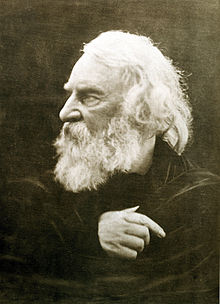
Henry Wadsworth Longfellow
(1)
Poem topics: , Print This Poem , Rhyme Scheme
Submit Spanish Translation
Submit German Translation
Submit French Translation
About Virgil's First Eclogue
Virgil's First Eclogue is a poem by Henry Wadsworth Longfellow. This page includes the poem text, poet information, related topics, comments, and similar poems.
Write your comment about Virgil's First Eclogue poem by Henry Wadsworth Longfellow
Best Poems of Henry Wadsworth Longfellow