The Theologian's Tale - The Wayside Inn - Part Second Poem Rhyme Scheme and Analysis
Rhyme Scheme: A BB CCDDAAAC EEFCDDFD DDGHGIIH JKJKKKHLLH DJJLDMLLKNNKKKHHHLL DDKKKKKAAKDDKOPKK KKKKK JJQRRSQLLQQTUDDJVWHJ QQH DJJJDJ DDXXQQJJ JMJMJJVJDDJQQ Q YZZQYQQQQQQQ DA2A2DPO QB2B2QLC2C2D2 QQQQQQQQQQQQDQQD| THE LEGEND BEAUTIFUL | A |
| - | |
| Hads't thou stayed I must have fled | B |
| That is what the Vision said | B |
| - | |
| In his chamber all alone | C |
| Kneeling on the floor of stone | C |
| Prayed the Monk in deep contrition | D |
| For his sins of indecision | D |
| Prayed for greater self denial | A |
| In temptation and in trial | A |
| It was noonday by the dial | A |
| And the Monk was all alone | C |
| - | |
| Suddenly as if it lightened | E |
| An unwonted splendor brightened | E |
| All within him and without him | F |
| In that narrow cell of stone | C |
| And he saw the Blessed Vision | D |
| Of our Lord with light Elysian | D |
| Like a vesture wrapped about him | F |
| Like a garment round him thrown | D |
| - | |
| Not as crucified and slain | D |
| Not in agonies of pain | D |
| Not with bleeding hands and feet | G |
| Did the Monk his Master see | H |
| But as in the village street | G |
| In the house or harvest field | I |
| Halt and lame and blind he healed | I |
| When he walked in Galilee | H |
| - | |
| In an attitude imploring | J |
| Hands upon his bosom crossed | K |
| Wondering worshipping adoring | J |
| Knelt the Monk in rapture lost | K |
| Lord he thought in heaven that reignest | K |
| Who am I that thus thou deignest | K |
| To reveal thyself to me | H |
| Who am I that from the centre | L |
| Of thy glory thou shouldst enter | L |
| This poor cell my guest to be | H |
| - | |
| Then amid his exaltation | D |
| Loud the convent bell appalling | J |
| From its belfry calling calling | J |
| Rang through court and corridor | L |
| With persistent iteration | D |
| He had never heard before | M |
| It was now the appointed hour | L |
| When alike in shine or shower | L |
| Winter's cold or summer's heat | K |
| To the convent portals came | N |
| All the blind and halt and lame | N |
| All the beggars of the street | K |
| For their daily dole of food | K |
| Dealt them by the brotherhood | K |
| And their almoner was he | H |
| Who upon his bended knee | H |
| Rapt in silent ecstasy | H |
| Of divinest self surrender | L |
| Saw the Vision and the Splendor | L |
| - | |
| Deep distress and hesitation | D |
| Mingled with his adoration | D |
| Should he go or should he stay | K |
| Should he leave the poor to wait | K |
| Hungry at the convent gate | K |
| Till the Vision passed away | K |
| Should he slight his radiant guest | K |
| Slight this visitant celestial | A |
| For a crowd of ragged bestial | A |
| Beggars at the convent gate | K |
| Would the Vision there remain | D |
| Would the Vision come again | D |
| Then a voice within his breast | K |
| Whispered audible and clear | O |
| As if to the outward ear | P |
| Do thy duty that is best | K |
| Leave unto thy Lord the rest | K |
| - | |
| Straightway to his feet he started | K |
| And with longing look intent | K |
| On the Blessed Vision bent | K |
| Slowly from his cell departed | K |
| Slowly on his errand went | K |
| - | |
| At the gate the poor were waiting | J |
| Looking through the iron grating | J |
| With that terror in the eye | Q |
| That is only seen in those | R |
| Who amid their wants and woes | R |
| Hear the sound of doors that close | S |
| And of feet that pass them by | Q |
| Grown familiar with disfavor | L |
| Grown familiar with the savor | L |
| Of the bread by which men die | Q |
| But to day they knew not why | Q |
| Like the gate of Paradise | T |
| Seemed the convent sate to rise | U |
| Like a sacrament divine | D |
| Seemed to them the bread and wine | D |
| In his heart the Monk was praying | J |
| Thinking of the homeless poor | V |
| What they suffer and endure | W |
| What we see not what we see | H |
| And the inward voice was saying | J |
| Whatsoever thing thou doest | Q |
| To the least of mine and lowest | Q |
| That thou doest unto me | H |
| - | |
| Unto me but had the Vision | D |
| Come to him in beggar's clothing | J |
| Come a mendicant imploring | J |
| Would he then have knelt adoring | J |
| Or have listened with derision | D |
| And have turned away with loathing | J |
| - | |
| Thus his conscience put the question | D |
| Full of troublesome suggestion | D |
| As at length with hurried pace | X |
| Towards his cell he turned his face | X |
| And beheld the convent bright | Q |
| With a supernatural light | Q |
| Like a luminous cloud expanding | J |
| Over floor and wall and ceiling | J |
| - | |
| But he paused with awe struck feeling | J |
| At the threshold of his door | M |
| For the Vision still was standing | J |
| As he left it there before | M |
| When the convent bell appalling | J |
| From its belfry calling calling | J |
| Summoned him to feed the poor | V |
| Through the long hour intervening | J |
| It had waited his return | D |
| And he felt his bosom burn | D |
| Comprehending all the meaning | J |
| When the Blessed Vision said | Q |
| Hadst thou stayed I must have fled | Q |
| - | |
| - | |
| - | |
| INTERLUDE | Q |
| - | |
| All praised the Legend more or less | Y |
| Some liked the moral some the verse | Z |
| Some thought it better and some worse | Z |
| Than other legends of the past | Q |
| Until with ill concealed distress | Y |
| At all their cavilling at last | Q |
| The Theologian gravely said | Q |
| The Spanish proverb then is right | Q |
| Consult your friends on what you do | Q |
| And one will say that it is white | Q |
| And others say that it is red | Q |
| And Amen quoth the Spanish Jew | Q |
| - | |
| Six stories told We must have seven | D |
| A cluster like the Pleiades | A2 |
| And lo it happens as with these | A2 |
| That one is missing from our heaven | D |
| Where is the Landlord Bring him here | P |
| Let the Lost Pleiad reappear | O |
| - | |
| Thus the Sicilian cried and went | Q |
| Forthwith to seek his missing star | B2 |
| But did not find him in the bar | B2 |
| A place that landlords most frequent | Q |
| Nor yet beside the kitchen fire | L |
| Nor up the stairs nor in the hall | C2 |
| It was in vain to ask or call | C2 |
| There were no tidings of the Squire | D2 |
| - | |
| So he came back with downcast head | Q |
| Exclaiming Well our bashful host | Q |
| Hath surely given up the ghost | Q |
| Another proverb says the dead | Q |
| Can tell no tales and that is true | Q |
| It follows then that one of you | Q |
| Must tell a story in his stead | Q |
| You must he to the Student said | Q |
| Who know so many of the best | Q |
| And tell them better than the rest | Q |
| Straight by these flattering words beguiled | Q |
| The Student happy as a child | Q |
| When he is called a little man | D |
| Assumed the double task imposed | Q |
| And without more ado unclosed | Q |
| His smiling lips and thus began | D |
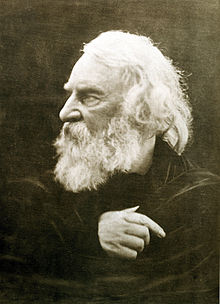
Henry Wadsworth Longfellow
(1)
Poem topics: , Print This Poem , Rhyme Scheme
Submit Spanish Translation
Submit German Translation
Submit French Translation
About The Theologian's Tale - The Wayside Inn - Part Second
The Theologian's Tale - The Wayside Inn - Part Second is a poem by Henry Wadsworth Longfellow. This page includes the poem text, poet information, related topics, comments, and similar poems.
Write your comment about The Theologian's Tale - The Wayside Inn - Part Second poem by Henry Wadsworth Longfellow
Best Poems of Henry Wadsworth Longfellow