The Spanish Jew's Second Tale - The Wayside Inn - Part Third Poem Rhyme Scheme and Analysis
Rhyme Scheme: A BBCCDEED FGGFCCEDEEDD HEEHEIEI EEAAJEEKLL EEEMEEMEE HHEEAABBBMM NNAOMEPAPE EEEEAEA MEMEEEMEMME EEEEEEEEEE AAMEAAMEEEEE MQQMRRRMEERM RSRRSHRRHRHRHR EEEEOSAAEEERRE HHEAAEAHHSASSA PRPRRHSSHRS E EHAAEHSS SSNAAPNP HHESSETHHTHHTRESSREA EESEHSSHESEE UEUDDEEAAEEVVE EESSE EEERRHEHEHHERRE| SCANDERBEG | A |
| - | |
| The battle is fought and won | B |
| By King Ladislaus the Hun | B |
| In fire of hell and death's frost | C |
| On the day of Pentecost | C |
| And in rout before his path | D |
| From the field of battle red | E |
| Flee all that are not dead | E |
| Of the army of Amurath | D |
| - | |
| In the darkness of the night | F |
| Iskander the pride and boast | G |
| Of that mighty Othman host | G |
| With his routed Turks takes flight | F |
| From the battle fought and lost | C |
| On the day of Pentecost | C |
| Leaving behind him dead | E |
| The army of Amurath | D |
| The vanguard as it led | E |
| The rearguard as it fled | E |
| Mown down in the bloody swath | D |
| Of the battle's aftermath | D |
| - | |
| But he cared not for Hospodars | H |
| Nor for Baron or Voivode | E |
| As on through the night he rode | E |
| And gazed at the fateful stars | H |
| That were shining overhead | E |
| But smote his steed with his staff | I |
| And smiled to himself and said | E |
| This is the time to laugh | I |
| - | |
| In the middle of the night | E |
| In a halt of the hurrying flight | E |
| There came a Scribe of the King | A |
| Wearing his signet ring | A |
| And said in a voice severe | J |
| This is the first dark blot | E |
| On thy name George Castriot | E |
| Alas why art thou here | K |
| And the army of Amurath slain | L |
| And left on the battle plain | L |
| - | |
| And Iskander answered and said | E |
| They lie on the bloody sod | E |
| By the hoofs of horses trod | E |
| But this was the decree | M |
| Of the watchers overhead | E |
| For the war belongeth to God | E |
| And in battle who are we | M |
| Who are we that shall withstand | E |
| The wind of his lifted hand | E |
| - | |
| Then he bade them bind with chains | H |
| This man of books and brains | H |
| And the Scribe said What misdeed | E |
| Have I done that without need | E |
| Thou doest to me this thing | A |
| And Iskander answering | A |
| Said unto him Not one | B |
| Misdeed to me hast thou done | B |
| But for fear that thou shouldst run | B |
| And hide thyself from me | M |
| Have I done this unto thee | M |
| - | |
| Now write me a writing O Scribe | N |
| And a blessing be on thy tribe | N |
| A writing sealed with thy ring | A |
| To King Amurath's Pasha | O |
| In the city of Croia | M |
| The city moated and walled | E |
| That he surrender the same | P |
| In the name of my master the King | A |
| For what is writ in his name | P |
| Can never be recalled | E |
| - | |
| And the Scribe bowed low in dread | E |
| And unto Iskander said | E |
| Allah is great and just | E |
| But we are as ashes and dust | E |
| How shall I do this thing | A |
| When I know that my guilty head | E |
| Will be forfeit to the King | A |
| - | |
| Then swift as a shooting star | M |
| The curved and shining blade | E |
| Of Iskander's scimetar | M |
| From its sheath with jewels bright | E |
| Shot as he thundered Write | E |
| And the trembling Scribe obeyed | E |
| And wrote in the fitful glare | M |
| Of the bivouac fire apart | E |
| With the chill of the midnight air | M |
| On his forehead white and bare | M |
| And the chill of death in his heart | E |
| - | |
| Then again Iskander cried | E |
| Now follow whither I ride | E |
| For here thou must not stay | E |
| Thou shalt be as my dearest friend | E |
| And honors without end | E |
| Shall surround thee on every side | E |
| And attend thee night and day | E |
| But the sullen Scribe replied | E |
| Our pathways here divide | E |
| Mine leadeth not thy way | E |
| - | |
| And even as he spoke | A |
| Fell a sudden scimetar stroke | A |
| When no one else was near | M |
| And the Scribe sank to the ground | E |
| As a stone pushed from the brink | A |
| Of a black pool might sink | A |
| With a sob and disappear | M |
| And no one saw the deed | E |
| And in the stillness around | E |
| No sound was heard but the sound | E |
| Of the hoofs of Iskander's steed | E |
| As forward he sprang with a bound | E |
| - | |
| Then onward he rode and afar | M |
| With scarce three hundred men | Q |
| Through river and forest and fen | Q |
| O'er the mountains of Argentar | M |
| And his heart was merry within | R |
| When he crossed the river Drin | R |
| And saw in the gleam of the morn | R |
| The White Castle Ak Hissar | M |
| The city Croia called | E |
| The city moated and walled | E |
| The city where he was born | R |
| And above it the morning star | M |
| - | |
| Then his trumpeters in the van | R |
| On their silver bugles blew | S |
| And in crowds about him ran | R |
| Albanian and Turkoman | R |
| That the sound together drew | S |
| And he feasted with his friends | H |
| And when they were warm with wine | R |
| He said O friends of mine | R |
| Behold what fortune sends | H |
| And what the fates design | R |
| King Amurath commands | H |
| That my father's wide domain | R |
| This city and all its lands | H |
| Shall be given to me again | R |
| - | |
| Then to the Castle White | E |
| He rode in regal state | E |
| And entered in at the gate | E |
| In all his arms bedight | E |
| And gave to the Pasha | O |
| Who ruled in Croia | S |
| The writing of the King | A |
| Sealed with his signet ring | A |
| And the Pasha bowed his head | E |
| And after a silence said | E |
| Allah is just and great | E |
| I yield to the will divine | R |
| The city and lands are thine | R |
| Who shall contend with fate | E |
| - | |
| Anon from the castle walls | H |
| The crescent banner falls | H |
| And the crowd beholds instead | E |
| Like a portent in the sky | A |
| Iskander's banner fly | A |
| The Black Eagle with double head | E |
| And a shout ascends on high | A |
| For men's souls are tired of the Turks | H |
| And their wicked ways and works | H |
| That have made of Ak Hissar | S |
| A city of the plague | A |
| And the loud exultant cry | S |
| That echoes wide and far | S |
| Is Long live Scanderbeg | A |
| - | |
| It was thus Iskander came | P |
| Once more unto his own | R |
| And the tidings like the flame | P |
| Of a conflagration blown | R |
| By the winds of summer ran | R |
| Till the land was in a blaze | H |
| And the cities far and near | S |
| Sayeth Ben Joshua Ben Meir | S |
| In his Book of the Words of the Days | H |
| Were taken as a man | R |
| Would take the tip of his ear | S |
| - | |
| - | |
| - | |
| INTERLUDE | E |
| - | |
| Now that is after my own heart | E |
| The Poet cried one understands | H |
| Your swarthy hero Scanderbeg | A |
| Gauntlet on hand and boot on leg | A |
| And skilled in every warlike art | E |
| Riding through his Albanian lands | H |
| And following the auspicious star | S |
| That shone for him o'er Ak Hissar | S |
| - | |
| The Theologian added here | S |
| His word of praise not less sincere | S |
| Although he ended with a jibe | N |
| The hero of romance and song | A |
| Was born he said to right the wrong | A |
| And I approve but all the same | P |
| That bit of treason with the Scribe | N |
| Adds nothing to your hero's fame | P |
| - | |
| The Student praised the good old times | H |
| And liked the canter of the rhymes | H |
| That had a hoofbeat in their sound | E |
| But longed some further word to hear | S |
| Of the old chronicler Ben Meir | S |
| And where his volume might he found | E |
| The tall Musician walked the room | T |
| With folded arms and gleaming eyes | H |
| As if he saw the Vikings rise | H |
| Gigantic shadows in the gloom | T |
| And much he talked of their emprise | H |
| And meteors seen in Northern skies | H |
| And Heimdal's horn and day of doom | T |
| But the Sicilian laughed again | R |
| This is the time to laugh he said | E |
| For the whole story he well knew | S |
| Was an invention of the Jew | S |
| Spun from the cobwebs in his brain | R |
| And of the same bright scarlet thread | E |
| As was the Tale of Kambalu | A |
| - | |
| Only the Landlord spake no word | E |
| 'T was doubtful whether he had heard | E |
| The tale at all so full of care | S |
| Was he of his impending fate | E |
| That like the sword of Damocles | H |
| Above his head hung blank and bare | S |
| Suspended by a single hair | S |
| So that he could not sit at ease | H |
| But sighed and looked disconsolate | E |
| And shifted restless in his chair | S |
| Revolving how he might evade | E |
| The blow of the descending blade | E |
| - | |
| The Student came to his relief | U |
| By saying in his easy way | E |
| To the Musician Calm your grief | U |
| My fair Apollo of the North | D |
| Balder the Beautiful and so forth | D |
| Although your magic lyre or lute | E |
| With broken strings is lying mute | E |
| Still you can tell some doleful tale | A |
| Of shipwreck in a midnight gale | A |
| Or something of the kind to suit | E |
| The mood that we are in to night | E |
| For what is marvellous and strange | V |
| So give your nimble fancy range | V |
| And we will follow in its flight | E |
| - | |
| But the Musician shook his head | E |
| No tale I tell to night he said | E |
| While my poor instrument lies there | S |
| Even as a child with vacant stare | S |
| Lies in its little coffin dead | E |
| - | |
| Yet being urged he said at last | E |
| There comes to me out of the Past | E |
| A voice whose tones are sweet and wild | E |
| Singing a song almost divine | R |
| And with a tear in every line | R |
| An ancient ballad that my nurse | H |
| Sang to me when I was a child | E |
| In accents tender as the verse | H |
| And sometimes wept and sometimes smiled | E |
| While singing it to see arise | H |
| The look of wonder in my eyes | H |
| And feel my heart with tenor beat | E |
| This simple ballad I retain | R |
| Clearly imprinted on my brain | R |
| And as a tale will now repeat | E |
Henry Wadsworth Longfellow
(1)
Poem topics: , Print This Poem , Rhyme Scheme
Submit Spanish Translation
Submit German Translation
Submit French Translation
About The Spanish Jew's Second Tale - The Wayside Inn - Part Third
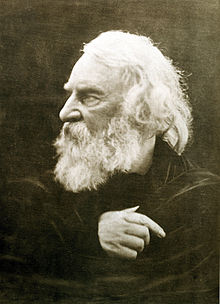
The Spanish Jew's Second Tale - The Wayside Inn - Part Third is a poem by Henry Wadsworth Longfellow. This page includes the poem text, poet information, related topics, comments, and similar poems.
Write your comment about The Spanish Jew's Second Tale - The Wayside Inn - Part Third poem by Henry Wadsworth Longfellow
Best Poems of Henry Wadsworth Longfellow