The Song Of Hiawatha Xiv: Picture-writing Poem Rhyme Scheme and Analysis
Rhyme Scheme: ABCDEEEEEEFGHEIEJEKL EMGNLENOEPQRSTIUUVEE JEEIKJKIERVJVKOIVVEW KXEYSZZEA2A2NA2 B2FIA2FVAVIEVEVGN EFGA2C2NFA2VEEEEFA2V VA2IA2NFIA2FEIIIEEA2 EFA2FIIEIA2IEIIA2FIA 2FI IIF A2B2VD2 FNNA2A2D2 A2A2A2EA2D2F FNEJE EVVIJ AVIIJC2Q| In those days said Hiawatha | A |
| 'Lo how all things fade and perish | B |
| From the memory of the old men | C |
| Pass away the great traditions | D |
| The achievements of the warriors | E |
| The adventures of the hunters | E |
| All the wisdom of the Medas | E |
| All the craft of the Wabenos | E |
| All the marvellous dreams and visions | E |
| Of the Jossakeeds the Prophets | E |
| 'Great men die and are forgotten | F |
| Wise men speak their words of wisdom | G |
| Perish in the ears that hear them | H |
| Do not reach the generations | E |
| That as yet unborn are waiting | I |
| In the great mysterious darkness | E |
| Of the speechless days that shall be | J |
| 'On the grave posts of our fathers | E |
| Are no signs no figures painted | K |
| Who are in those graves we know not | L |
| Only know they are our fathers | E |
| Of what kith they are and kindred | M |
| From what old ancestral Totem | G |
| Be it Eagle Bear or Beaver | N |
| They descended this we know not | L |
| Only know they are our fathers | E |
| 'Face to face we speak together | N |
| But we cannot speak when absent | O |
| Cannot send our voices from us | E |
| To the friends that dwell afar off | P |
| Cannot send a secret message | Q |
| But the bearer learns our secret | R |
| May pervert it may betray it | S |
| May reveal it unto others ' | T |
| Thus said Hiawatha walking | I |
| In the solitary forest | U |
| Pondering musing in the forest | U |
| On the welfare of his people | V |
| From his pouch he took his colors | E |
| Took his paints of different colors | E |
| On the smooth bark of a birch tree | J |
| Painted many shapes and figures | E |
| Wonderful and mystic figures | E |
| And each figure had a meaning | I |
| Each some word or thought suggested | K |
| Gitche Manito the Mighty | J |
| He the Master of Life was painted | K |
| As an egg with points projecting | I |
| To the four winds of the heavens | E |
| Everywhere is the Great Spirit | R |
| Was the meaning of this symbol | V |
| Gitche Manito the Mighty | J |
| He the dreadful Spirit of Evil | V |
| As a serpent was depicted | K |
| As Kenabeek the great serpent | O |
| Very crafty very cunning | I |
| Is the creeping Spirit of Evil | V |
| Was the meaning of this symbol | V |
| Life and Death he drew as circles | E |
| Life was white but Death was darkened | W |
| Sun and moon and stars he painted | K |
| Man and beast and fish and reptile | X |
| Forests mountains lakes and rivers | E |
| For the earth he drew a straight line | Y |
| For the sky a bow above it | S |
| White the space between for daytime | Z |
| Filled with little stars for night time | Z |
| On the left a point for sunrise | E |
| On the right a point for sunset | A2 |
| On the top a point for noontide | A2 |
| And for rain and cloudy weather | N |
| Waving lines descending from it | A2 |
| - | |
| Footprints pointing towards a wigwam | B2 |
| Were a sign of invitation | F |
| Were a sign of guests assembling | I |
| Bloody hands with palms uplifted | A2 |
| Were a symbol of destruction | F |
| Were a hostile sign and symbol | V |
| All these things did Hiawatha | A |
| Show unto his wondering people | V |
| And interpreted their meaning | I |
| And he said 'Behold your grave posts | E |
| Have no mark no sign nor symbol | V |
| Go and paint them all with figures | E |
| Each one with its household symbol | V |
| With its own ancestral Totem | G |
| So that those who follow after | N |
| May distinguish them and know them ' | - |
| And they painted on the grave posts | E |
| On the graves yet unforgotten | F |
| Each his own ancestral Totem | G |
| Each the symbol of his household | A2 |
| Figures of the Bear and Reindeer | C2 |
| Of the Turtle Crane and Beaver | N |
| Each inverted as a token | F |
| That the owner was departed | A2 |
| That the chief who bore the symbol | V |
| Lay beneath in dust and ashes | E |
| And the Jossakeeds the Prophets | E |
| The Wabenos the Magicians | E |
| And the Medicine men the Medas | E |
| Painted upon bark and deer skin | F |
| Figures for the songs they chanted | A2 |
| For each song a separate symbol | V |
| Figures mystical and awful | V |
| Figures strange and brightly colored | A2 |
| And each figure had its meaning | I |
| Each some magic song suggested | A2 |
| The Great Spirit the Creator | N |
| Flashing light through all the heaven | F |
| The Great Serpent the Kenabeek | I |
| With his bloody crest erected | A2 |
| Creeping looking into heaven | F |
| In the sky the sun that listens | E |
| And the moon eclipsed and dying | I |
| Owl and eagle crane and hen hawk | I |
| And the cormorant bird of magic | I |
| Headless men that walk the heavens | E |
| Bodies lying pierced with arrows | E |
| Bloody hands of death uplifted | A2 |
| Flags on graves and great war captains | E |
| Grasping both the earth and heaven | F |
| Such as these the shapes they painted | A2 |
| On the birch bark and the deer skin | F |
| Songs of war and songs of hunting | I |
| Songs of medicine and of magic | I |
| All were written in these figures | E |
| For each figure had its meaning | I |
| Each its separate song recorded | A2 |
| Nor forgotten was the Love Song | I |
| The most subtle of all medicines | E |
| The most potent spell of magic | I |
| Dangerous more than war or hunting | I |
| Thus the Love Song was recorded | A2 |
| Symbol and interpretation | F |
| First a human figure standing | I |
| Painted in the brightest scarlet | A2 |
| T Is the lover the musician | F |
| And the meaning is 'My painting | I |
| Makes me powerful over others ' | - |
| Then the figure seated singing | I |
| Playing on a drum of magic | I |
| And the interpretation 'Listen | F |
| T Is my voice you hear my singing ' | - |
| Then the same red figure seated | A2 |
| In the shelter of a wigwam | B2 |
| And the meaning of the symbol | V |
| 'I will come and sit beside you | D2 |
| In the mystery of my passion ' | - |
| Then two figures man and woman | F |
| Standing hand in hand together | N |
| With their hands so clasped together | N |
| That they seemed in one united | A2 |
| And the words thus represented | A2 |
| Are 'I see your heart within you | D2 |
| And your cheeks are red with blushes ' | - |
| Next the maiden on an island | A2 |
| In the centre of an Island | A2 |
| And the song this shape suggested | A2 |
| Was 'Though you were at a distance | E |
| Were upon some far off island | A2 |
| Such the spell I cast upon you | D2 |
| Such the magic power of passion | F |
| I could straightway draw you to me ' | - |
| Then the figure of the maiden | F |
| Sleeping and the lover near her | N |
| Whispering to her in her slumbers | E |
| Saying 'Though you were far from me | J |
| In the land of Sleep and Silence | E |
| Still the voice of love would reach you ' | - |
| And the last of all the figures | E |
| Was a heart within a circle | V |
| Drawn within a magic circle | V |
| And the image had this meaning | I |
| 'Naked lies your heart before me | J |
| To your naked heart I whisper ' | - |
| Thus it was that Hiawatha | A |
| In his wisdom taught the people | V |
| All the mysteries of painting | I |
| All the art of Picture Writing | I |
| On the smooth bark of the birch tree | J |
| On the white skin of the reindeer | C2 |
| On the grave posts of the village | Q |
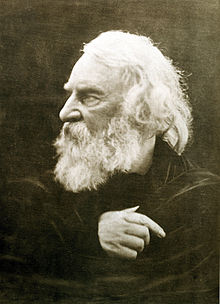
Henry Wadsworth Longfellow
(1)
Poem topics: , Print This Poem , Rhyme Scheme
Submit Spanish Translation
Submit German Translation
Submit French Translation
<< Tales Of A Wayside Inn : Part 2. Interlude Ii. Poem
By The Seaside : The Fire Of Driftwood Poem>>
About The Song Of Hiawatha Xiv: Picture-writing
The Song Of Hiawatha Xiv: Picture-writing is a poem by Henry Wadsworth Longfellow. This page includes the poem text, poet information, related topics, comments, and similar poems.
Write your comment about The Song Of Hiawatha Xiv: Picture-writing poem by Henry Wadsworth Longfellow
Best Poems of Henry Wadsworth Longfellow