The Golden Legend: Iv. The Road To Hirschau Poem Rhyme Scheme and Analysis
Rhyme Scheme: AB CDED AAFA GHAH IJAJ KAHA AILI MENE EOHO APIP A QRSR TUVU KJWJ EXHX HAYA ZA2ZA2 A B2 HT TTC2C2TT D2D2TTE2E2F2F2G2G2H2 H2XI2I2X JJAJAD2D2D2AATTF2F2D 2J2J2D2 AJ2J2J2K2K2ANNL2L2AA M2N2N2M2AA AAAA O2O2P2P2P2DD A TTTTTTAAP2P2TTAAQ2Q2 T AATT R2R2S2S2P2P2E2E2P2P2 P2P2P2P2 D ATATP2BTBTBAATTP2IP2 I T P2P2E2| PRINCE HENRY and ELSIE with their attendants on | A |
| horseback | B |
| - | |
| Elsie Onward and onward the highway runs | C |
| to the distant city impatiently bearing | D |
| Tidings of human joy and disaster of love and of | E |
| hate of doing and daring | D |
| - | |
| Prince Henry This life of ours is a wild aeolian | A |
| harp of many a joyous strain | A |
| But under them all there runs a loud perpetual wail | F |
| as of souls in pain | A |
| - | |
| Elsie Faith alone can interpret life and the heart | G |
| that aches and bleeds with the stigma | H |
| Of pain alone bears the likeness of Christ and can | A |
| comprehend its dark enigma | H |
| - | |
| Prince Henry Man is selfish and seeketh pleasure | I |
| with little care of what may betide | J |
| Else why am I travelling here beside thee a demon | A |
| that rides by an angel's side | J |
| - | |
| Elsie All the hedges are white with dust and | K |
| the great dog under the creaking wain | A |
| Hangs his head in the lazy heat while onward the | H |
| horses toil and strain | A |
| - | |
| Prince Henry Now they stop at the wayside inn | A |
| and the wagoner laughs with the landlord's daughter | I |
| While out of the dripping trough the horses distend | L |
| their leathern sides with water | I |
| - | |
| Elsie All through life there are wayside inns | M |
| where man may refresh his soul with love | E |
| Even the lowest may quench his thirst at rivulets fed | N |
| by springs from above | E |
| - | |
| Prince Henry Yonder where rises the cross of | E |
| stone our journey along the highway ends | O |
| And over the fields by a bridle path down into the | H |
| broad green valley descends | O |
| - | |
| Elsie I am not sorry to leave behind the beaten | A |
| road with its dust and heat | P |
| The air will be sweeter far and the turf will be softer | I |
| under our horses' feet | P |
| - | |
| They turn down a green lane | A |
| - | |
| Elsie Sweet is the air with the budding haws | Q |
| and the valley stretching for miles below | R |
| Is white with blossoming cheery trees as if just covered | S |
| with lightest snow | R |
| - | |
| Prince Henry Over our heads a white cascade is | T |
| gleaming against the distant hill | U |
| We cannot hear it nor see it move but it hangs like | V |
| a banner when winds are still | U |
| - | |
| Elsie Damp and cool is this deep ravine and | K |
| cool the sound of the brook by our side | J |
| What is this castle that rises above us and lords it | W |
| over a land so wide | J |
| - | |
| Prince Henry It is the home of the Counts of | E |
| Calva well have I known these scenes of old | X |
| Well I remember each tower and turret remember the | H |
| brooklet the wood and the wold | X |
| - | |
| Elsie Hark from the little village below us the | H |
| bells of the church are ringing for rain | A |
| Priests and peasants in long procession come forth | Y |
| and kneel on the arid plain | A |
| - | |
| Prince Henry They have not long to wait for I | Z |
| see in the south uprising a little cloud | A2 |
| That before the sun shall be set will cover the sky | Z |
| above us as with a shroud | A2 |
| - | |
| They pass on | A |
| - | |
| - | |
| - | |
| THE CONVENT OF HIRSCHAU IN THE BLACK FOREST | B2 |
| - | |
| - | |
| - | |
| The Convent cellar FRIAR CLAUS comes in with a | H |
| light and a basket of empty flagons | T |
| - | |
| Friar Claus I always enter this sacred place | T |
| With a thoughtful solemn and reverent pace | T |
| Pausing long enough on each stair | C2 |
| To breathe an ejaculatory prayer | C2 |
| And a benediction on the vines | T |
| That produce these various sorts of wines | T |
| - | |
| For my part I am well content | D2 |
| That we have got through with the tedious Lent | D2 |
| Fasting is all very well for those | T |
| Who have to contend with invisible foes | T |
| But I am quite sure it does not agree | E2 |
| With a quiet peaceable man like me | E2 |
| Who am not of that nervous and meagre kind | F2 |
| That are always distressed in body and mind | F2 |
| And at times it really does me good | G2 |
| To come down among this brotherhood | G2 |
| Dwelling forever under ground | H2 |
| Silent contemplative round and sound | H2 |
| Each one old and brown with mould | X |
| But filled to the lips with the ardor of youth | I2 |
| With the latent power and love of truth | I2 |
| And with virtues fervent and manifold | X |
| - | |
| I have heard it said that at Easter tide | J |
| When buds are swelling on every side | J |
| And the sap begins to move in the vine | A |
| Then in all the cellars far and wide | J |
| The oldest as well as the newest wine | A |
| Begins to stir itself and ferment | D2 |
| With a kind of revolt and discontent | D2 |
| At being so long in darkness pent | D2 |
| And fain would burst from its sombre tun | A |
| To bask on the hillside in the sun | A |
| As in the bosom of us poor friars | T |
| The tumult of half subdued desires | T |
| For the world that we have left behind | F2 |
| Disturbs at times all peace of mind | F2 |
| And now that we have lived through Lent | D2 |
| My duty it is as often before | J2 |
| To open awhile the prison door | J2 |
| And give these restless spirits vent | D2 |
| - | |
| Now here is a cask that stands alone | A |
| And has stood a hundred years or more | J2 |
| Its beard of cobwebs long and hoar | J2 |
| Trailing and sweeping along the floor | J2 |
| Like Barbarossa who sits in his cave | K2 |
| Taciturn sombre sedate and grave | K2 |
| Till his beard has grown through the table of stone | A |
| It is of the quick and not of the dead | N |
| In its veins the blood is hot and red | N |
| And a heart still beats in those ribs of oak | L2 |
| That time may have tamed but has not broke | L2 |
| It comes from Bacharach on the Rhine | A |
| Is one of the three best kinds of wine | A |
| And costs some hundred florins the ohm | M2 |
| But that I do not consider dear | N2 |
| When I remember that every year | N2 |
| Four butts are sent to the Pope of Rome | M2 |
| And whenever a goblet thereof I drain | A |
| The old rhyme keeps running in my brain | A |
| - | |
| At Bacharach on the Rhine | A |
| At Hochheim on the Main | A |
| And at Wuerzburg on the Stein | A |
| Grow the three best kinds of wine | A |
| - | |
| They are all good wines and better far | O2 |
| Than those of the Neckar or those of the Ahr | O2 |
| In particular Wuerzburg well may boast | P2 |
| Of its blessed wine of the Holy Ghost | P2 |
| Which of all wines I like the most | P2 |
| This I shall draw for the Abbot's drinking | D |
| Who seems to be much of my way of thinking | D |
| - | |
| Fills a flagon | A |
| - | |
| Ah how the streamlet laughs and sings | T |
| What a delicious fragrance springs | T |
| From the deep flagon while it fills | T |
| As of hyacinths and daffodils | T |
| Between this cask and the Abbot's lips | T |
| Many have been the sips and slips | T |
| Many have been the draughts of wine | A |
| On their way to his that have stopped at mine | A |
| And many a time my soul has hankered | P2 |
| For a deep draught out of his silver tankard | P2 |
| When it should have been busy with other affairs | T |
| Less with its longings and more with its prayers | T |
| But now there is no such awkward condition | A |
| No danger of death and eternal perdition | A |
| So here's to the Abbot and Brothers all | Q2 |
| Who dwell in this convent of Peter and Paul | Q2 |
| - | |
| He drinks | T |
| - | |
| O cordial delicious O soother of pain | A |
| It flashes like sunshine into my brain | A |
| A benison rest on the Bishop who sends | T |
| Such a fudder of wine as this to his friends | T |
| - | |
| And now a flagon for such as may ask | R2 |
| A draught from the noble Bacharach cask | R2 |
| And I will be gone though I know full well | S2 |
| The cellar's a cheerfuller place than the cell | S2 |
| Behold where he stands all sound and good | P2 |
| Brown and old in his oaken hood | P2 |
| Silent he seems externally | E2 |
| As any Carthusian monk may be | E2 |
| But within what a spirit of deep unrest | P2 |
| What a seething and simmering in his breast | P2 |
| As if the heaving of his great heart | P2 |
| Would burst his belt of oak apart | P2 |
| Let me unloose this button of wood | P2 |
| And quiet a little his turbulent mood | P2 |
| - | |
| Sets it running | D |
| - | |
| See how its currents gleam and shine | A |
| As if they had caught the purple hues | T |
| Of autumn sunsets on the Rhine | A |
| Descending and mingling with the dews | T |
| Or as if the grapes were stained with the blood | P2 |
| Of the innocent boy who some years back | B |
| Was taken and crucified by the Jews | T |
| In that ancient town of Bacharach | B |
| Perdition upon those infidel Jews | T |
| In that ancient town of Bacharach | B |
| The beautiful town that gives us wine | A |
| With the fragrant odor of Muscadine | A |
| I should deem it wrong to let this pass | T |
| Without first touching my lips to the glass | T |
| For here in the midst of the current I stand | P2 |
| Like the stone Pfalz in the midst of the river | I |
| Taking toll upon either hand | P2 |
| And much more grateful to the giver | I |
| - | |
| He drinks | T |
| - | |
| Here now is a very inferior kind | P2 |
| Such as in any town you may find | P2 |
| Such as one mi | E2 |
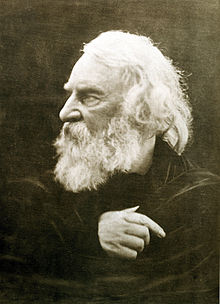
Henry Wadsworth Longfellow
(1)
Poem topics: , Print This Poem , Rhyme Scheme
Submit Spanish Translation
Submit German Translation
Submit French Translation
About The Golden Legend: Iv. The Road To Hirschau
The Golden Legend: Iv. The Road To Hirschau is a poem by Henry Wadsworth Longfellow. This page includes the poem text, poet information, related topics, comments, and similar poems.
Write your comment about The Golden Legend: Iv. The Road To Hirschau poem by Henry Wadsworth Longfellow
Best Poems of Henry Wadsworth Longfellow