The Borough. Letter Xxiv: Schools Poem Rhyme Scheme and Analysis
Rhyme Scheme: AABBCCDDEEDDFFGGHHIJ DDKKLLMMNNOOAAPPNNII QL QRRRRSSKKAADDRRTTU RRVVWWXXR RRJJYYZZDDA2A2B2B2RR C2C2RRXXAARRBBRRD2E2 D2EERR RRF2 F2F2G2G2F2F2RRRRH2I2 F2F2F2F2RRF2F2F2F2J2 J2K2K2YYYF2 F2RRYL2K2K2F2F2F2F2M 2M2RRN2N2RRO2O2RRP2P 2OOF2F2RRF2F2Q2Q2F2F 2F2F2F2R2R2C2R| To every class we have a School assign'd | A |
| Rules for all ranks and food for every mind | A |
| Yet one there is that small regard to rule | B |
| Or study pays and still is deem'd a School | B |
| That where a deaf poor patient widow sits | C |
| And awes some thirty infants as she knits | C |
| Infants of humble busy wives who pay | D |
| Some trifling price for freedom through the day | D |
| At this good matron's hut the children meet | E |
| Who thus becomes the mother of the street | E |
| Her room is small they cannot widely stray | D |
| Her threshold high they cannot run away | D |
| Though deaf she sees the rebel heroes shout | F |
| Though lame her white rod nimbly walks about | F |
| With band of yarn she keeps offenders in | G |
| And to her gown the sturdiest rogue can pin | G |
| Aided by these and spells and tell tale birds | H |
| Her power they dread and reverence her words | H |
| To Learning's second seats we now proceed | I |
| Where humming students gilded primers read | J |
| Or books with letters large and pictures gay | D |
| To make their reading but a kind of play | D |
| 'Reading made easy ' so the titles tell | K |
| But they who read must first begin to spell | K |
| There may be profit in these arts but still | L |
| Learning is labour call it what you will | L |
| Upon the youthful mind a heavy load | M |
| Nor must we hope to find the royal road | M |
| Some will their easy steps to science show | N |
| And some to heav'n itself their by way know | N |
| Ah trust them not who fame or bliss would share | O |
| Must learn by labour and must live by care | O |
| Another matron of superior kind | A |
| For higher schools prepares the rising mind | A |
| Preparatory she her Learning calls | P |
| The step first made to colleges and halls | P |
| She early sees to what the mind will grow | N |
| Nor abler judge of infant powers I know | N |
| She sees what soon the lively will impede | I |
| And how the steadier will in turn succeed | I |
| Observes the dawn of wisdom fancy taste | Q |
| And knows what parts will wear and what will | L |
| - | |
| waste | Q |
| She marks the mind too lively and at once | R |
| Sees the gay coxcomb and the rattling dunce | R |
| Long has she lived and much she loves to trace | R |
| Her former pupils now a lordly race | R |
| Whom when she sees rich robes and furs bedeck | S |
| She marks the pride which once she strove to check | S |
| A Burgess comes and she remembers well | K |
| How hard her task to make his worship spell | K |
| Cold selfish dull inanimate unkind | A |
| 'Twas but by anger he display'd a mind | A |
| Now civil smiling complaisant and gay | D |
| The world has worn th' unsocial crust away | D |
| That sullen spirit now a softness wears | R |
| And save by fits e'en dulness disappears | R |
| But still the matron can the man behold | T |
| Dull selfish hard inanimate and cold | T |
| A Merchant passes 'Probity and truth | U |
| Prudence and patience mark'd thee from thy youth ' | - |
| Thus she observes but oft retains her fears | R |
| For him who now with name unstain'd appears | R |
| Nor hope relinquishes for one who yet | V |
| Is lost in error and involved in debt | V |
| For latent evil in that heart she found | W |
| More open here but here the core was sound | W |
| Various our Day Schools here behold we one | X |
| Empty and still the morning duties done | X |
| Soil'd tatter'd worn and thrown in various | R |
| - | |
| heaps | R |
| Appear their books and there confusion sleeps | R |
| The workmen all are from the Babel fled | J |
| And lost their tools till the return they dread | J |
| Meantime the master with his wig awry | Y |
| Prepares his books for business by and by | Y |
| Now all th' insignia of the monarch laid | Z |
| Beside him rest and none stand by afraid | Z |
| He while his troop light hearted leap and play | D |
| Is all intent on duties of the day | D |
| No more the tyrant stern or judge severe | A2 |
| He feels the father's and the husband's fear | A2 |
| Ah little think the timid trembling crowd | B2 |
| That one so wise so powerful and so proud | B2 |
| Should feel himself and dread the humble ills | R |
| Of rent day charges and of coalman's bills | R |
| That while they mercy from their judge implore | C2 |
| He fears himself a knocking at the door | C2 |
| And feels the burthen as his neighbour states | R |
| His humble portion to the parish rates | R |
| They sit th' alloted hours then eager run | X |
| Rushing to pleasure when the duty's done | X |
| His hour of leisure is of different kind | A |
| Then cares domestic rush upon his mind | A |
| And half the ease and comfort he enjoys | R |
| Is when surrounded by slates books and boys | R |
| Poor Reuben Dixon has the noisiest school | B |
| Of ragged lads who ever bow'd to rule | B |
| Low in his price the men who heave our coals | R |
| And clean our causeways send him boys in shoals | R |
| To see poor Reuben with his fry beside | D2 |
| Their half check'd rudeness and his half scorn'd | E2 |
| - | |
| pride | D2 |
| Their room the sty in which th' assembly meet | E |
| In the close lane behind the Northgate street | E |
| T'observe his vain attempts to keep the peace | R |
| Till tolls the bell and strife and troubles cease | R |
| - | |
| - | |
| Calls for our praise his labour praise deserves | R |
| But not our pity Reuben has no nerves | R |
| 'Mid noise and dirt and stench and play and | F2 |
| - | |
| prate | F2 |
| He calmly cuts the pen or views the slate | F2 |
| But Leonard yes for Leonard's fate I grieve | G2 |
| Who loaths the station which he dares not leave | G2 |
| He cannot dig he will not beg his bread | F2 |
| All his dependence rests upon his head | F2 |
| And deeply skill'd in sciences and arts | R |
| On vulgar lads he wastes superior parts | R |
| Alas what grief that feeling mind sustains | R |
| In guiding hands and stirring torpid brains | R |
| He whose proud mind from pole to pole will move | H2 |
| And view the wonders of the worlds above | I2 |
| Who thinks and reasons strongly hard his fate | F2 |
| Confined for ever to the pen and slate | F2 |
| True he submits and when the long dull day | F2 |
| Has slowly pass'd in weary tasks away | F2 |
| To other worlds with cheerful view he looks | R |
| And parts the night between repose and books | R |
| Amid his labours he has sometimes tried | F2 |
| To turn a little from his cares aside | F2 |
| Pope Milton Dryden with delight has seized | F2 |
| His soul engaged and of his trouble eased | F2 |
| When with a heavy eye and ill done sum | J2 |
| No part conceived a stupid boy will come | J2 |
| Then Leonard first subdues the rising frown | K2 |
| And bids the blockhead lay his blunders down | K2 |
| O'er which disgusted he will turn his eye | Y |
| To his sad duty his sound mind apply | Y |
| And vex'd in spirit throw his pleasures by | Y |
| Turn we to Schools which more than these afford | F2 |
| - | |
| - | |
| The sound instruction and the wholesome board | F2 |
| And first our School for Ladies pity calls | R |
| For one soft sigh when we behold these walls | R |
| Placed near the town and where from window high | Y |
| The fair confined may our free crowds espy | L2 |
| With many a stranger gazing up and down | K2 |
| And all the envied tumult of the town | K2 |
| May in the smiling summer eve when they | F2 |
| Are sent to sleep the pleasant hours away | F2 |
| Behold the poor whom they conceive the bless'd | F2 |
| Employ'd for hours and grieved they cannot rest | F2 |
| Here the fond girl whose days are sad and few | M2 |
| Since dear mamma pronounced the last adieu | M2 |
| Looks to the road and fondly thinks she hears | R |
| The carriage wheels and struggles with her tears | R |
| All yet is new the misses great and small | N2 |
| Madam herself and teachers odious all | N2 |
| From laughter pity nay command she turns | R |
| But melts in softness or with anger burns | R |
| Nauseates her food and wonders who can sleep | O2 |
| On such mean beds where she can only weep | O2 |
| She scorns condolence but to all she hates | R |
| Slowly at length her mind accommodates | R |
| Then looks on bondage with the same concern | P2 |
| As others felt and finds that she must learn | P2 |
| As others learn'd the common lot to share | O |
| To search for comfort and submit to care | O |
| There are 'tis said who on these seats attend | F2 |
| And to these ductile minds destruction vend | F2 |
| Wretches to virtue peace and nature foes | R |
| To these soft minds their wicked trash expose | R |
| Seize on the soul ere passions take the sway | F2 |
| And lead the heart ere yet it feels astray | F2 |
| Smugglers obscene and can there be who take | Q2 |
| Infernal pains the sleeping vice to wake | Q2 |
| Can there be those by whom the thought defiled | F2 |
| Enters the spotless bosom of a child | F2 |
| By whom the ill is to the heart conveyed | F2 |
| Who lend the foe not yet in arms their aid | F2 |
| And sap the city walls before the siege be laid | F2 |
| Oh rather skulking in the by ways steal | R2 |
| And rob the poorest traveller of his meal | R2 |
| Burst through the humblest trader's bolted door | C2 |
| Bear from the widow's hut her winter s | R |
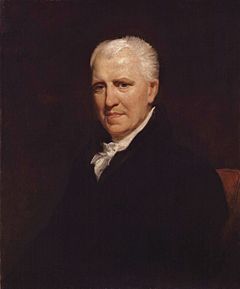
George Crabbe
(1)
Poem topics: , Print This Poem , Rhyme Scheme
Submit Spanish Translation
Submit German Translation
Submit French Translation
About The Borough. Letter Xxiv: Schools
The Borough. Letter Xxiv: Schools is a poem by George Crabbe. This page includes the poem text, poet information, related topics, comments, and similar poems.
Write your comment about The Borough. Letter Xxiv: Schools poem by George Crabbe
Best Poems of George Crabbe