The Second Epistle Of The Second Book Of Horace Poem Rhyme Scheme and Analysis
Rhyme Scheme: A B CCDEFFBBEEGGHIJJKKL MMNNOO PPQQRR SSPPPPPTTPPBBEE UP VVPPWXYYPPPPPPPPZZEE PPPPRRA2A2 PPEEB2B2EE EEEEPPBBC2VE PPPPEEBB PPVVPPBB PPC2VBBBEEPP EEEEPP PPD2D2EEEEP E EEPPE2E2 PPF2GPPBBEEPPEEG2G2E EGGF2D2D2EEEE H2H2EEPPPPI2I2YYPPBB P PPJ2H2PPK2K2 BBPPPP UL2EEE J2J2EEBBM2M2PPEE N2ZPPO2P2PPPP Q2Q2PPP2O2PPBBPPL2UE ER2R2BBS2S2TT KKBB PPVVEEPPK2K2BBA2A2T2 T2 U2U2EEEEBBBBPP PPBBV2W2PP X2BBA2A2P2P2BBPPPPPP VV A2A2Y2Y2EE| 'Ludentis speciem dabit et torquebitur ' | A |
| - | |
| HOR | B |
| - | |
| Dear Colonel Cobham's and your country's friend | C |
| You love a verse take such as I can send | C |
| A Frenchman comes presents you with his boy | D |
| Bows and begins 'The lad sir is of Blois | E |
| Observe his shape how clean his locks how curl'd | F |
| My only son I'd have him see the world | F |
| His French is pure his voice too you shall hear | B |
| Sir he's your slave for twenty pound a year | B |
| Mere wax as yet you fashion him with ease | E |
| Your barber cook upholsterer what you please | E |
| A perfect genius at an opera song | G |
| To say too much might do my honour wrong | G |
| Take him with all his virtues on my word | H |
| His whole ambition was to serve a lord | I |
| But sir to you with what would I not part | J |
| Though faith I fear 'twill break his mother's heart | J |
| Once and but once I caught him in a lie | K |
| And then unwhipp'd he had the grace to cry | K |
| The fault he has I fairly shall reveal | L |
| Could you o'erlook but that it is to steal ' | - |
| - | |
| If after this you took the graceless lad | M |
| Could you complain my friend he proved so bad | M |
| Faith in such case if you should prosecute | N |
| I think Sir Godfrey should decide the suit | N |
| Who sent the thief that stole the cash away | O |
| And punish'd him that put it in his way | O |
| - | |
| Consider then and judge me in this light | P |
| I told you when I went I could not write | P |
| You said the same and are you discontent | Q |
| With laws to which you gave your own assent | Q |
| Nay worse to ask for verse at such a time | R |
| D' ye think me good for nothing but to rhyme | R |
| - | |
| In Anna's wars a soldier poor and old | S |
| Had dearly earn'd a little purse of gold | S |
| Tired with a tedious march one luckless night | P |
| He slept poor dog and lost it to a doit | P |
| This put the man in such a desperate mind | P |
| Between revenge and grief and hunger join'd | P |
| Against the foe himself and all mankind | P |
| He leap'd the trenches scaled a castle wall | T |
| Tore down a standard took the fort and all | T |
| 'Prodigious well ' his great commander cried | P |
| Gave him much praise and some reward beside | P |
| Next pleased his excellence a town to batter | B |
| Its name I know not and it's no great matter | B |
| 'Go on my friend ' he cried 'see yonder walls | E |
| Advance and conquer go where glory calls | E |
| More honours more rewards attend the brave ' | - |
| Don't you remember what reply he gave | U |
| 'D' ye think me noble general such a sot | P |
| Let him take castles who has ne'er a groat ' | - |
| - | |
| Bred up at home full early I begun | V |
| To read in Greek the wrath of Peleus' son | V |
| Besides my father taught me from a lad | P |
| The better art to know the good from bad | P |
| And little sure imported to remove | W |
| To hunt for truth in Maudlin's learned grove | X |
| But knottier points we knew not half so well | Y |
| Deprived us soon of our paternal cell | Y |
| And certain laws by sufferers thought unjust | P |
| Denied all posts of profit or of trust | P |
| Hopes after hopes of pious Papists fail'd | P |
| While mighty William's thundering arm prevail'd | P |
| For right hereditary tax'd and fined | P |
| He stuck to poverty with peace of mind | P |
| And me the Muses help'd to undergo it | P |
| Convict a Papist he and I a poet | P |
| But thanks to Homer since I live and thrive | Z |
| Indebted to no prince or peer alive | Z |
| Sure I should want the care of ten Monroes | E |
| If I would scribble rather than repose | E |
| - | |
| Years following years steal something every day | P |
| At last they steal us from ourselves away | P |
| In one our frolics one amusements end | P |
| In one a mistress drops in one a friend | P |
| This subtle thief of life this paltry time | R |
| What will it leave me if it snatch my rhyme | R |
| If every wheel of that unwearied mill | A2 |
| That turn'd ten thousand verses now stands still | A2 |
| - | |
| But after all what would you have me do | P |
| When out of twenty I can please not two | P |
| When this heroics only deigns to praise | E |
| Sharp satire that and that Pindaric lays | E |
| One likes the pheasant's wing and one the leg | B2 |
| The vulgar boil the learned roast an egg | B2 |
| Hard task to hit the palate of such guests | E |
| When Oldfield loves what Dartineuf detests | E |
| - | |
| But grant I may relapse for want of grace | E |
| Again to rhyme can London be the place | E |
| Who there his Muse or self or soul attends | E |
| In crowds and courts law business feasts and friends | E |
| My counsel sends to execute a deed | P |
| A poet begs me I will hear him read | P |
| In Palace yard at nine you'll find me there | B |
| At ten for certain sir in Bloomsbury Square | B |
| Before the Lords at twelve my cause comes on | C2 |
| There's a rehearsal sir exact at one | V |
| 'Oh but a wit can study in the streets | E |
| And raise his mind above the mob he meets ' | - |
| Not quite so well however as one ought | P |
| A hackney coach may chance to spoil a thought | P |
| And then a nodding beam or pig of lead | P |
| God knows may hurt the very ablest head | P |
| Have you not seen at Guildhall's narrow pass | E |
| Two aldermen dispute it with an ass | E |
| And peers give way exalted as they are | B |
| Even to their own s r v nce in a car | B |
| - | |
| Go lofty poet and in such a crowd | P |
| Sing thy sonorous verse but not aloud | P |
| Alas to grottos and to groves we run | V |
| To ease and silence every Muse's son | V |
| Blackmore himself for any grand effort | P |
| Would drink and doze at Tooting or Earl's Court | P |
| How shall I rhyme in this eternal roar | B |
| How match the bards whom none e'er match'd before | B |
| - | |
| The man who stretch'd in Isis' calm retreat | P |
| To books and study gives seven years complete | P |
| See strew'd with learned dust his nightcap on | C2 |
| He walks an object new beneath the sun | V |
| The boys flock round him and the people stare | B |
| So stiff so mute some statue you would swear | B |
| Stepp'd from its pedestal to take the air | B |
| And here while town and court and city roars | E |
| With mobs and duns and soldiers at their doors | E |
| Shall I in London act this idle part | P |
| Composing songs for fools to get by heart | P |
| - | |
| The Temple late two brother sergeants saw | E |
| Who deem'd each other oracles of law | E |
| With equal talents these congenial souls | E |
| One lull'd th' Exchequer and one stunn'd the Rolls | E |
| Each had a gravity would make you split | P |
| And shook his head at Murray as a wit | P |
| ''Twas sir your law' and 'Sir your eloquence ' | - |
| 'Yours Cowper's manner and yours Talbot's sense ' | - |
| - | |
| Thus we dispose of all poetic merit | P |
| Yours Milton's genius and mine Homer's spirit | P |
| Call Tibbald Shakspeare and he'll swear the Nine | D2 |
| Dear Cibber never match'd one ode of thine | D2 |
| Lord how we strut through Merlin's cave to see | E |
| No poets there but Stephen you and me | E |
| Walk with respect behind while we at ease | E |
| Weave laurel crowns and take what names we please | E |
| 'My dear Tibullus ' if that will not do | P |
| 'Let me be Horace and be Ovid you ' | - |
| Or 'I'm content allow me Dryden's strains | E |
| And you shall rise up Otway for your pains ' | - |
| Much do I suffer much to keep in peace | E |
| This jealous waspish wrong head rhyming race | E |
| And much must flatter if the whim should bite | P |
| To court applause by printing what I write | P |
| But let the fit pass o'er I'm wise enough | E2 |
| To stop my ears to their confounded stuff | E2 |
| - | |
| In vain bad rhymers all mankind reject | P |
| They treat themselves with most profound respect | P |
| 'Tis to small purpose that you hold your tongue | F2 |
| Each praised within is happy all day long | G |
| But how severely with themselves proceed | P |
| The men who write such verse as we can read | P |
| Their own strict judges not a word they spare | B |
| That wants or force or light or weight or care | B |
| Howe'er unwillingly it quits its place | E |
| Nay though at court perhaps it may find grace | E |
| Such they'll degrade and sometimes in its stead | P |
| In downright charity revive the dead | P |
| Mark where a bold expressive phrase appears | E |
| Bright through the rubbish of some hundred years | E |
| Command old words that long have slept to wake | G2 |
| Words that wise Bacon or brave Raleigh spake | G2 |
| Or bid the new be English ages hence | E |
| For use will father what's begot by sense | E |
| Pour the full tide of eloquence along | G |
| Serenely pure and yet divinely strong | G |
| Rich with the treasures of each foreign tongue | F2 |
| Prune the luxuriant the uncouth refine | D2 |
| But show no mercy to an empty line | D2 |
| Then polish all with so much life and ease | E |
| You think 'tis nature and a knack to please | E |
| But ease in writing flows from art not chance | E |
| As those move easiest who have learn'd to dance | E |
| - | |
| If such the plague and pains to write by rule | H2 |
| Better say I be pleased and play the fool | H2 |
| Call if you will bad rhyming a disease | E |
| It gives men happiness or leaves them ease | E |
| There lived in primo Georgii they record | P |
| A worthy member no small fool a lord | P |
| Who though the House was up delighted sat | P |
| Heard noted answer'd as in full debate | P |
| In all but this a man of sober life | I2 |
| Fond of his friend and civil to his wife | I2 |
| Not quite a madman though a pasty fell | Y |
| And much too wise to walk into a well | Y |
| Him the damn'd doctors and his friends immured | P |
| They bled they cupp'd they purged in short they cured | P |
| Whereat the gentleman began to stare | B |
| 'My friends ' he cried 'pox take you for your care | B |
| That from a patriot of distinguish'd note | P |
| Have bled and purged me to a simple vote ' | - |
| - | |
| Well on the whole plain prose must be my fate | P |
| Wisdom curse on it will come soon or late | P |
| There is a time when poets will grow dull | J2 |
| I'll e'en leave verses to the boys at school | H2 |
| To rules of poetry no more confined | P |
| I learn to smooth and harmonise my mind | P |
| Teach every thought within its bounds to roll | K2 |
| And keep the equal measure of the soul | K2 |
| - | |
| Soon as I enter at my country door | B |
| My mind resumes the thread it dropped before | B |
| Thoughts which at Hyde park corner I forgot | P |
| Meet and rejoin me in the pensive grot | P |
| There all alone and compliments apart | P |
| I ask these sober questions of my heart | P |
| - | |
| If when the more you drink the more you crave | U |
| You tell the doctor when the more you have | L2 |
| The more you want why not with equal ease | E |
| Confess as well your folly as disease | E |
| The heart resolves this matter in a trice | E |
| 'Men only feel the smart but not the vice ' | - |
| - | |
| When golden angels cease to cure the evil | J2 |
| You give all royal witchcraft to the devil | J2 |
| When servile chaplains cry that birth and place | E |
| Indue a peer with honour truth and grace | E |
| Look in that breast most dirty D be fair | B |
| Say can you find out one such lodger there | B |
| Yet still not heeding what your heart can teach | M2 |
| You go to church to hear these flatterers preach | M2 |
| Indeed could wealth bestow or wit or merit | P |
| A grain of courage or a spark of spirit | P |
| The wisest man might blush I must agree | E |
| If D loved sixpence more than he | E |
| - | |
| If there be truth in law and use can give | N2 |
| A property that's yours on which you live | Z |
| Delightful Abbs Court if its fields afford | P |
| Their fruits to you confesses you its lord | P |
| All Worldly's hens nay partridge sold to town | O2 |
| His ven'son too a guinea makes your own | P2 |
| He bought at thousands what with better wit | P |
| You purchase as you want and bit by bit | P |
| Now or long since what difference will be found | P |
| You pay a penny and he paid a pound | P |
| - | |
| Heathcote himself and such large acred men | Q2 |
| Lords of fat Ev'sham or of Lincoln fen | Q2 |
| Buy every stick of wood that lends them heat | P |
| Buy every pullet they afford to eat | P |
| Yet these are wights who fondly call their own | P2 |
| Half that the devil o'erlooks from Lincoln town | O2 |
| The laws of God as well as of the land | P |
| Abhor a perpetuity should stand | P |
| Estates have wings and hang in fortune's power | B |
| Loose on the point of every wavering hour | B |
| Ready by force or of your own accord | P |
| By sale at least by death to change their lord | P |
| Man and for ever wretch what wouldst thou have | L2 |
| Heir urges heir like wave impelling wave | U |
| All vast possessions just the same the case | E |
| Whether you call them villa park or chase | E |
| Alas my Bathurst what will they avail | R2 |
| Join Cotswood hills to Saperton's fair dale | R2 |
| Let rising granaries and temples here | B |
| There mingled farms and pyramids appear | B |
| Link towns to towns with avenues of oak | S2 |
| Enclose whole downs in walls 'tis all a joke | S2 |
| Inexorable death shall level all | T |
| And trees and stones and farms and farmer fall | T |
| - | |
| Gold silver ivory vases sculptured high | K |
| Paint marble gems and robes of Persian dye | K |
| There are who have not and thank Heaven there are | B |
| Who if they have not think not worth their care | B |
| - | |
| Talk what you will of taste my friend you'll find | P |
| Two of a face as soon as of a mind | P |
| Why of two brothers rich and restless one | V |
| Ploughs burns manures and toils from sun to sun | V |
| The other slights for women sports and wines | E |
| All Townshend's turnips and all Grosvenor's mines | E |
| Why one like Bu with pay and scorn content | P |
| Bows and votes on in court and parliament | P |
| One driven by strong benevolence of soul | K2 |
| Shall fly like Oglethorpe from pole to pole | K2 |
| Is known alone to that Directing Power | B |
| Who forms the genius in the natal hour | B |
| That God of Nature who within us still | A2 |
| Inclines our action not constrains our will | A2 |
| Various of temper as of face or frame | T2 |
| Each individual His great end the same | T2 |
| - | |
| Yes sir how small soever be my heap | U2 |
| A part I will enjoy as well as keep | U2 |
| My heir may sigh and think it want of grace | E |
| A man so poor would live without a place | E |
| But sure no statute in his favour says | E |
| How free or frugal I shall pass my days | E |
| I who at some times spend at others spare | B |
| Divided between carelessness and care | B |
| 'Tis one thing madly to disperse my store | B |
| Another not to heed to treasure more | B |
| Glad like a boy to snatch the first good day | P |
| And pleased if sordid want be far away | P |
| - | |
| What is't to me a passenger God wot | P |
| Whether my vessel be first rate or not | P |
| The ship itself may make a better figure | B |
| But I that sail am neither less nor bigger | B |
| I neither strut with every favouring breath | V2 |
| Nor strive with all the tempest in my teeth | W2 |
| In power wit figure virtue fortune placed | P |
| Behind the foremost and before the last | P |
| - | |
| 'But why all this of avarice I have none ' | - |
| I wish you joy sir of a tyrant gone | X2 |
| But does no other lord it at this hour | B |
| As wild and mad the avarice of power | B |
| Does neither rage inflame nor fear appal | A2 |
| Not the black fear of death that saddens all | A2 |
| With terrors round can reason hold her throne | P2 |
| Despise the known nor tremble at the unknown | P2 |
| Survey both worlds intrepid and entire | B |
| In spite of witches devils dreams and fire | B |
| Pleased to look forward pleased to look behind | P |
| And count each birthday with a grateful mind | P |
| Has life no sourness drawn so near its end | P |
| Canst thou endure a foe forgive a friend | P |
| Has age but melted the rough parts away | P |
| As winter fruits grow mild ere they decay | P |
| Or will you think my friend your business done | V |
| When of a hundred thorns you pull out one | V |
| - | |
| Learn to live well or fairly make your will | A2 |
| You've play'd and loved and eat and drank your fill | A2 |
| Walk sober off before a sprightlier age | Y2 |
| Comes tittering on and shoves you from the stage | Y2 |
| Leave such to trifle with more grace and ease | E |
| Whom folly pleases and whose follies please | E |
Alexander Pope
(1)
Poem topics: , Print This Poem , Rhyme Scheme
Submit Spanish Translation
Submit German Translation
Submit French Translation
<< Epigram From The French Poem
Epitaph Xv. For One Who Would Not Be Buried In Westminster Abbey Poem>>
About The Second Epistle Of The Second Book Of Horace
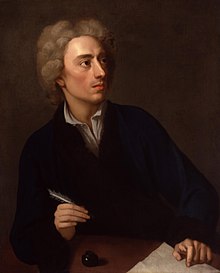
The Second Epistle Of The Second Book Of Horace is a poem by Alexander Pope. This page includes the poem text, poet information, related topics, comments, and similar poems.