The Poet's Tale - The Wayside Inn - Part First Poem Rhyme Scheme and Analysis
Rhyme Scheme: A BCBCBCDD EFEFEFGG HIHIHIJJ AKAKAKLL KMNMNMOO PGPGPGFF QRQRQRSS TUTUTUGG VKVKVKWW XTXTXTYY ZA2ZA2ZA2WW B2FC2FC2FXX ND2NE2ND2A2A2 SISISIC2C2 C2F2C2F2C2G2H2Y I2J2I2K2I2K2VV C2C2C2C2C2C2VV L2NL2NL2NM2M2 KC2KC2KC2NN C2C2C2C2C2C2N2N2 O2C2O2C2P2C2C2C2 N2C2N2C2N2C2FF Q2C2Q2C2Q2C2C2C2 GTGTC2TR2R2 WFWS2WS2T2T2 I2SI2SI2U2V2V2 W2X2W2X2W2X2L2L2 Y2Z2H2Z2Y2Z2II F2A3F2A3F2A3A3A3 NKNKNKAA F KDDA3KA3A3A3A3A3A3 A3L2L2A3L2A3A3L2L2YY| THE BIRDS OF KILLINGWORTH | A |
| - | |
| It was the season when through all the land | B |
| The merle and mavis build and building sing | C |
| Those lovely lyrics written by His hand | B |
| Whom Saxon Caedmon calls the Blitheheart King | C |
| When on the boughs the purple buds expand | B |
| The banners of the vanguard of the Spring | C |
| And rivulets rejoicing rush and leap | D |
| And wave their fluttering signals from the steep | D |
| - | |
| The robin and the bluebird piping loud | E |
| Filled all the blossoming orchards with their glee | F |
| The sparrows chirped as if they still were proud | E |
| Their race in Holy Writ should mentioned be | F |
| And hungry crows assembled in a crowd | E |
| Clamored their piteous prayer incessantly | F |
| Knowing who hears the ravens cry and said | G |
| Give us O Lord this day our daily bread | G |
| - | |
| Across the Sound the birds of passage sailed | H |
| Speaking some unknown language strange and sweet | I |
| Of tropic isle remote and passing hailed | H |
| The village with the cheers of all their fleet | I |
| Or quarrelling together laughed and railed | H |
| Like foreign sailors landed in the street | I |
| Of seaport town and with outlandish noise | J |
| Of oaths and gibberish frightening girls and boys | J |
| - | |
| Thus came the jocund Spring in Killingworth | A |
| In fabulous day some hundred years ago | K |
| And thrifty farmers as they tilled the earth | A |
| Heard with alarm the cawing of the crow | K |
| That mingled with the universal mirth | A |
| Cassandra like prognosticating woe | K |
| They shook their heads and doomed with dreadful words | L |
| To swift destruction the whole race of birds | L |
| - | |
| And a town meeting was convened straightway | K |
| To set a price upon the guilty heads | M |
| Of these marauders who in lieu of pay | N |
| Levied black mail upon the garden beds | M |
| And cornfields and beheld without dismay | N |
| The awful scarecrow with his fluttering shreds | M |
| The skeleton that waited at their feast | O |
| Whereby their sinful pleasure was increased | O |
| - | |
| Then from his house a temple painted white | P |
| With fluted columns and a roof of red | G |
| The Squire came forth august and splendid sight | P |
| Slowly descending with majestic tread | G |
| Three flights of steps nor looking left nor right | P |
| Down the long street he walked as one who said | G |
| A town that boasts inhabitants like me | F |
| Can have no lack of good society | F |
| - | |
| The Parson too appeared a man austere | Q |
| The instinct of whose nature was to kill | R |
| The wrath of God he preached from year to year | Q |
| And read with fervor Edwards on the Will | R |
| His favorite pastime was to slay the deer | Q |
| In Summer on some Adirondac hill | R |
| E'en now while walking down the rural lane | S |
| He lopped the wayside lilies with his cane | S |
| - | |
| From the Academy whose belfry crowned | T |
| The hill of Science with its vane of brass | U |
| Came the Preceptor gazing idly round | T |
| Now at the clouds and now at the green grass | U |
| And all absorbed in reveries profound | T |
| Of fair Almira in the upper class | U |
| Who was as in a sonnet he had said | G |
| As pure as water and as good as bread | G |
| - | |
| And next the Deacon issued from his door | V |
| In his voluminous neck cloth white as snow | K |
| A suit of sable bombazine he wore | V |
| His form was ponderous and his step was slow | K |
| There never was so wise a man before | V |
| He seemed the incarnate Well I told you so | K |
| And to perpetuate his great renown | W |
| There was a street named after him in town | W |
| - | |
| These came together in the new town hall | X |
| With sundry farmers from the region round | T |
| The Squirt presided dignified and tall | X |
| His air impressive and his reasoning sound | T |
| Ill fared it with the birds both great and small | X |
| Hardly a friend in all that crowd they found | T |
| But enemies enough who every one | Y |
| Charged them with all the crimes beneath the sun | Y |
| - | |
| When they had ended from his place apart | Z |
| Rose the Preceptor to redress the wrong | A2 |
| And trembling like a steed before the start | Z |
| Looked round bewildered on the expectant throng | A2 |
| Then thought of fair Almira and took heart | Z |
| To speak out what was in him clear and strong | A2 |
| Alike regardless of their smile or frown | W |
| And quite determined not to be laughed down | W |
| - | |
| Plato anticipating the Reviewers | B2 |
| From his Republic banished without pity | F |
| The Poets in this little town of yours | C2 |
| You put to death by means of a Committee | F |
| The ballad singers and the Troubadours | C2 |
| The street musicians of the heavenly city | F |
| The birds who make sweet music for us all | X |
| In our dark hours as David did for Saul | X |
| - | |
| The thrush that carols at the dawn of day | N |
| From the green steeples of the piny wood | D2 |
| The oriole in the elm the noisy jay | N |
| Jargoning like a foreigner at his food | E2 |
| The bluebird balanced on some topmost spray | N |
| Flooding with melody the neighborhood | D2 |
| Linnet and meadow lark and all the throng | A2 |
| That dwell in nests and have the gift of song | A2 |
| - | |
| You slay them all and wherefore for the gain | S |
| Of a scant handful more or less of wheat | I |
| Or rye or barley or some other grain | S |
| Scratched up at random by industrious feet | I |
| Searching for worm or weevil after rain | S |
| Or a few cherries that are not so sweet | I |
| As are the songs these uninvited guests | C2 |
| Sing at their feast with comfortable breasts | C2 |
| - | |
| Do you ne'er think what wondrous beings these | C2 |
| Do you ne'er think who made them and who taught | F2 |
| The dialect they speak where melodies | C2 |
| Alone are the interpreters of thought | F2 |
| Whose household words are songs in many keys | C2 |
| Sweeter than instrument of man e'er caught | G2 |
| Whose habitations in the tree tops even | H2 |
| Are half way houses on the road to heaven | Y |
| - | |
| Think every morning when the sun peeps through | I2 |
| The dim leaf latticed windows of the grove | J2 |
| How jubilant the happy birds renew | I2 |
| Their old melodious madrigals of love | K2 |
| And when you think of this remember too | I2 |
| 'T is always morning somewhere and above | K2 |
| The awakening continent from shore to shore | V |
| Somewhere the birds are singing evermore | V |
| - | |
| Think of your woods and orchards without birds | C2 |
| Of empty nests that cling to boughs and beams | C2 |
| As in an idiot's brain remembered words | C2 |
| Hang empty 'mid the cobwebs of his dreams | C2 |
| Will bleat of flocks or bellowing of herds | C2 |
| Make up for the lost music when your teams | C2 |
| Drag home the stingy harvest and no more | V |
| The feathered gleaners follow to your door | V |
| - | |
| What would you rather see the incessant stir | L2 |
| Of insects in the windrows of the hay | N |
| And hear the locust and the grasshopper | L2 |
| Their melancholy hurdy gurdies play | N |
| Is this more pleasant to you than the whir | L2 |
| Of meadow lark and her sweet roundelay | N |
| Or twitter of little field fares as you take | M2 |
| Your nooning in the shade of bush and brake | M2 |
| - | |
| You call them thieves and pillagers but know | K |
| They are the winged wardens of your farms | C2 |
| Who from the cornfields drive the insidious foe | K |
| And from your harvests keep a hundred harms | C2 |
| Even the blackest of them all the crow | K |
| Renders good service as your man at arms | C2 |
| Crushing the beetle in his coat of mail | N |
| And crying havoc on the slug and snail | N |
| - | |
| How can I teach your children gentleness | C2 |
| And mercy to the weak and reverence | C2 |
| For Life which in its weakness or excess | C2 |
| Is still a gleam of God's omnipotence | C2 |
| Or Death which seeming darkness is no less | C2 |
| The selfsame light although averted hence | C2 |
| When by your laws your actions and your speech | N2 |
| You contradict the very things I teach | N2 |
| - | |
| With this he closed and through the audience went | O2 |
| A murmur like the rustle of dead leaves | C2 |
| The farmers laughed and nodded and some bent | O2 |
| Their yellow heads together like their sheaves | C2 |
| Men have no faith in fine spun sentiment | P2 |
| Who put their trust in bullocks and in beeves | C2 |
| The birds were doomed and as the record shows | C2 |
| A bounty offered for the heads of crows | C2 |
| - | |
| There was another audience out of reach | N2 |
| Who had no voice nor vote in making laws | C2 |
| But in the papers read his little speech | N2 |
| And crowned his modest temples with applause | C2 |
| They made him conscious each one more than each | N2 |
| He still was victor vanquished in their cause | C2 |
| Sweetest of all the applause he won from thee | F |
| O fair Almira at the Academy | F |
| - | |
| And so the dreadful massacre began | Q2 |
| O'er fields and orchards and o'er woodland crests | C2 |
| The ceaseless fusillade of terror ran | Q2 |
| Dead fell the birds with blood stains on their breasts | C2 |
| Or wounded crept away from sight of man | Q2 |
| While the young died of famine in their nests | C2 |
| A slaughter to be told in groans not words | C2 |
| The very St Bartholomew of Birds | C2 |
| - | |
| The Summer came and all the birds were dead | G |
| The days were like hot coals the very ground | T |
| Was burned to ashes in the orchards fed | G |
| Myriads of caterpillars and around | T |
| The cultivated fields and garden beds | C2 |
| Hosts of devouring insects crawled and found | T |
| No foe to check their march till they had made | R2 |
| The land a desert without leaf or shade | R2 |
| - | |
| Devoured by worms like Herod was the town | W |
| Because like Herod it had ruthlessly | F |
| Slaughtered the Innocents From the trees spun down | W |
| The canker worms upon the passers by | S2 |
| Upon each woman's bonnet shawl and gown | W |
| Who shook them off with just a little cry | S2 |
| They were the terror of each favorite walk | T2 |
| The endless theme of all the village talk | T2 |
| - | |
| The farmers grew impatient but a few | I2 |
| Confessed their error and would not complain | S |
| For after all the best thing one can do | I2 |
| When it is raining is to let it rain | S |
| Then they repealed the law although they knew | I2 |
| It would not call the dead to life again | U2 |
| As school boys finding their mistake too late | V2 |
| Draw a wet sponge across the accusing slate | V2 |
| - | |
| That year in Killingworth the Autumn came | W2 |
| Without the light of his majestic look | X2 |
| The wonder of the falling tongues of flame | W2 |
| The illumined pages of his Doom's Day book | X2 |
| A few lost leaves blushed crimson with their shame | W2 |
| And drowned themselves despairing in the brook | X2 |
| While the wild wind went moaning everywhere | L2 |
| Lamenting the dead children of the air | L2 |
| - | |
| But the next Spring a stranger sight was seen | Y2 |
| A sight that never yet by bard was sung | Z2 |
| As great a wonder as it would have been | H2 |
| If some dumb animal had found a tongue | Z2 |
| A wagon overarched with evergreen | Y2 |
| Upon whose boughs were wicker cages hung | Z2 |
| All full of singing birds came down the street | I |
| Filling the air with music wild and sweet | I |
| - | |
| From all the country round these birds were brought | F2 |
| By order of the town with anxious quest | A3 |
| And loosened from their wicker prisons sought | F2 |
| In woods and fields the places they loved best | A3 |
| Singing loud canticles which many thought | F2 |
| Were satires to the authorities addressed | A3 |
| While others listening in green lanes averred | A3 |
| Such lovely music never had been heard | A3 |
| - | |
| But blither still and louder carolled they | N |
| Upon the morrow for they seemed to know | K |
| It was the fair Almira's wedding day | N |
| And everywhere around above below | K |
| When the Preceptor bore his bride away | N |
| Their songs burst forth in joyous overflow | K |
| And a new heaven bent over a new earth | A |
| Amid the sunny farms of Killingworth | A |
| - | |
| - | |
| - | |
| FINALE | F |
| - | |
| The hour was late the fire burned low | K |
| The Landlord's eyes were closed in sleep | D |
| And near the story's end a deep | D |
| Sonorous sound at times was heard | A3 |
| As when the distant bagpipes blow | K |
| At this all laughed the Landlord stirred | A3 |
| As one awaking from a swound | A3 |
| And gazing anxiously around | A3 |
| Protested that he had not slept | A3 |
| But only shut his eyes and kept | A3 |
| His ears attentive to each word | A3 |
| - | |
| Then all arose and said Good Night | A3 |
| Alone remained the drowsy Squire | L2 |
| To rake the embers of the fire | L2 |
| And quench the waning parlor light | A3 |
| While from the windows here and there | L2 |
| The scattered lamps a moment gleamed | A3 |
| And the illumined hostel seemed | A3 |
| The constellation of the Bear | L2 |
| Downward athwart the misty air | L2 |
| Sinking and setting toward the sun | Y |
| Far off the village clock struck one | Y |
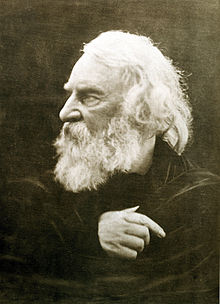
Henry Wadsworth Longfellow
(1)
Poem topics: , Print This Poem , Rhyme Scheme
Submit Spanish Translation
Submit German Translation
Submit French Translation
About The Poet's Tale - The Wayside Inn - Part First
The Poet's Tale - The Wayside Inn - Part First is a poem by Henry Wadsworth Longfellow. This page includes the poem text, poet information, related topics, comments, and similar poems.
Write your comment about The Poet's Tale - The Wayside Inn - Part First poem by Henry Wadsworth Longfellow
Best Poems of Henry Wadsworth Longfellow